





Persian Woven Tribal Pouch
A persian woven tribal pouch brings utility and nomadic colour together, offering collectors small portable masterpieces of regional weaving.
Persian Woven Tribal Pouch
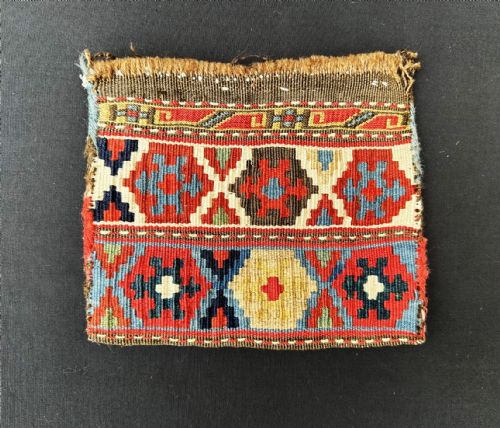
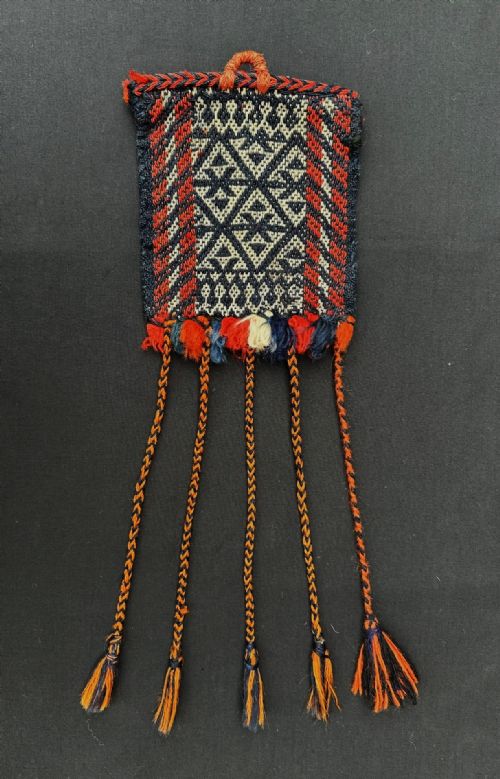
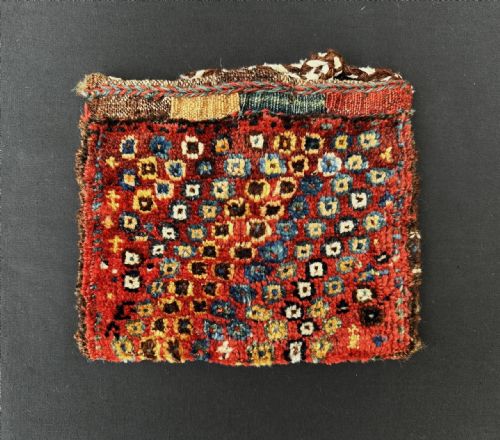
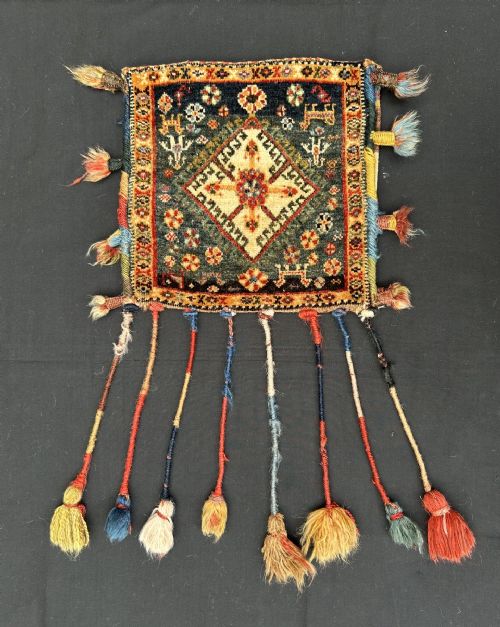
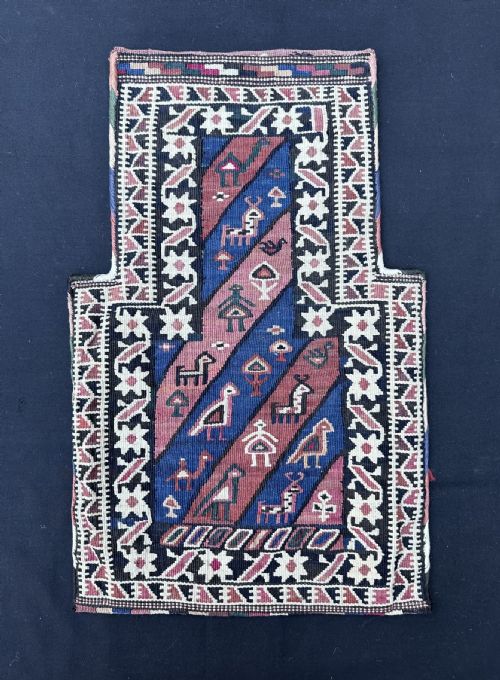
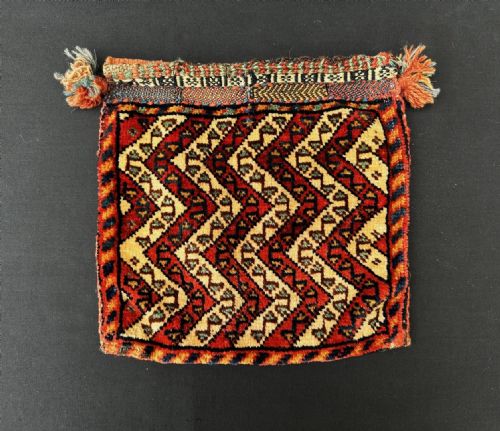
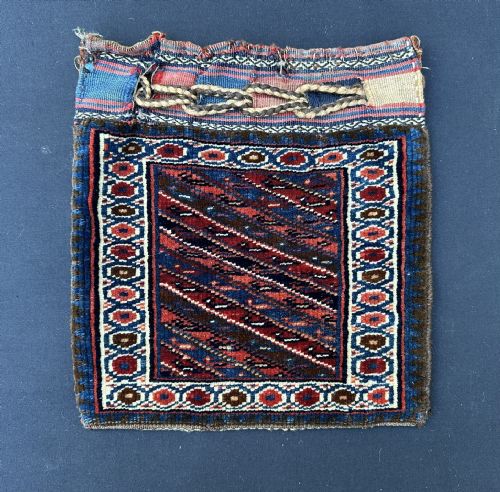
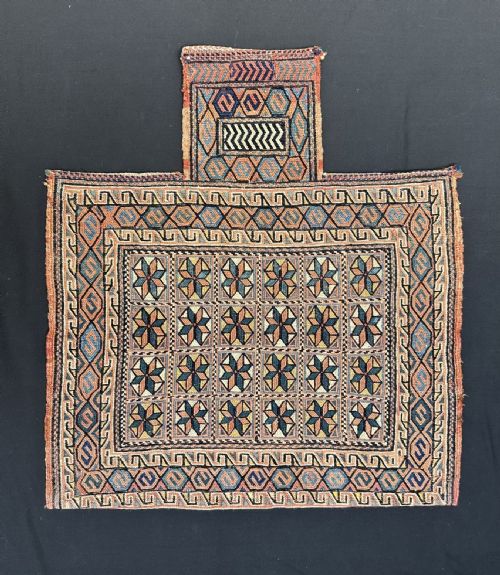
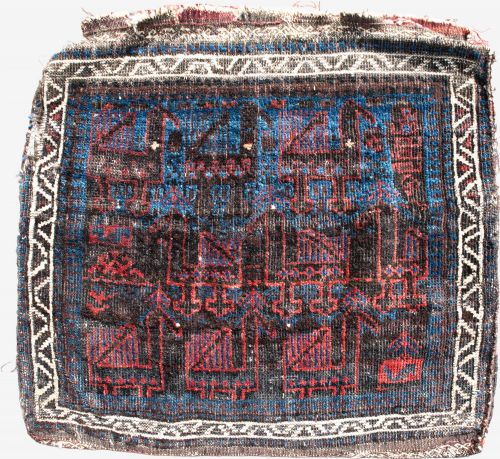
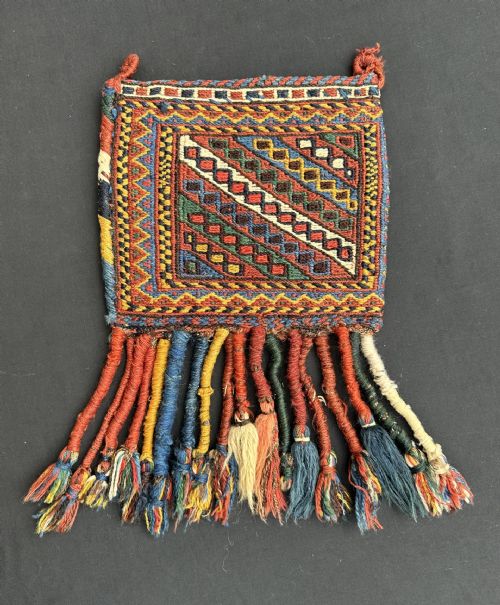
The pieces on this page appear predominantly as vanity-bags, salt-bags, and chantehs originating from regions like Fars, Kerman, Azerbaijan, and Khorassan. They represent the weaving output of tribal groups including the Qashqa'i, Afshar, Shahsevan, and Baluch from the late nineteenth and early twentieth centuries.
How they were made
Weavers constructed these pouches using wool and cotton foundations, employing techniques such as soumak work, banded weft design, and pile or flatweave structures. Natural dyes provided the palette, derived from local plant and mineral sources to colour the yarn before assembly.
Certain examples incorporate decorative elements like cowrie shells onto the woven structure, adding texture and protective symbolism. The construction reflects durability suited for nomadic life, combining structural warp and weft tension with intricate geometric and figurative patterns.
The listings span from 1860 to 1920, predominantly featuring wool, cotton, and natural dyes.
What varies in quality
Quality rests upon the fineness of the weave, the clarity of the natural dye palette, and the integrity of the original back and closure systems. Pieces retaining their structural entirety and complete regional motifs command greater interest from discerning collectors.
The precision of tribal pattern execution and the depth of the wool quality distinguish standard utility items from masterworks of nomadic textile art. Preservation of original surface textures, such as intact cowrie shell embellishments or original hanging loops, further elevates the standing of an individual pouch.
The Persian Woven Tribal Pouch Glossary
- Chanteh
- A small traditional tribal bag or vanity pouch used by Persian nomads for personal possessions.
- Namakdan
- A specific form of tribal container traditionally utilised for storing rock salt.
- Soumak
- A flatweave technique involving wrapping weft threads over warps to create a textured, durable surface.
- Tubreh
- A general term for a bag or sack produced by tribal weavers.
- Kilim
- A tapestry-woven flat textile forming the body or face of various nomadic bags.
Persian Woven Tribal Pouch: Frequently Asked Questions
What were these pouches used for?
Nomadic groups utilised these containers for practical storage needs during seasonal migrations across Persia. Specific forms held household salt, tobacco pipes, spoons, or personal grooming items.
Their portable nature meant they doubled as personal carriers and decorative elements within tents. Each shape corresponded directly to the specific domestic function required by the weaver.
How do I care for a textile pouch?
Keep the textile out of direct sunlight to prevent natural dye fading over time. Gentle vacuuming through a mesh screen helps remove dust without damaging fragile wool fibres.
Avoid hanging heavy objects inside the pouch, as antique wool and cotton foundations can stretch or tear under strain. Professional textile conservation remains the safest route for deeper cleaning.
How can I tell different tribal designs apart?
Tribal attribution relies on specific structural patterns, colour combinations, and regional motifs characteristic of groups like the Qashqa'i, Afshar, or Shahsevan. Weavers integrated distinct geometric markers passed down through generations within specific confederacies.
Familiarity with regional palettes from areas such as Fars or Azerbaijan helps isolate the likely origin of a given piece. Comparing knotting styles and flatweave structures offers further clues to the maker's community.
Are these bags double-sided?
Certain pieces feature woven designs on both the front and the reverse, while others utilise plain or sturdy utilitarian backings. Double-sided examples required significantly more time and material investment from the weaver.
The presence of an original back adds considerable authenticity and completeness to antique nomadic bags.