



Persian Wool Bag Faces
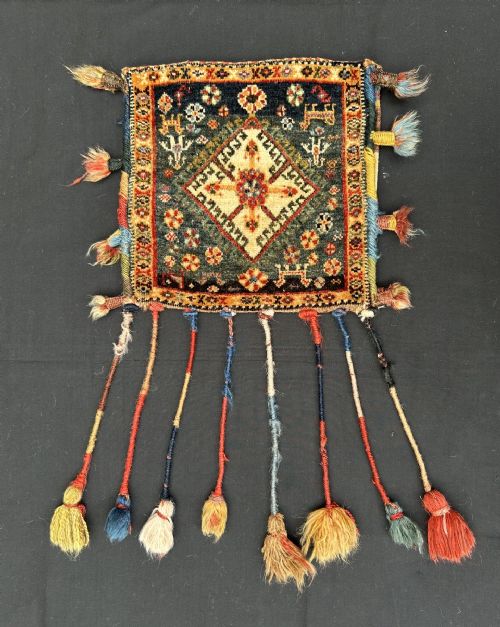
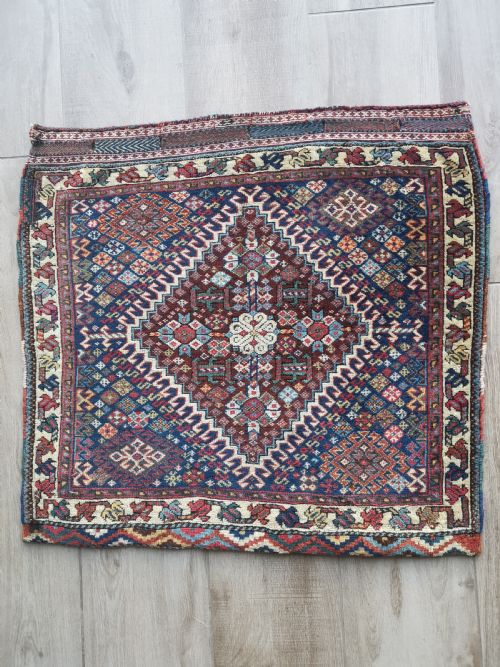
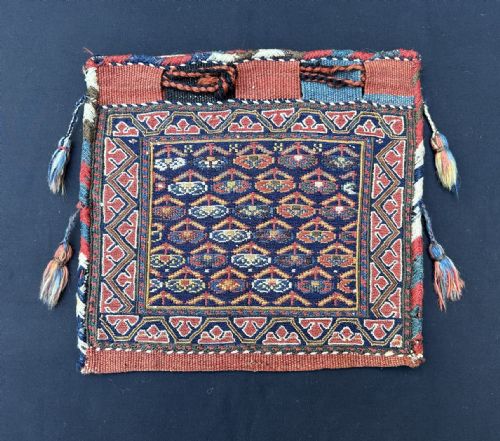
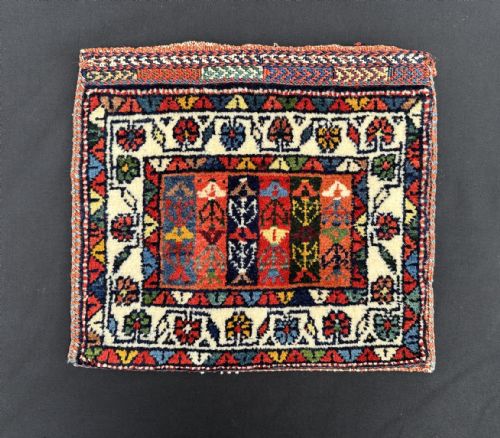
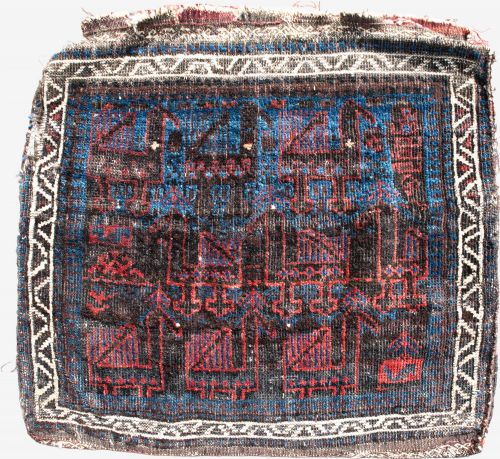
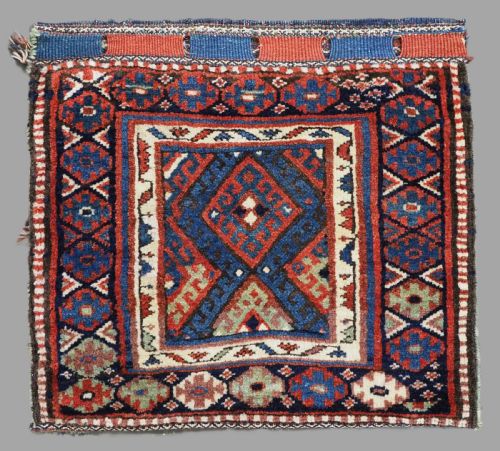
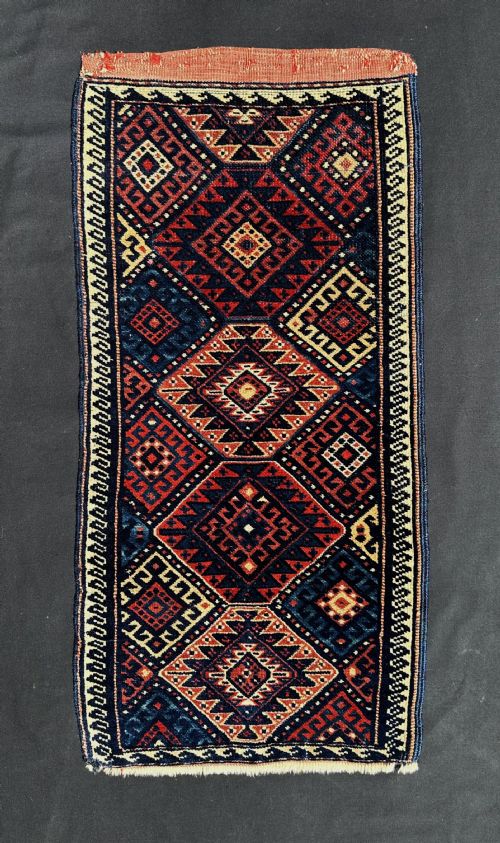
Persian wool bag faces are fragments or single panels of nomadic storage sacks woven by tribal groups across nineteenth and early twentieth century Persia.
Persian Wool Bag Faces
When you examine persian wool bag faces, you encounter the front panels or complete sides of utilitarian sacks used for travel and storage by tribal confederations like the Qashqai, Afshar, Baluch, and Khamseh.
These pieces originate from nineteenth and early twentieth century nomadic and village communities across regions such as Fars, Khorassan, and Luristan.
How they were made
Weavers utilised hand-spun wool for the pile and structure, often paired with cotton foundations in specific regional workshops.
Colours derive from natural and vegetable dyes, producing saturated hues that age with deep patination across the woven surface.
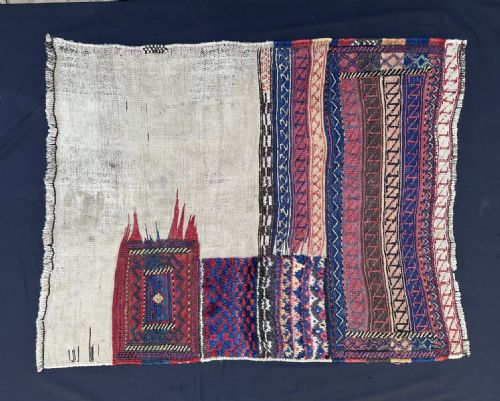
Construction techniques include hand-knotting for pile sections alongside flat-woven soumac and plain weave structures for backs and banding.
Nomadic weavers frequently tucked small protective amulets directly into the utilitarian weave of these bags.
What varies in quality
Quality rests in the precision of the tribal drawing, the complexity of motifs such as medallions and boteh repeats, and the handle of the wool.
Examples with intact original plain weave backs or complete side structures demonstrate superior preservation compared to isolated cut fragments.
The Persian Wool Bag Faces Glossary
- Khorjin
- A traditional double-sided saddlebag used for transport on pack animals during tribal migrations. These were designed to carry personal possessions.
- Chanteh
- A small personal bag or vanity bag woven for intimate storage or as a decorative pouch. They display concentrated tribal iconography on the primary face.
- Soumac
- A wrapping technique used in flat-weaving that creates a textured, durable surface without pile knots. It often appears on Shahsavan bag faces.
- Boteh
- A stylised almond or paisley motif representing a floral spray or cypress tree. This design occurs frequently across Afshar and Kurdish pieces.
- Balisht
- A small pillow or cushion face adapted from bedding bags. These items provide comfortable support while showcasing intricate village weaving.
Persian Wool Bag Faces: Frequently Asked Questions
What are Persian wool bag faces?
These textiles are the decorative front panels or surviving halves of nomadic storage sacks produced by tribal weavers in Persia. They served practical functions for transport and household storage before entering the collector market.
Nomads utilised them on pack animals or inside tents for organising belongings. Today, collectors preserve them as wall hangings or small floor displays.
How were these bags used originally?
Tribal groups used these woven sacks as saddlebags on horses and camels, or as stationary storage containers within tents. They held grain, personal items, and household goods during seasonal migrations.
The sturdy construction protected contents from weather and rough travel. Smaller versions functioned as vanity bags or personal carry pouches.
How do I live with a bag face?
Many collectors mount these textile panels on fabric backings for wall display, treating them as concentrated examples of tribal art. Smaller pieces function effectively as cabinet display items or small cushion covers.
Protect the wool from direct sunlight to preserve natural dye colours. Gentle vacuuming through mesh helps maintain the pile without damaging the antique structure.
How can I tell tribal styles apart?
Tribal attribution relies on specific colour palettes, structural materials, and characteristic drawing styles. Qashqai and Afshar pieces often feature precise geometric medallions, while Baluch works display darker tones and banded designs.
Examining the selvedges, end finishes, and knotting density reveals regional habits. Comparing motif structures like boteh repeats helps pinpoint specific tribal groups.