

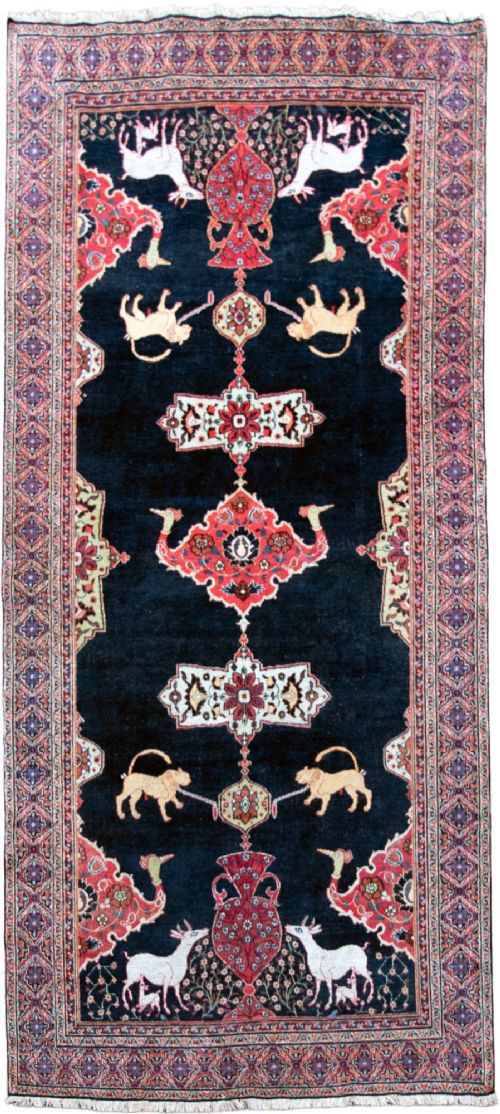
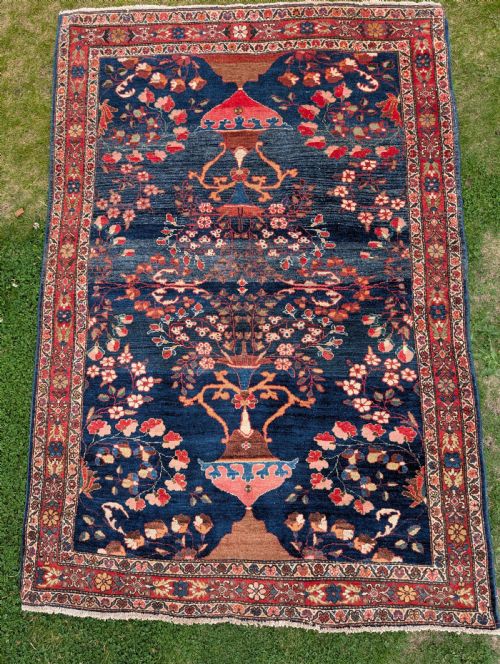


Persian Vase Carpet
A persian vase carpet brings centuries of textile artistry into a room, offering rich floral motifs and deep historical resonance.
Persian Vase Carpet
A persian vase carpet is a woven textile featuring traditional vase and floral designs originating from Persian and Indian weaving traditions. These pieces often take the form of roomsize carpets, area rugs, and prayer rugs produced across various regional centres.
Buyers browsing this selection will most frequently encounter early twentieth-century examples, particularly pieces dating from the 1910s, 1920s, and 1930s. These floor coverings bridge traditional village craftsmanship and refined city workshop production.
The regional diversity spans from Kashan and Kirman to Isfahan, Malayer, and Afshar tribal areas. Each origin brings distinct design vocabularies to the overarching vase carpet genre.
Materials and Construction
These textiles utilise natural materials such as wool, cotton, and silk, providing durable foundations and lustrous pile surfaces. Weavers mounted these fibres on sturdy cotton or wool warp and weft foundations to ensure structural integrity.
The construction involves meticulous hand-knotting techniques executed by skilled makers across Persian and Indian workshops and tribal communities. This labour-intensive process allowed for intricate floral detailing and precise ivory or coloured ground compositions.
Persian Vase Carpet Retail Price Guide 2026
Typical asking prices for persian vase carpet among the pieces listed under this phrase on Sellingantiques today, from the lower quarter to the upper quarter. They describe what is for sale here now, not the wider market.
Current listings span the decades from 1910 to 1930, utilising wool, cotton, and silk across Persian and Indian traditions.
Distinctions in Quality
Quality in these carpets rests on the fineness of the knotting and the precision of the floral vase design. Superior examples demonstrate exceptional clarity in drawing and harmonious colour distribution across the field.
The choice of materials also dictates the calibre of the piece, with finer silk or high-grade wool yielding greater textural depth and resilience. Condition and the integrity of the original borders further distinguish the finer pieces from standard production.
The Persian Vase Carpet Glossary
- Kashan
- A city in central Persia renowned for sophisticated workshop carpets featuring detailed floral motifs and fine pile construction.
- Prayer rug
- A smaller format rug traditionally featuring a mihrab or niche design used for personal devotion.
- Kirman
- A major weaving centre in south-east Persia known for roomsize carpets with expansive floral fields and balanced compositions.
- Afshar
- A tribal group from south Persia producing geometric and stylized floral rugs with distinctive cultural character.
- Pile
- The vertical or slanted cut loops of wool, cotton, or silk that form the usable surface of the carpet.
Persian Vase Carpet: Frequently Asked Questions
Where were these carpets made?
These pieces originate from various regions including central and south Persia, alongside Indian workshops. Specific production centres such as Kashan, Kirman, and Isfahan contributed distinct regional aesthetics.
Tribal areas like those of the Afshar people also produced notable examples with unique regional characteristics.
How do I care for an old rug?
Regular gentle vacuuming without a beater bar helps remove dust and particulate matter from the pile. Professional cleaning suited to antique textiles preserves the natural fibres.
Keeping the carpet out of direct sunlight prevents fading of the dyed wool, cotton, and silk materials.
What periods do these pieces date from?
The listings consist primarily of early twentieth-century pieces dating from the 1910s, 1920s, and 1930s. These decades represent a period of traditional hand-knotting before mid-century industrial shifts.
Examples from this era combine older design traditions with durable natural materials.
How are different regional styles told apart?
Regional styles are distinguished by their specific motifs, colour palettes, and structural foundations. City workshops like Kashan and Kirman typically feature refined floral vase compositions and curved lines.
In contrast, tribal pieces such as Afshar rugs often incorporate more geometric interpretations and distinctive village colour schemes.