

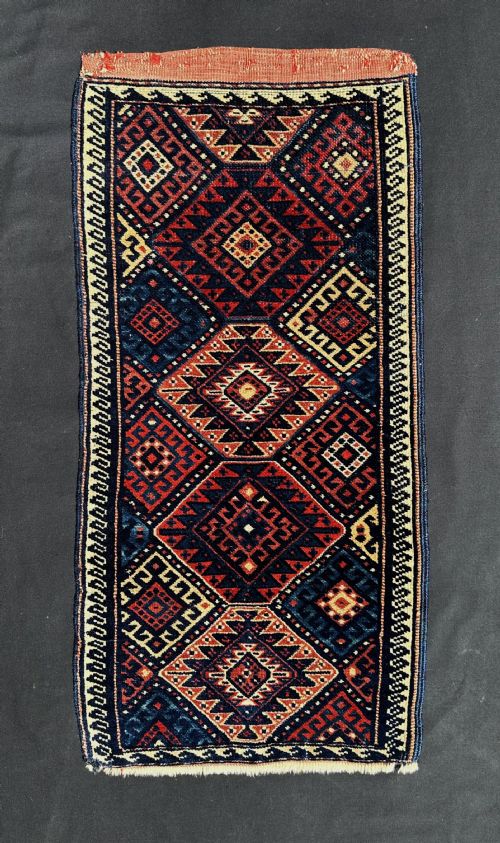


Persian Tribal Bag Face
A persian tribal bag face brings the dense iconography and practical artistry of nineteenth-century nomadic weaving directly into a modern interior.
Persian Tribal Bag Face
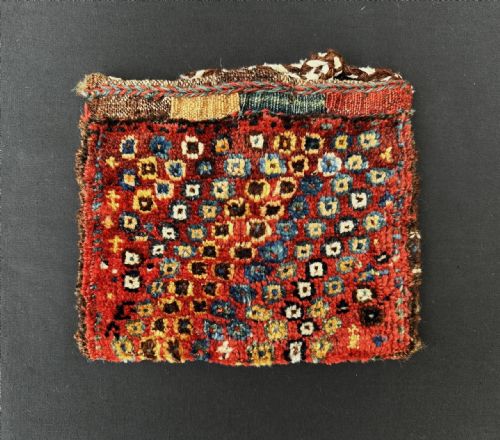
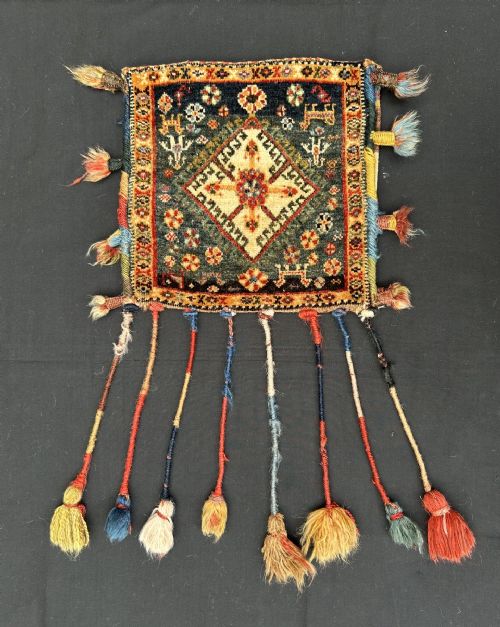
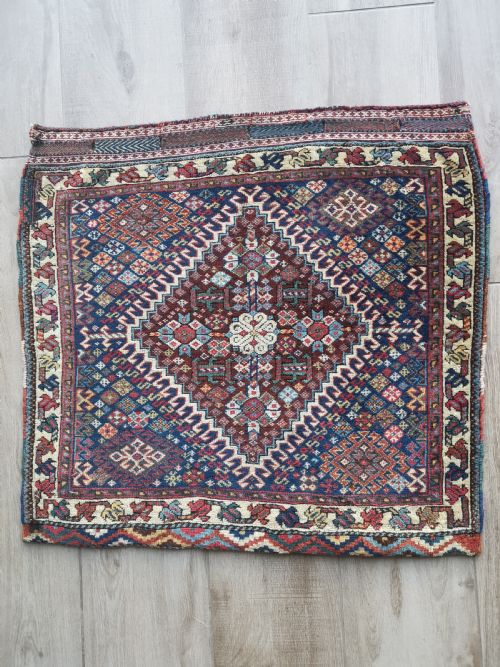
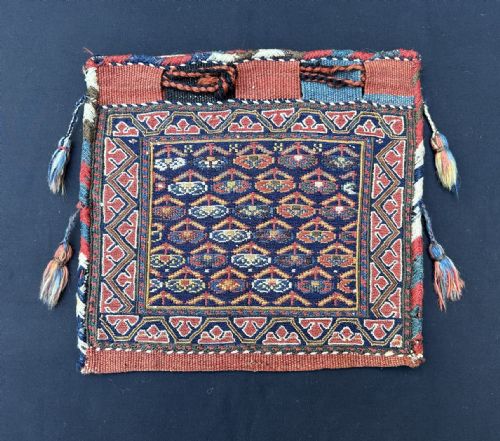
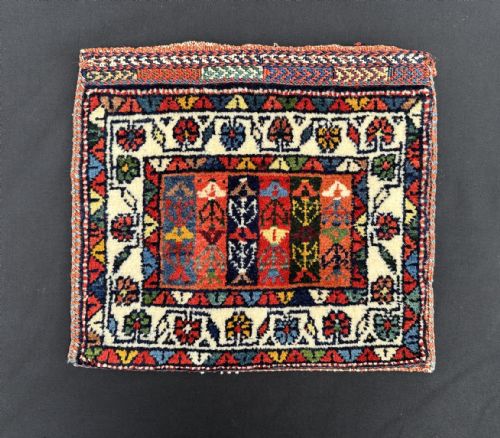
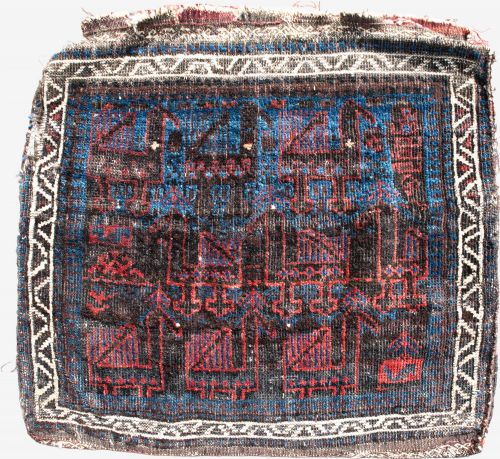
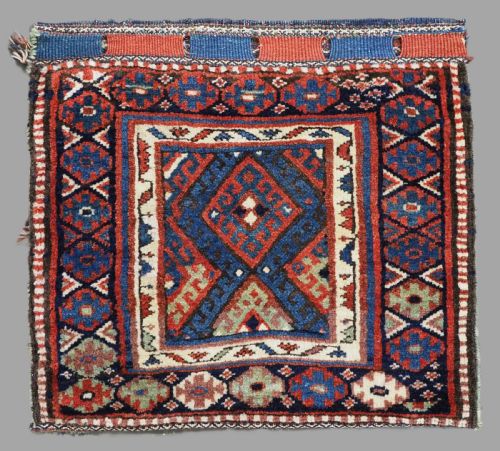
A persian tribal bag face represents the front portion of a larger utilitarian storage container, such as a saddlebag or a personal carrying pouch, woven by nomadic groups across nineteenth-century Persia. These textiles served functional purposes for pastoral peoples moving across regions like Fars, Luristan, and Khorassan.
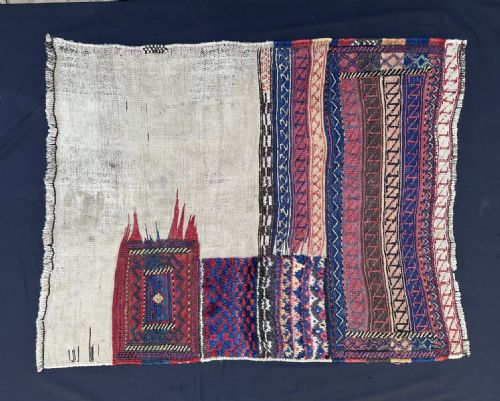
The objects seen most frequently on this page originate from tribal confederations including the Qashqa'i, Baluch, Afshar, Luri, and Shahsavan. They survive either as isolated panels or complete bags featuring flatweave backs and knotted-pile fronts.
Materials and construction
Weavers relied on locally sourced wool, frequently hand-spun, combined with cotton foundations depending on the specific tribal tradition. The resulting pile is dense and durable, designed to withstand the rigours of nomadic daily life.
Colour comes from natural and vegetable dyes, yielding rich, saturated tones that age with considerable depth. Surface decoration ranges from knotted pile to intricate sumac work and banded flatweave techniques.
Some nineteenth-century weavers embedded small blue glass beads directly into the wool pile to ward off the evil eye during migration.
Assessing quality
Quality rests upon the fineness of the knotting and the crispness of the tribal geometry, which dictates how sharply medallions and repeating motifs are rendered. Tighter knot counts allow for greater detail in complex patterns such as boteh or tile designs.
The stability and handling of the wool, alongside the integrity of the natural dyes, determine the longevity and visual impact of the piece. Well-preserved edges and original flatweave backs elevate the preservation status of the textile.
The Persian Tribal Bag Face Glossary
- Khorjin
- A traditional double-sided saddlebag used by nomadic tribes for transport and storage. The face represents the decorative front half of this utility piece.
- Chanteh
- A small personal bag or vanity pouch woven for individual use. These smaller formats often display exceptionally fine detail.
- Sumac
- A wrapped-weft flatweave technique that produces a durable, textured surface resembling embroidery. It provides strong structural contrast to knotted pile.
- Boteh
- A stylised floral motif resembling a curved almond or pear shape. It appears frequently across Afshar and broader tribal weaving.
- Salar Khani
- A specific sub-group of Baluch weavers known for distinctive regional palettes and iconography. Their work forms a recognisable subset within Khorassan textiles.
Persian Tribal Bag Face: Frequently Asked Questions
What is a bag face?
A bag face is the decorative front panel of a nomadic storage sack or saddlebag that has been separated from its plain wool back. These panels were preserved for their intricate geometric and floral patterns.
Nomads utilised these bags for household storage during migrations, but the front panels functioned primarily as displays of tribal identity and weaving skill.
How were these bags used?
Pastoral nomads used these textiles on pack animals to transport personal belongings, grain, and bedding across harsh landscapes. Smaller versions served as personal vanity cases or letter pouches.
When mounted on horses or camels, the woven faces remained visible on the flanks, combining practical transport with vibrant visual decoration.
How do I display a bag face?
Bag faces mount easily onto linen-backed panels or display frames for wall hanging, bringing rich texture into modern rooms. Their manageable dimensions also suit placement on small tables or shelves.
Some collectors convert them into decorative cushions or pillows, though many prefer to keep the textile flat to preserve the structural integrity of the weave.