




Persian Passage Carpet
These persian passage carpet examples bring genuine nineteenth and early twentieth century warmth to corridors and long floors.
Persian Passage Carpet
A persian passage carpet is a long, narrow format textile designed specifically for hallways, staircases, and galleries. These pieces provide durable floor covering for high-traffic zones while adding traditional design to domestic interiors.
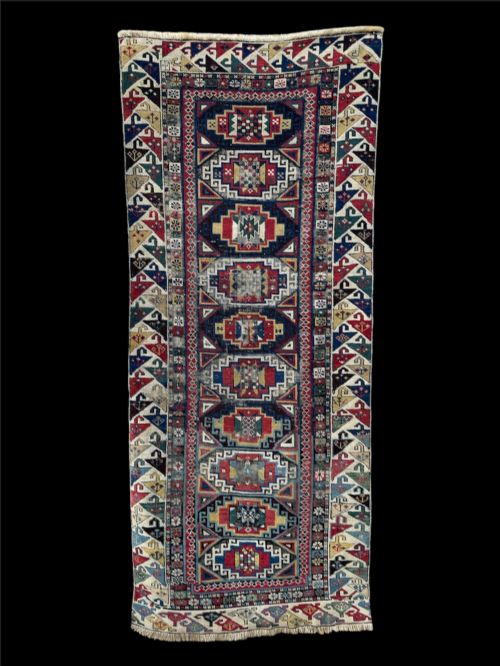
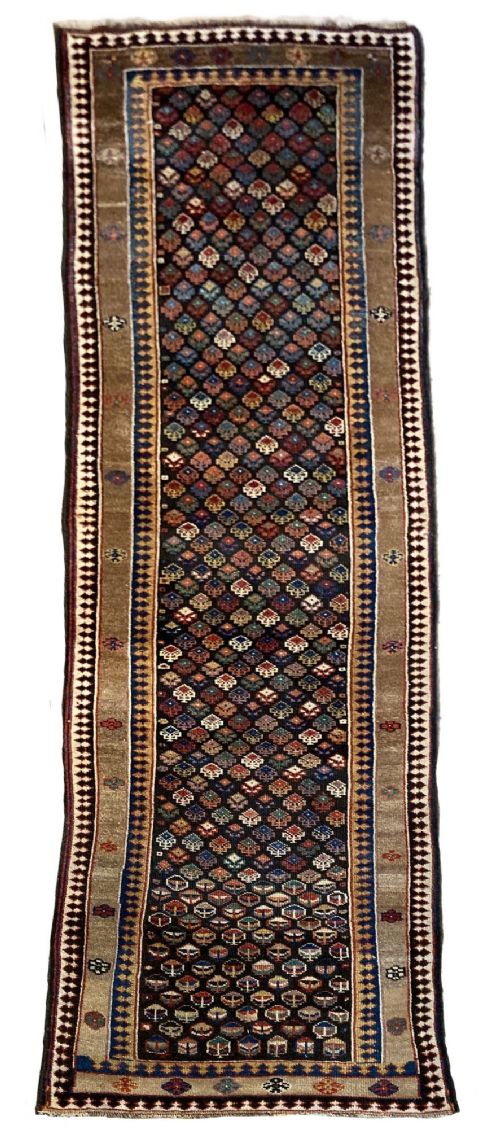
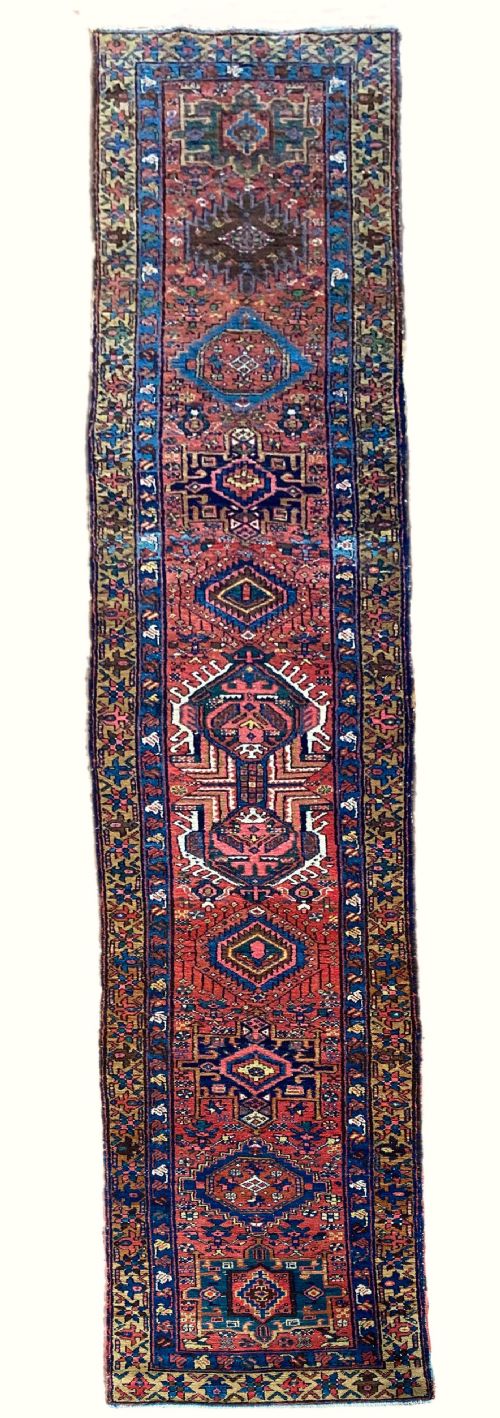
The selections on this page span from the late nineteenth century through to the 1930s. Buyers frequently encounter regional woven styles such as Heriz, Kurdish, Bidjar, and Ferahan among these elongated formats.
What varies in quality
Quality rests in the precision of the weave and the crispness of the tribal or traditional motifs. Finer knots per square inch allow for intricate geometric and floral detailing that holds its definition over generations.
The depth and harmony of the wool pile directly influence how the piece ages in a hallway. Superior examples maintain structural integrity and colour saturation despite heavy corridor use.
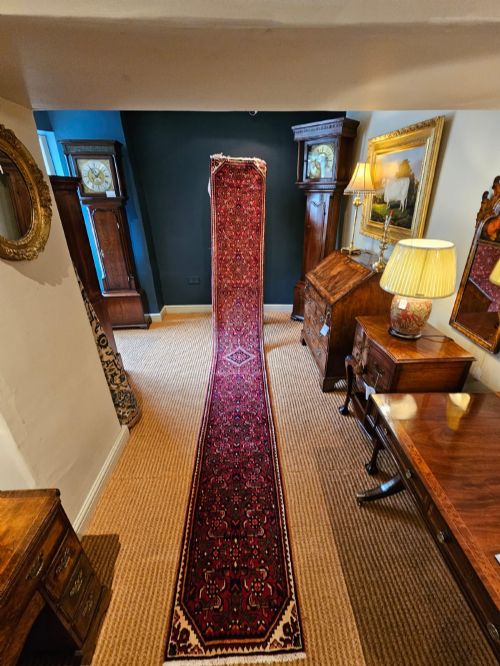
Some runners stretch to nearly thirteen metres long, requiring a very committed hallway.
The Persian Passage Carpet Glossary
- Runner
- A long, narrow carpet format intended for corridors, staircases, and narrow hallways. This shape defines the category.
- Pile
- The upright yarn loops or cut ends that form the soft surface of the carpet. Wool is the standard material used for this layer.
- Warp
- The stationary vertical threads stretched onto the loom before weaving begins. Cotton typically forms this structural base.
- Weft
- The horizontal threads passed through the warp to bind the knots in place. This material works with the warp to create the foundation.
- Boteh
- A traditional almond-shaped or paisley motif representing a floral spray or cypress tree. This design appears frequently in regional woven pieces.
Persian Passage Carpet: Frequently Asked Questions
Where do I put a runner?
These long carpets suit hallways, corridors, and staircases where foot traffic is heavy. Their narrow proportions fit spaces that standard square rugs cannot accommodate.
Position them centrally on bare floorboards or hallways to protect high-traffic areas while introducing period character.
How do I clean an old wool runner?
Gentle vacuuming without a rotating brush roll removes everyday dust and grit from the wool pile. Avoid aggressive shaking or beating.
Professional specialist cleaning is recommended for heavier dirt or spills to protect the natural dyes and cotton foundation.
Are these runners durable?
Traditional hand-knotted construction using wool and cotton creates a resilient surface built for daily foot traffic. The tight knot density ensures longevity in busy corridors.
Underlays help prevent slipping and reduce friction between the floor and the woven foundation during transit.
What is a Heriz runner?
A Heriz runner originates from the Heris region of northwest Persia, known for geometric medallion designs and robust construction. These pieces often feature bold, enduring colour palettes.
Their substantial wool pile and cotton foundations make them particularly suited for heavy domestic use in long hallways.