






Persian Kurdish Bag
These Persian Kurdish bag examples are woven tribal textiles that bring authentic nomadic character and practical utility to any room.
Persian Kurdish Bag
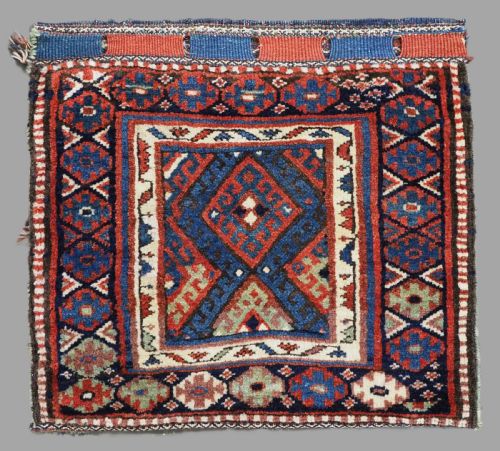
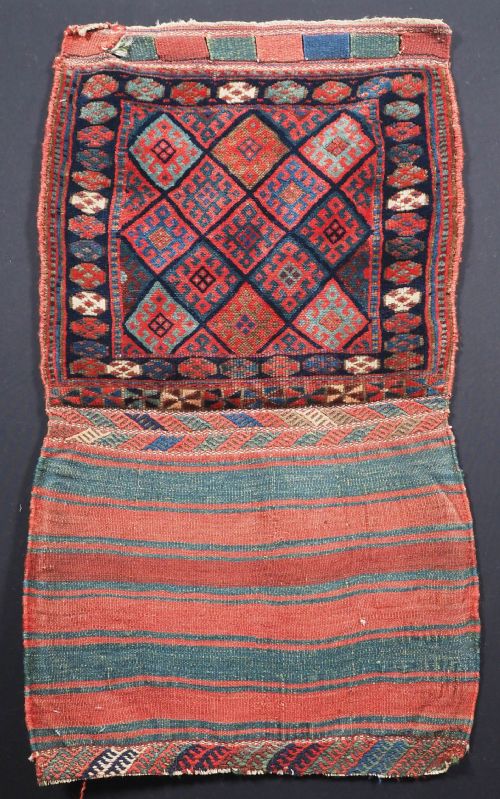
A Persian Kurdish bag encompasses traditional woven containers, chantehs, wheat sacks, and saddlebag faces created by nomadic and tribal makers. The pieces listed show various formats including complete bags with plain weave backs, isolated bag faces, and cushion conversions.
Most examples originate from tribal groups in western Persia, specifically featuring works attributed to the Jaf Kurds and Bakhtiari Lor tribes of the Char Mahal Valley. These textiles reflect the utilitarian needs of nomadic life, where woven bags served for transport and storage.
The selections available date from the late nineteenth century into the early twentieth century, spanning decades between eighteen eighty and nineteen twenty. Buyers frequently encounter formats such as small chantehs, square cushions, and saddlebag fragments.
Materials and construction
Makers utilised hand-spun wool for the primary pile and decorative surfaces, paired with goat hair and cotton for structural integrity. The use of hand-spun wool yields varied texture and absorbs natural dye processes with rich tonal shifts.
Construction techniques combine intricate pile knotting with plain weave structures, particularly visible on the backs of complete bags. Goat hair often appears in the robust selvages and backing materials to withstand the heavy wear of nomadic travel.
Persian Kurdish Bag Retail Price Guide 2026
Typical asking prices for persian kurdish bag among the pieces listed under this phrase on Sellingantiques today, from the lower quarter to the upper quarter. They describe what is for sale here now, not the wider market.
Materials documented across the pieces include wool, hand-spun wool, goat hair, and cotton.
Assessing quality and authenticity
Quality rests in the fineness of the weave, the crispness of tribal geometric patterns, and the integrity of the surviving materials. Complete bags retaining their original plain weave backs hold distinct interest compared to isolated fragments.
The handled condition of the wool, the retention of original dimensions, and the clarity of design distinguish finer tribal weaving from standard utilitarian output. Pieces showing careful execution in both pile and flatweave sections demonstrate superior workshop standards.
The Persian Kurdish Bag Glossary
- Chanteh
- A small tribal bag or vanity pouch used by nomads for carrying personal items. These pieces often feature single face panels.
- Saddlebag face
- The decorative front panel of a paired riding bag separated from its rear connecting web. Collectors prize these for their concentrated geometric designs.
- Plain weave
- A simple unpiled textile technique where warp and weft threads cross alternately. This method forms the durable backs of complete Kurdish bags.
- Jaf Kurd
- A specific tribal subgroup known for distinctive geometric repeat patterns on woven bags. Their work forms a significant portion of the available textiles.
- Tasheh
- A traditional term for a wheat sack or grain container woven by tribal groups. These items combined heavy utility with traditional ornamentation.
Persian Kurdish Bag: Frequently Asked Questions
What is a Kurdish chanteh?
A chanteh is a small tribal pouch traditionally carried by nomadic peoples for personal belongings. These miniature textiles display the same weaving techniques and motifs found on larger rugs.
In modern interiors, collectors often frame them or display them as small decorative wall hangings.
How were these bags used?
Nomadic tribes utilised these woven containers for storage and transport during seasonal migrations. Saddlebags carried possessions across horses or pack animals, while grain sacks stored provisions.
Over time, many bags have been separated into individual faces or converted into decorative cushions for domestic use.
How do I date an antique piece?
Dating relies on material analysis, structural evidence, and stylistic comparisons with documented nineteenth and early twentieth century tribal weaving. Hand-spun wool and natural dye palettes provide primary chronological indicators.
Most examples on this page date from the late eighteen hundreds to approximately nineteen twenty.
Can I use these bags as cushions?
Many surviving bag faces and complete containers lend themselves well to cushion conversion for domestic seating. Their durable wool and cotton construction handles gentle daily contact.
Ensuring proper backing and professional stuffing protects the historical textile from unnecessary structural strain.