



Persian Kirman Carpet
A persian kirman carpet brings intricate floral motifs and sophisticated South Persian artistry into a room, offering both historical depth and lasting floor presence.
Persian Kirman Carpet
A persian kirman carpet represents a sophisticated weaving tradition originating from the city of Kirman in South East Persia. Buyers searching for this phrase encounter formats ranging from compact prayer rugs and runners to room-size and oversized floor coverings. The examples seen on this page span from the nineteenth century into the early twentieth century, capturing decades of traditional Persian craftsmanship.
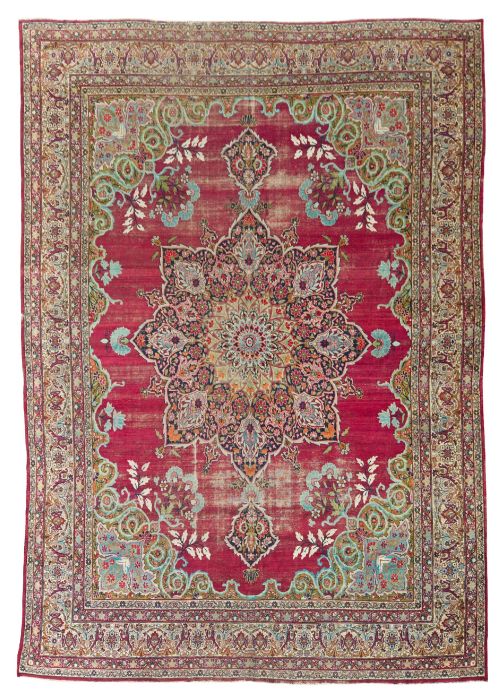
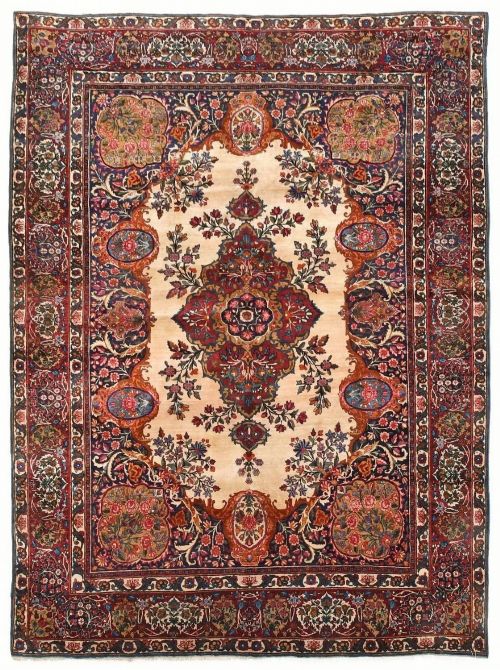
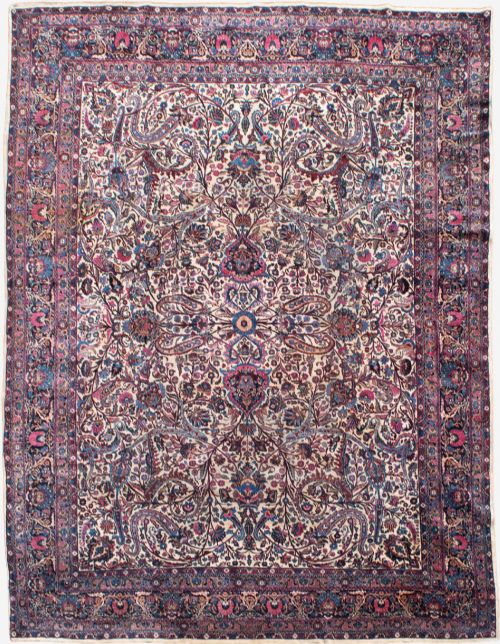
The most common formats met here include large room-size carpets alongside smaller mats and runners. Pieces often display intricate floral patterns, boteh motifs, or millefleurs designs created within the Persian style. These textiles serve as both functional floor coverings and substantial decorative elements for traditional interiors.
Materials and construction
The pieces recorded in these listings rely fundamentally on a foundation of cotton with a pile spun from wool. Artisans utilised these durable natural fibres to achieve the dense knotting and fine detail characteristic of the region. The interplay between wool pile and cotton warp and weft provides the structural integrity necessary for large room-size carpets to endure.
Weavers employed traditional Persian techniques to execute complex designs such as repeat floral patterns and garden layouts. The precision of the knotting allows intricate motifs like the millefleurs prayer designs to maintain clarity across various scales, from small mats to oversized carpets.
Persian Kirman Carpet Retail Price Guide 2026
Typical asking prices for persian kirman carpet among the pieces listed under this phrase on Sellingantiques today, from the lower quarter to the upper quarter. They describe what is for sale here now, not the wider market.
Listings feature pieces dated from 1860 through the 1940s, utilising wool pile and cotton foundations in formats ranging from small mats to oversized carpets.
Distinctions in quality
Quality in these textiles rests upon the density of the knotting and the finesse of the design execution. Finer examples demonstrate meticulous control over intricate floral and boteh patterns, maintaining crisp outlines and balanced compositions across the field. Lesser examples may exhibit looser construction or simpler rendering of traditional motifs.
The condition of the wool pile and the structural stability of the cotton foundation also dictate the standing of a piece. Well-preserved surfaces retain the nuance of the original dye work and the integrity of the borders, whereas heavily distressed pieces show significant wear to the foundation and pile.
Rashid Farrokhi
The Persian Kirman Carpet Glossary
- Boteh
- A traditional teardrop or almond-shaped motif with a curved upper end, frequently seen in Persian weaving. This ancient symbol represents a floral cluster, cypress tree, or flame.
- Millefleurs
- A decorative style translating to a thousand flowers, describing a field dense with tiny floral blossoms. This pattern appears on specialised prayer rugs from the region.
- Warp
- The vertical threads stretched on the loom that form the structural backbone of the carpet. The cotton fringe at the ends of a rug originates from these tension threads.
- Weft
- The horizontal threads passed through the warp threads to bind the knots in place. Together, warp and weft create the grid that holds the wool pile secure.
- Prayer rug
- A small format rug featuring a mihrab or arch design intended to indicate the direction of prayer. These pieces often incorporate specific symbolic motifs within the field.
Persian Kirman Carpet: Frequently Asked Questions
How do I clean an old carpet?
Professional specialist cleaning is essential for antique textiles to protect the delicate wool pile and natural dyes. Standard domestic cleaning methods or excessive water can damage the cotton foundation.
Regular gentle suction without a beater bar helps remove surface dust between professional treatments. Keeping the piece out of direct sunlight preserves the original dye colours over time.
Can these rugs handle heavy foot traffic?
Room-size examples woven with wool on cotton foundations are structurally robust enough for everyday domestic use. Placing a quality underlay beneath the textile reduces friction and cushions the fibres against wear.
High-traffic hallways or entryways benefit from sturdier runners, while heavily distressed or fine antique pieces deserve more protected placement in low-traffic rooms.
How do I identify a South Persian origin?
Examination of the knot density, colour palette, and structural materials often points directly to South East Persian workshops. Specific design elements like elaborate floral sprays and characteristic border arrangements provide further clues.
Consulting the construction details, such as the spin and twist of the wool and cotton, helps differentiate these pieces from other regional styles.
What does room size mean here?
Room size designates larger floor coverings intended to anchor major living spaces or dining rooms. These pieces generally measure upwards of three metres in length, providing substantial coverage.
Such dimensions require careful measurement of your room's perimeter to ensure appropriate clearance around furniture and baseboards.