
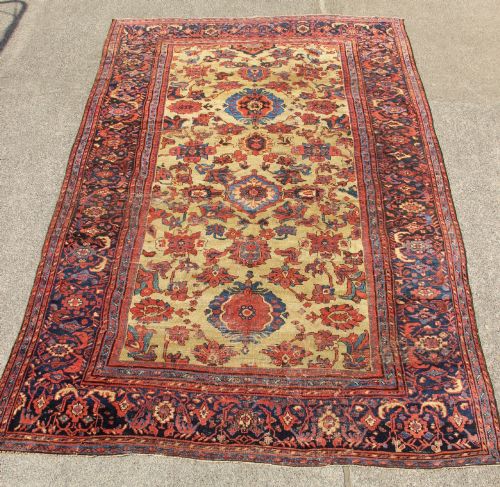
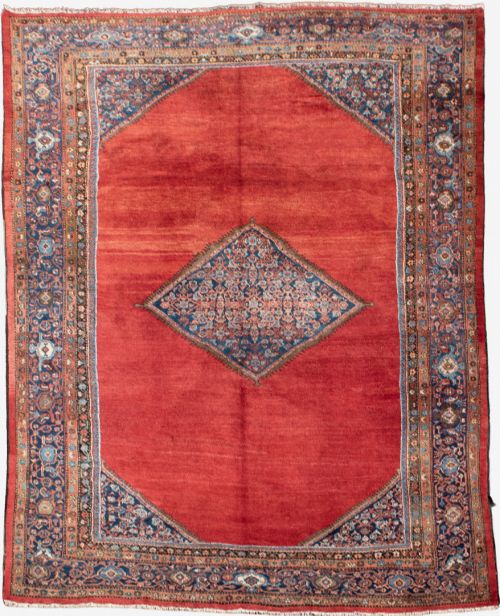


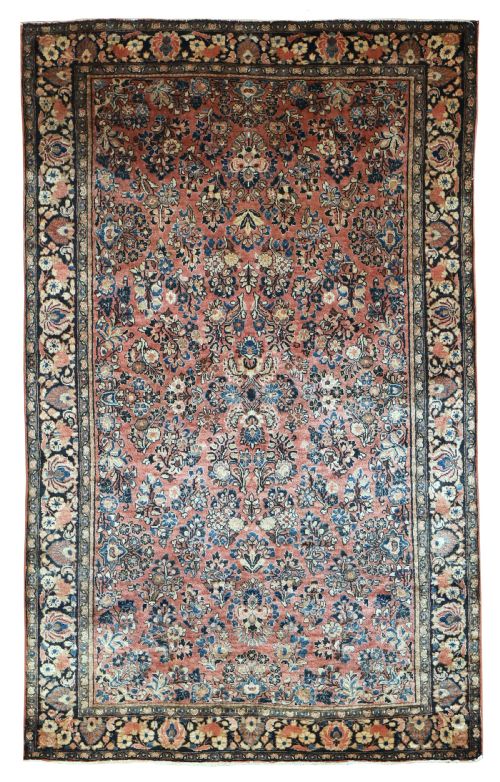
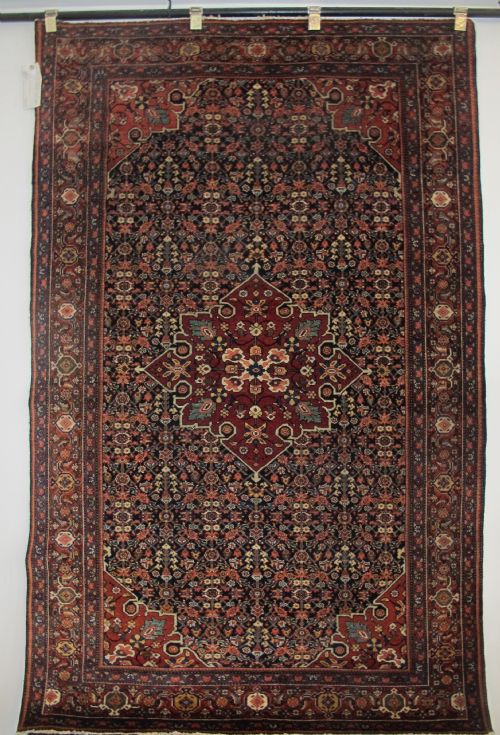
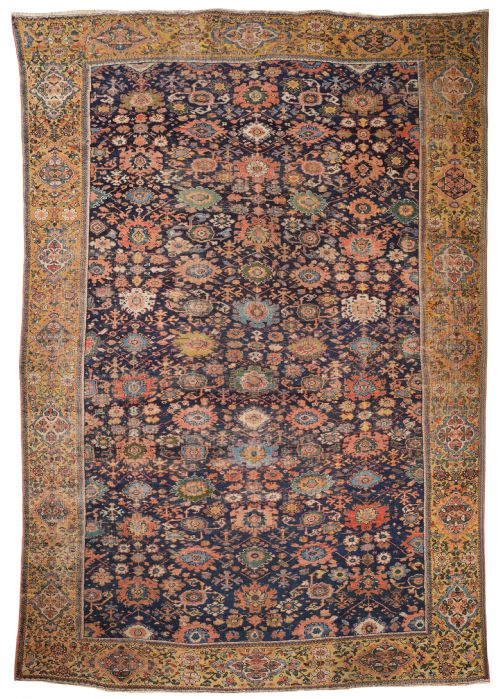
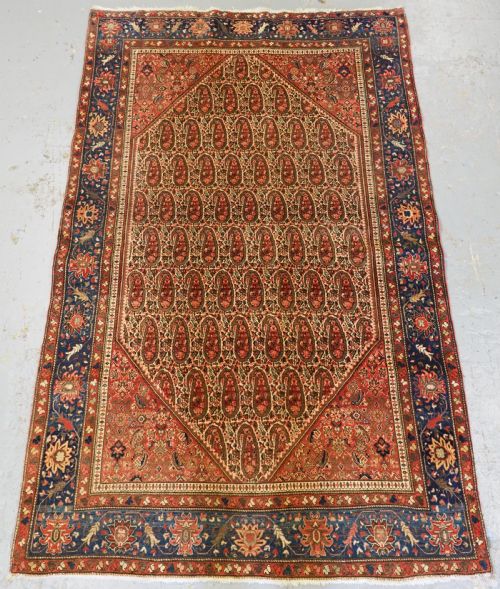
Persian Farahan Carpet
A persian farahan carpet brings enduring traditional West Persian artistry into a room, offering dense wool pile and intricate classical motifs.
Persian Farahan Carpet
A persian farahan carpet is a traditional textile woven in West Persia during the nineteenth and early twentieth centuries, encompassing formats from small scatter rugs and runners to large square and room-size floor coverings.
Buyers seeking a persian farahan carpet most frequently encounter nineteenth-century room-size carpets and smaller rugs from periods spanning eighteen fifty to nineteen thirty, often featuring traditional Persian styles and designs like the boteh.
These woven works function primarily as substantial floor coverings for principal rooms, though smaller formats serve as area rugs and runner rugs in corridors or compact spaces.
How They Were Made
Makers constructed each persian farahan carpet using a durable wool pile hand-knotted onto sturdy cotton foundations.
Weavers employed traditional Persian techniques to achieve fine weaves that supported intricate geometric and floral patterns.
Farahan weavers occasionally hid tiny imperfections in their intricate knots to honour traditional beliefs that only divine creation is flawless.
What Varies in Quality
The density of the hand-knotted wool pile and the precision of the weave separate standard examples from finer pieces.
The subtlety of the palette and the complexity of traditional Persian design motifs determine the distinction across the range.
The Persian Farahan Carpet Glossary
- Boteh
- A traditional almond-shaped or paisley motif representing a floral spray or cypress tree. This symbol frequently appears across classical Persian rugs and carpets.
- Pile
- The upright yarn loops forming the soft surface of a carpet. It is hand-knotted onto the underlying foundation threads.
- Foundation
- The underlying structure of warp and weft threads that supports the knotted wool pile. Cotton provides the stable base in these Persian weaves.
- Runner
- A long, narrow carpet format designed for hallways and corridors. These pieces guide movement through domestic spaces.
Persian Farahan Carpet: Frequently Asked Questions
What is a persian farahan carpet?
A persian farahan carpet is a hand-knotted textile originating from West Persia during the nineteenth and early twentieth centuries.
These pieces showcase traditional regional weaving styles using wool pile on cotton foundations.
How were these carpets used?
These textiles served as durable floor coverings in principal rooms, providing warmth and decoration.
Smaller formats functioned as area rugs or runners to define pathways and smaller spaces within homes.
How do I date a persian farahan carpet?
Dating relies on examining the materials, weave structure, and stylistic characteristics recorded across pieces from eighteen fifty to nineteen thirty.
Comparative study of traditional Persian design shifts helps narrow the era of production.
How do I live with a wool carpet?
Place the carpet in low-traffic or moderate-traffic areas to preserve the hand-knotted wool pile over decades of daily use.
Regular gentle care protects the cotton foundation and maintains the soft colours of the traditional design.