
Period Wooden Seating
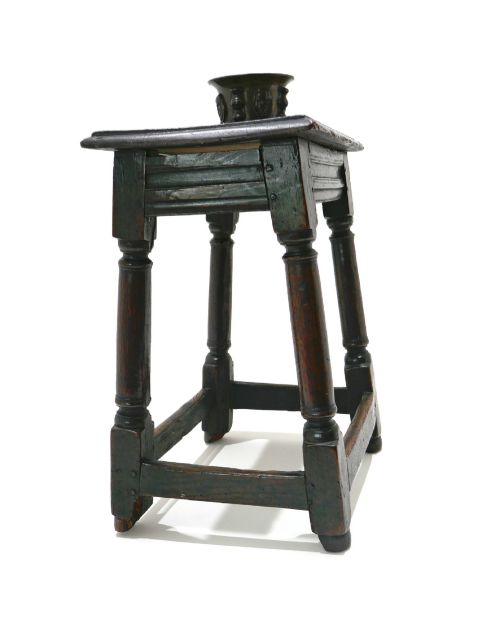
Period wooden seating brings together centuries of craftsmanship, offering everything from sturdy oak stools to elegant mahogany dining chairs.
Period Wooden Seating
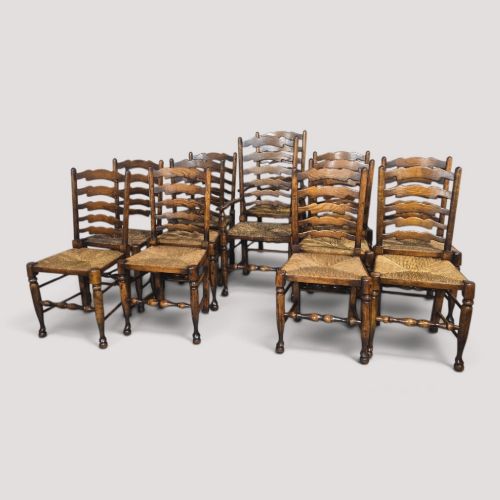
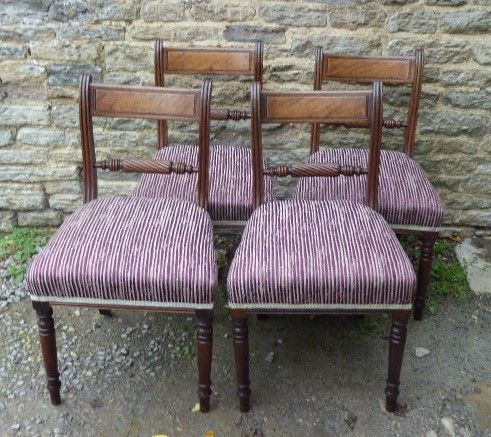
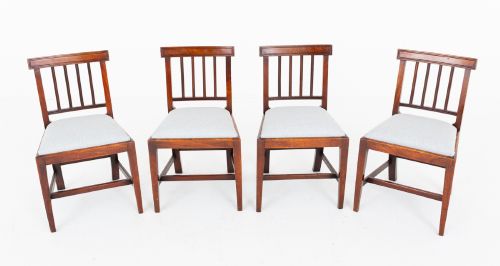
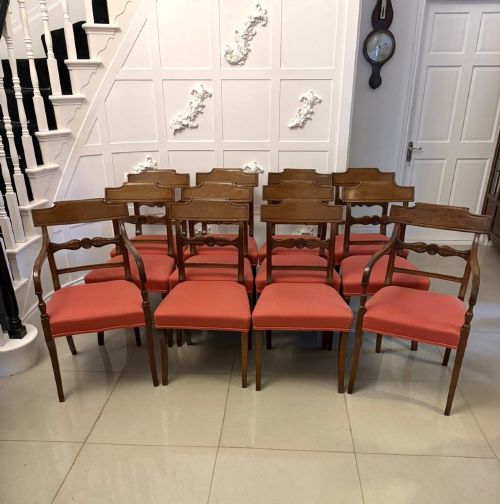
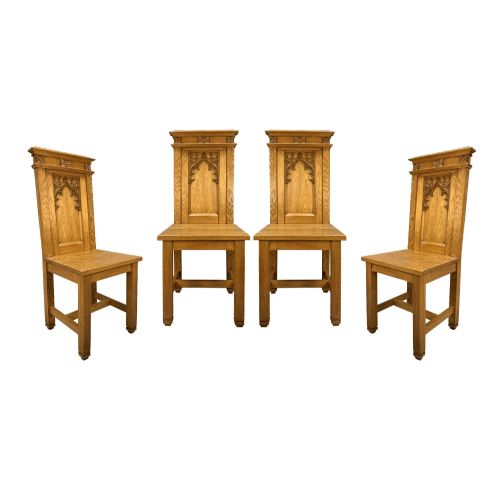
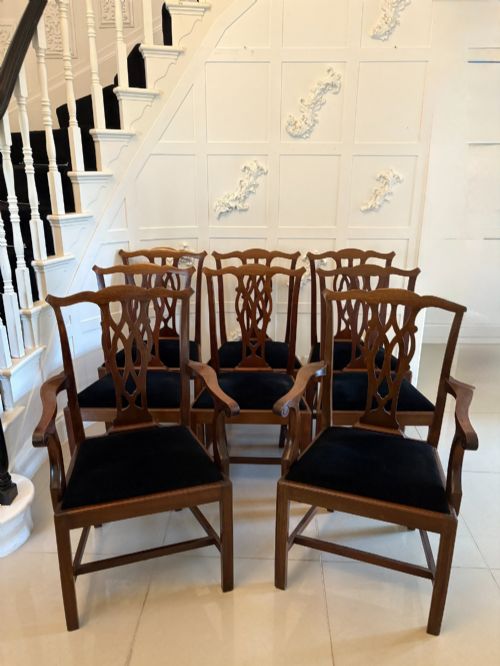
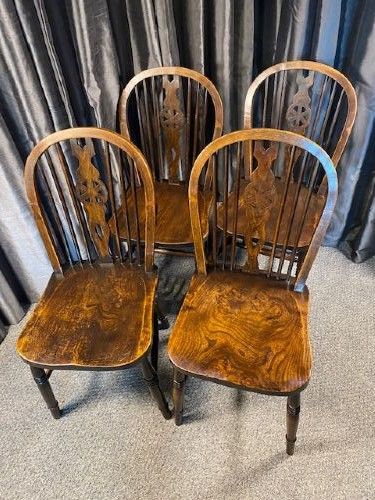
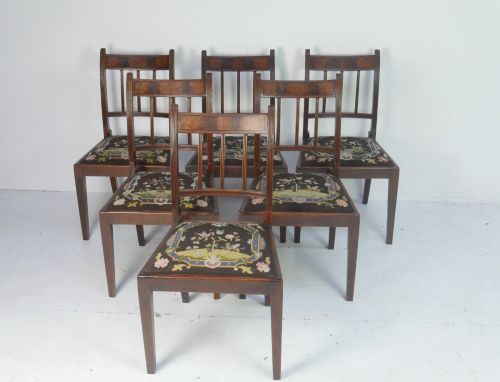
The forms range from simple kitchen chairs in elm and ash to elaborate sets of Regency dining chairs and Georgian window benches. Dining chairs and armchairs dominate the selection, often appearing in sets that span from four to twelve pieces.
Origins stretch from early English country workshops to refined urban cabinet makers, reflecting diverse aesthetic movements including Jacobean, Georgian, Regency, and Arts and Crafts styles.
Materials and construction
Makers relied heavily on native hardwoods such as oak, elm, ash, and fruitwood for earlier pieces, transitioning to mahogany as global trade routes expanded. These timbers provided the structural integrity required to support daily use over centuries.
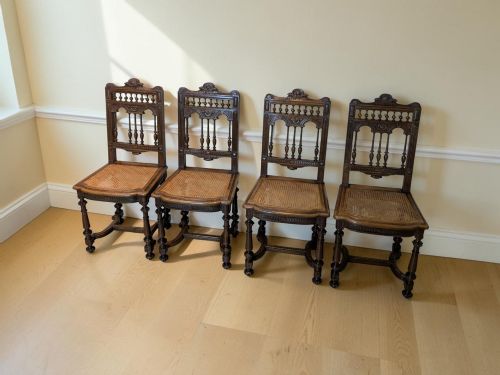
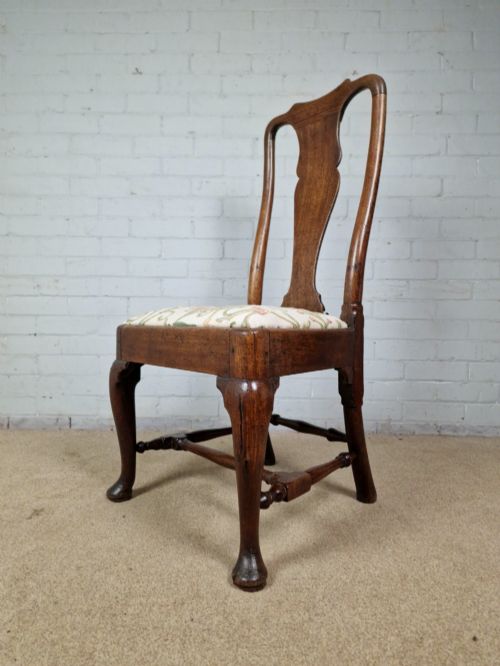
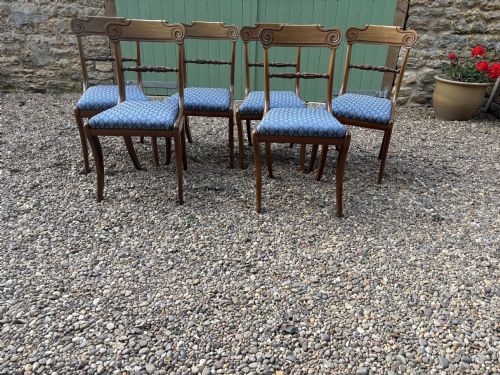
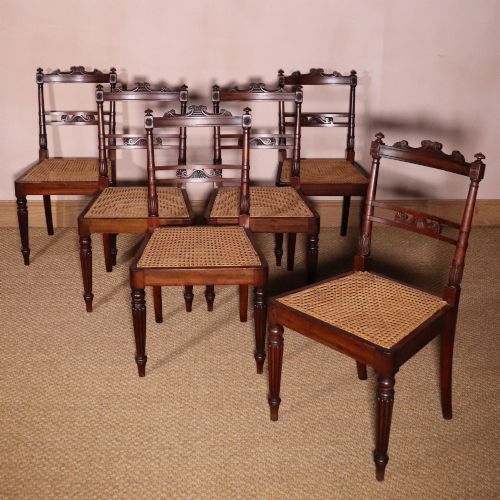
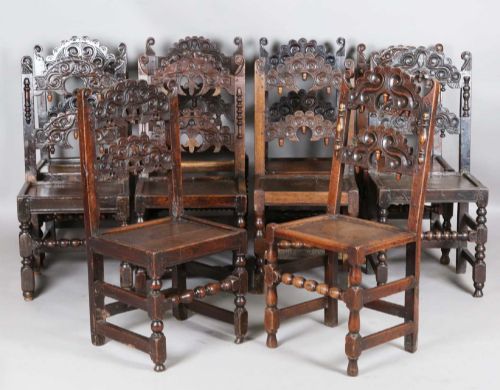
Construction techniques evolved from joined framework and pegged joints in seventeenth-century pieces to sophisticated turned components, curved splats, and sabre legs in later periods. Upholstery materials like fabric, velvet, and cane added comfort to wooden frames.
Joinery remained vital across all eras, whether securing a ladder-back armchair or constructing a large framed sofa.
Listings span from the seventeenth century through to the Edwardian era, featuring oak, mahogany, elm, ash, and fruitwood.
Gradations of quality
Quality in these pieces rests upon the selection of timber, the crispness of carved details, and the integrity of the original construction. Superior examples retain their original finish and structural timber without extensive replacement.
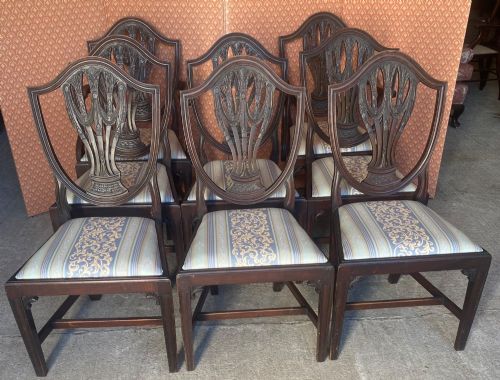
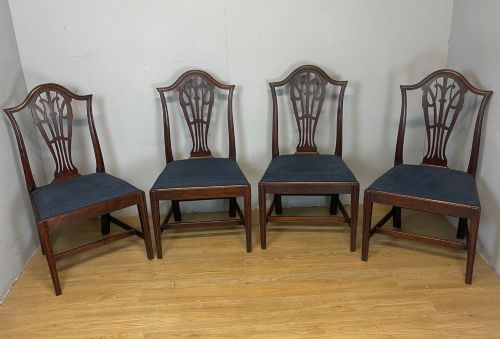
The cohesion of a set heavily influences its standing, as matching groups of eight or twelve dining chairs require uniform timber grain and consistent proportion across every single chair. Individual details like pierced splats, inlaid decoration, and well-executed sabre legs separate standard production from exceptional work.
Maple and Co
The Period Wooden Seating Glossary
- Splat
- The vertical central strip of wood in the back of a chair. It often takes a pierced or vase-shaped form in Georgian dining chairs.
- Carver
- An armchair designed to match a set of single dining chairs, typically placed at the head of a dining table.
- Wainscot
- A heavy wooden armchair from the seventeenth century, constructed with panelled backrests and solid wooden seats.
- Cane
- Woven rattan material utilised for seat pads, providing a resilient and flexible surface in Regency seating.
Period Wooden Seating: Frequently Asked Questions
How do I date a wooden chair?
Dating relies on examining the construction methods, timber choice, and stylistic cues present in the frame. Hand-cut joints, tool marks, and specific backrest shapes often point toward a particular century.
Later Victorian and Edwardian reproductions frequently mimic earlier Georgian or Jacobean styles, making wood maturity and wear patterns essential indicators of age.
Can I use antique dining chairs daily?
Most period dining chairs were built for daily utility using robust timbers like oak, mahogany, and elm. Regular use remains entirely appropriate provided the joints stay secure.
Routine inspection of the undercarriage and avoidance of excessive moisture help preserve the structural stability of older seating.
What is the difference between single chairs and carvers?
Single chairs are standard armless dining chairs made to fit compactly around a table in sets. Carvers are the matching armchairs typically positioned at the ends of the dining table.
Sets often combine a majority of single chairs with a pair of carvers for the hosts.
How do I care for antique wood?
Maintaining wooden seating involves keeping pieces away from direct heat sources and drastic humidity shifts that can cause timber to split. Gentle dusting with a dry cloth protects the finish.
Occasional application of appropriate wax nourishes the wood without building up heavy chemical residues.