





Period Wooden Elbow Chair
A period wooden elbow chair brings warmth and solid timber framing to a room, offering the structured comfort of arms alongside traditional craftsmanship.
Period Wooden Elbow Chair
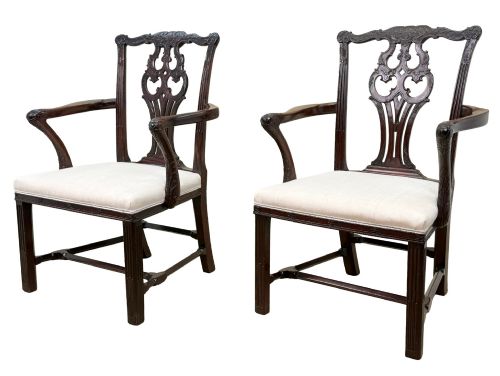
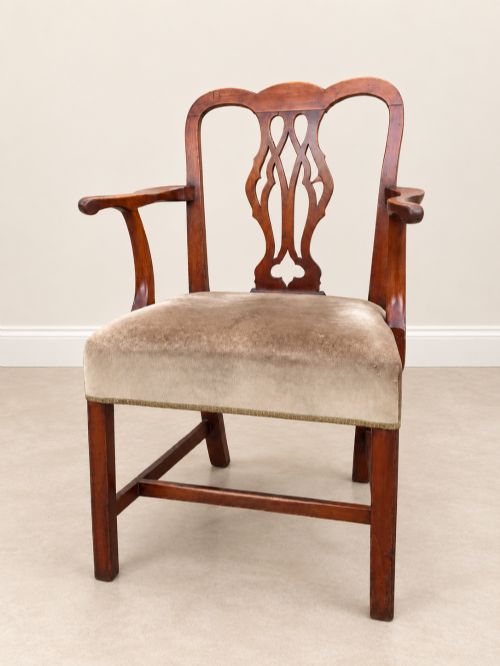
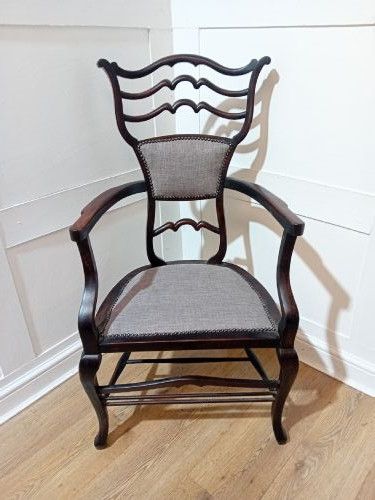
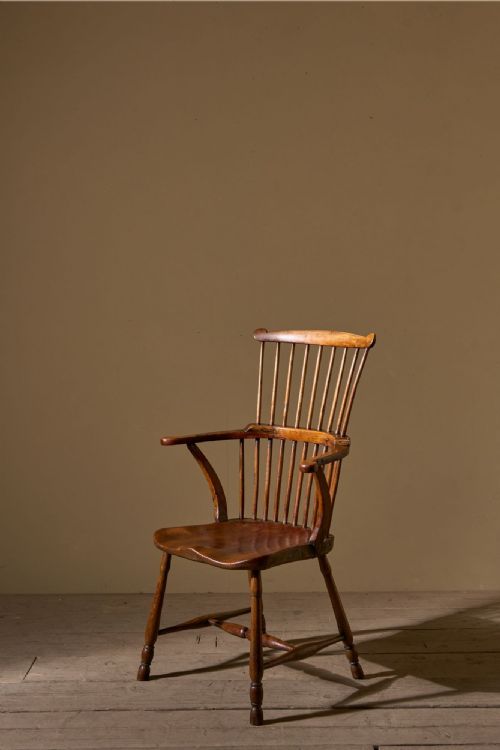
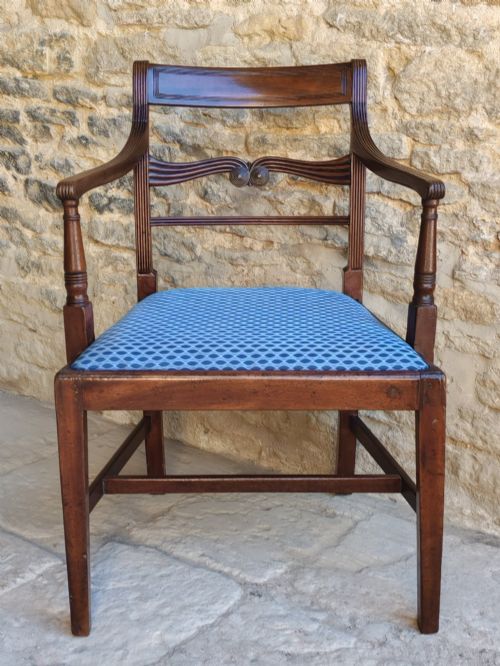
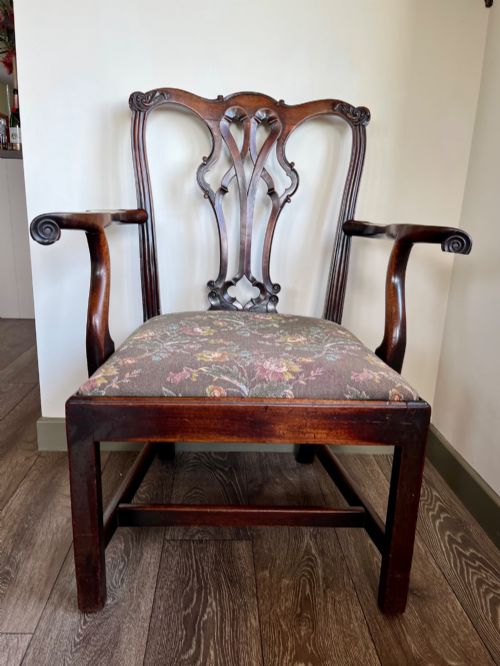
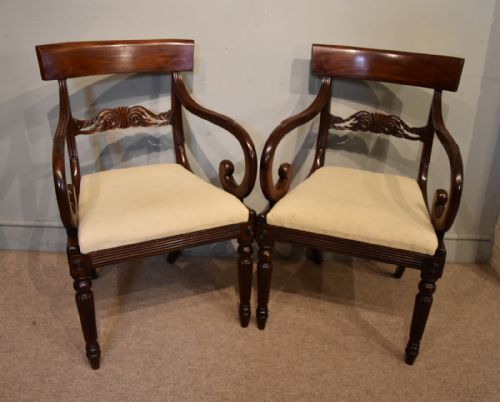
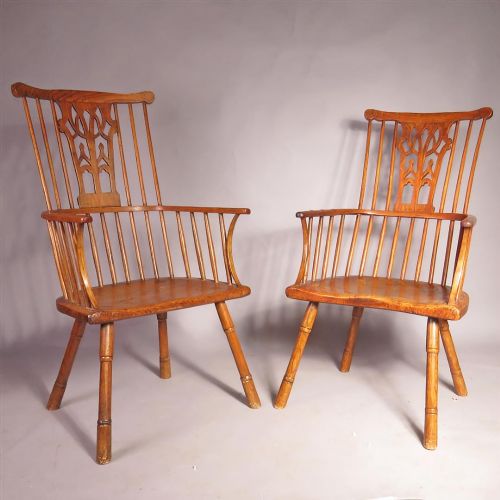
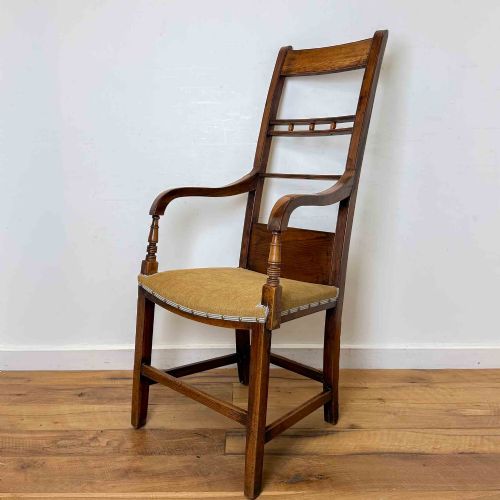
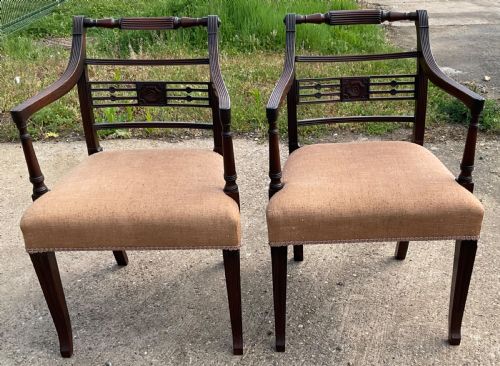
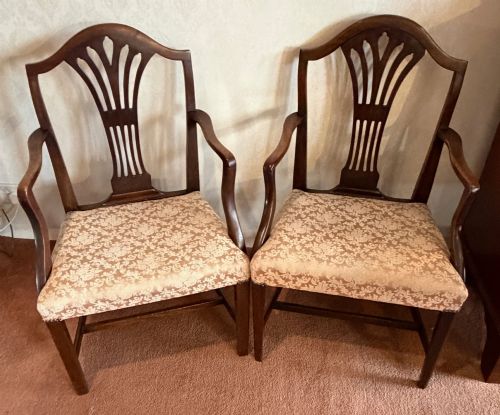
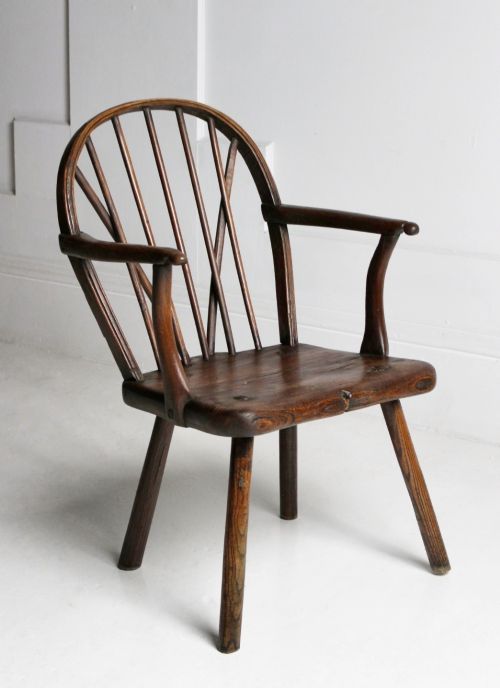
A period wooden elbow chair is fundamentally a seated piece fitted with arm rests, spanning formal urban workshop designs and sturdy regional vernacular forms. When searching for a period wooden elbow chair, buyers encounter everything from refined mahogany carvers to comb-back Windsor designs in ash and elm.
The selection ranges across several centuries, drawing heavily from Georgian, Regency, and eighteenth-century origins. Formal dining armchairs and desk chairs sit alongside country stick-backs and low children's seating.
How they were made
Cabinet makers and bodgers relied on a mix of dense hardwoods, turning to mahogany, oak, walnut, and fruitwood for formal frames, while combining ash and elm for resilient country windsor chairs. Seats often featured drop-in upholstery in fabric or textile, or utilised woven cane.
Joinery methods involved traditional mortise and tenon joints, steam-bending for curved components such as comb backs, and hand-carved detailing on splats and legs.
Period Wooden Elbow Chair Retail Price Guide 2026
Typical asking prices for period wooden elbow chair among the pieces listed under this phrase on Sellingantiques today, from the lower quarter to the upper quarter. They describe what is for sale here now, not the wider market.
Several miniature chairs wait patiently on the sidelines, built small for children or perhaps as an apprentice's masterwork.
What varies in quality
The distinction between ordinary examples and exceptional pieces rests in timber selection, the crispness of carved details like mahogany splats or scroll arms, and the integrity of the original construction. Regional vernacular chairs derive their merit from honest country building methods and timber patination, whereas formal urban pieces depend on balanced proportions and precise joinery.
Retaining original surfaces, integrated timber components, and period upholstery supports distinguish museum-worthy examples from heavily restored specimens.
Robert Manwaring
The Period Wooden Elbow Chair Glossary
- Carver chair
- A term for an armchair, often matching a set of single dining chairs, designed with elbow supports for the head of a table.
- Comb back
- A Windsor chair variation where the vertical spindles of the back extend upward into a horizontal crest rail resembling a hair comb.
- Sabre leg
- A concave sweeping leg that tapers toward the foot, frequently seen on Regency period seating.
- Drop-in seat
- A removable wooden frame upholstered in fabric or textile that rests inside a recess on the chair seat rails.
Period Wooden Elbow Chair: Frequently Asked Questions
What is an elbow chair?
An elbow chair is simply a chair fitted with arms, historically used at the head of a dining table or as a desk seat.
These pieces provide structural support for the arms while maintaining a compact footprint compared to a deep armchair.
Where were Windsor chairs made?
Windsor chairs originated in rural workshops, particularly in regions with abundant supplies of ash, elm, and fruitwood.
Country bodgers shaped the components locally before assembling sturdy stick-back and comb-back seating for domestic use.
Can I use an antique carver at a desk?
Many period carver chairs and desk chairs offer the correct height and arm clearance for writing tables.
Selecting a piece with comfortable elbow clearance ensures it functions practically for daily seating needs.