



Period Wardrobe Furniture
Period wardrobe furniture brings historic craftsmanship into modern rooms, offering substantial storage built from rich timbers like mahogany and oak.
Period Wardrobe Furniture
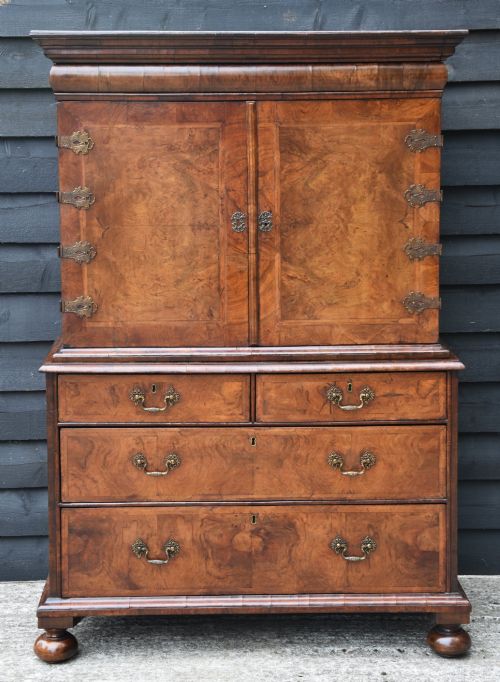
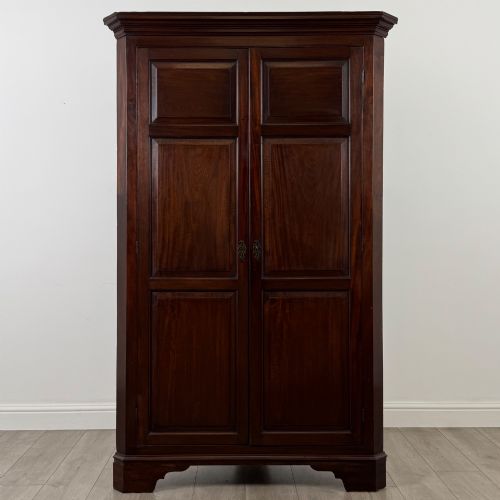
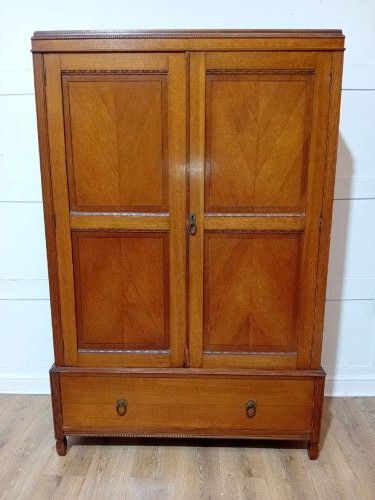
Period wardrobe furniture encompasses substantial storage pieces from the seventeenth to the nineteenth centuries, spanning eras like the Georgian and Regency periods. Buyers examining this category encounter large cupboards, linen presses, corner cabinets, and gentleman's hanging wardrobes designed for domestic utility.
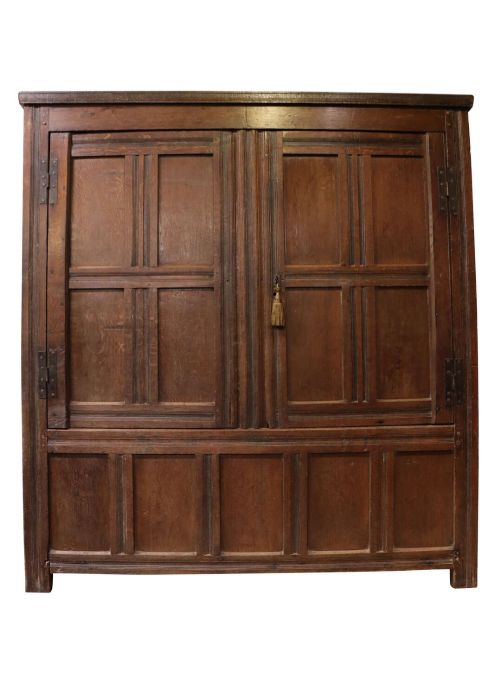
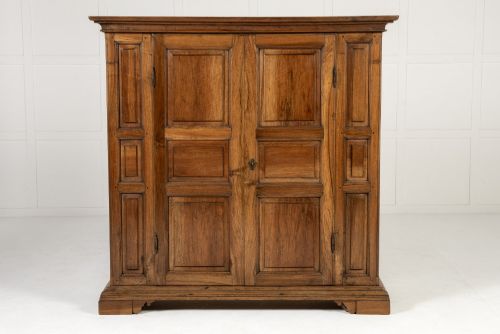
The objects listed on this page range from early seventeenth-century panelled oak vestment cupboards to nineteenth-century mahogany linen presses and compactum designs. Oak and mahogany dominate the selection, appearing alongside walnut and painted wood surfaces.
Forms vary from straightforward corner cabinets to complex cabinets on chest configurations and three-quarter height double wardrobes. Each piece reflects the functional storage needs of its respective period, from country houses to urban town residences.
Materials and construction methods
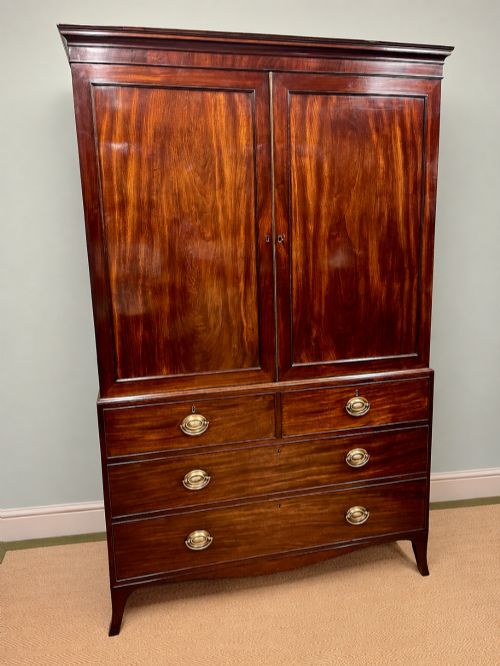
Cabinet makers utilised dense hardwoods, predominantly selecting figured mahogany and solid oak for structural integrity and visual depth. Flame mahogany veneers add distinctive grain patterns to later Regency and George III examples, while earlier seventeenth-century pieces rely on heavy oak panels.
Metal hardware, including brass handles and escutcheons, provides functional and decorative accents across Georgian and Regency items. Iron components appear in structural fastenings and hinges, concealed within the heavier framework of seventeenth-century cupboards.
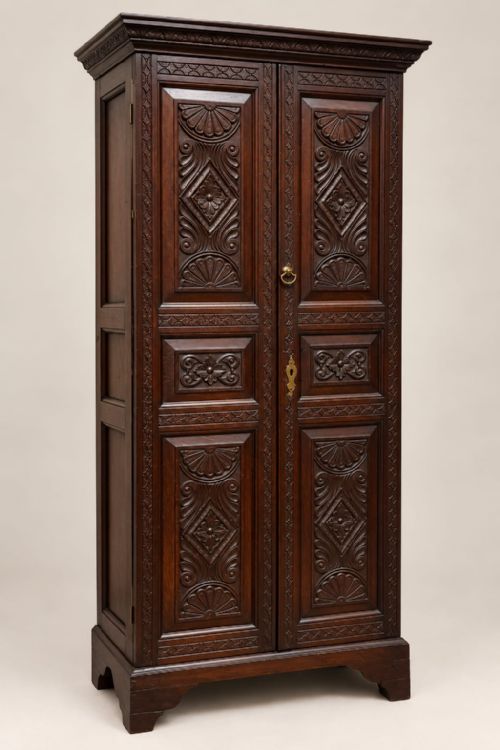
Joinery techniques involve traditional framing and panelling, allowing timber to move naturally across seasons without splitting. Carved ornamentation is applied directly to solid wood surfaces, as seen on George III oak cupboards and Italian Baroque walnut cabinets.
Period Wardrobe Furniture Retail Price Guide 2026
Typical asking prices for period wardrobe furniture among the pieces listed under this phrase on Sellingantiques today, from the lower quarter to the upper quarter. They describe what is for sale here now, not the wider market.
Housekeeper's cupboards retain the quiet witness of domestic life, built large enough to store household provisions and linens for an entire country estate.
Assessing quality in historical storage
Quality depends upon the selection of timber, visible in the matching of mahogany veneers and the soundness of structural oak timbers. Superior examples maintain original surface patination, reflecting decades of careful maintenance rather than modern refinishing.
The precision of joinery and the integration of internal fittings, such as sliding linen trays within presses or hanging rails in gentleman's wardrobes, indicate the original maker's skill. Carved details and moulded cornices show sharper execution on finer pieces compared to utilitarian items.
Harris Lebus
The Period Wardrobe Furniture Glossary
- Linen press
- A tall cupboard featuring upper doors enclosing sliding trays for folded textiles, placed above a base fitted with drawers. This form was essential for storing household linens before the widespread use of dedicated wardrobes.
- Gentleman's wardrobe
- A specialised storage piece designed for men's attire, typically combining hanging space with shallow drawers for accessories. These items often date from the Georgian and Regency periods.
- Compactum
- A multi-functional fitted wardrobe combining hanging sections, shelves, and drawers within a single unified carcass. This form became prominent around the turn of the twentieth century.
- Bracket feet
- Simple, architectural feet projecting from the lower corners of a cabinet, providing a stable platform raised slightly off the floor. They are common on eighteenth-century Georgian case pieces.
- Flame mahogany
- A veneer cut from the branch junction of a mahogany tree, producing a dramatic, flickering flame-like pattern across the front of drawers and doors.
Period Wardrobe Furniture: Frequently Asked Questions
What is a linen press?
A linen press is a tall storage cabinet designed primarily to hold folded household textiles on internal sliding trays, usually positioned above a base section with drawers.
These pieces served a central role in domestic organisation during the eighteenth and nineteenth centuries before hanging garments became the primary mode of clothing storage.
How do I date a Georgian wardrobe?
Dating a Georgian piece involves examining the secondary timbers used inside drawers, the style of the bracket or plinth feet, and the construction methods of the carcass.
Stylistic shifts from early eighteenth-century plain oak panels to later refined mahogany veneers and classical bracket feet help narrow the period of manufacture.
Where should I place a large cupboard?
Large period cupboards and wardrobes require walls with sufficient depth and stability to support substantial timber constructions without obstructing room flow.
Placing them away from direct heat sources and strong sunlight protects the antique wood and historic veneer surfaces from drying out or fading.
What distinguishes a compactum?
A compactum is a multi-compartment wardrobe that integrates hanging space, shelving, and internal drawer units into one efficient piece of furniture.
This form emerged later than standard linen presses, offering comprehensive storage solutions for varied wardrobes around the turn of the twentieth century.