

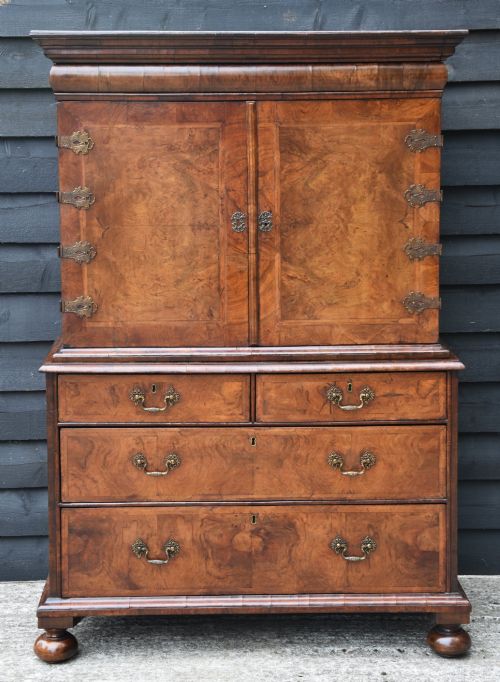
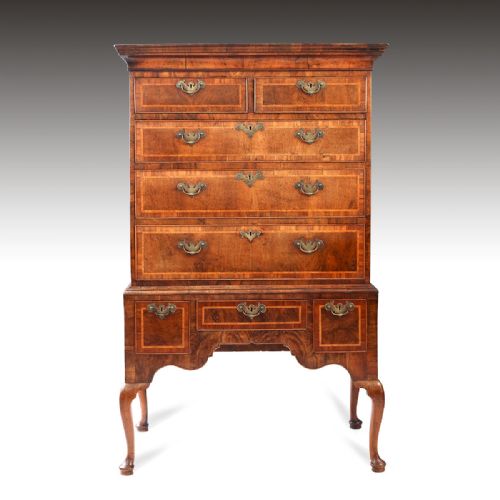
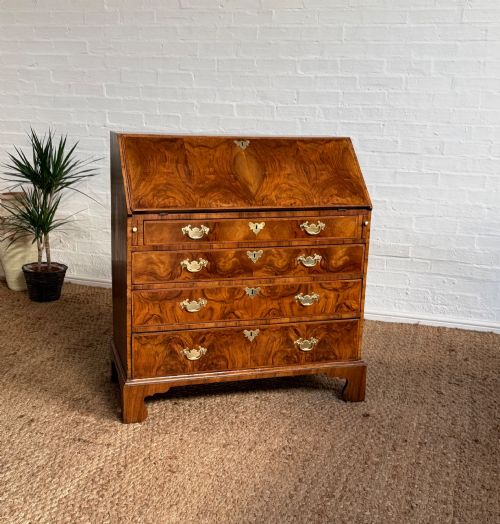
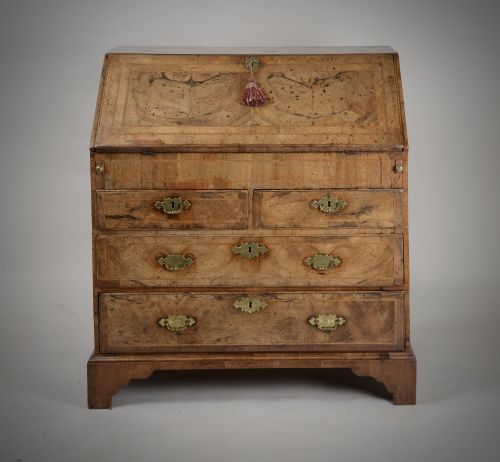


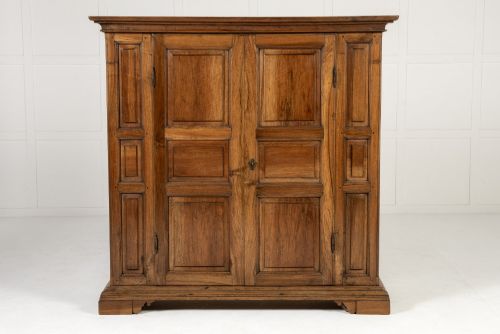

Period Walnut Cabinet
A period walnut cabinet brings rich grain, deep warmth and architectural presence to a room, ranging from small chests on stands to grand bureau bookcases.
Period Walnut Cabinet
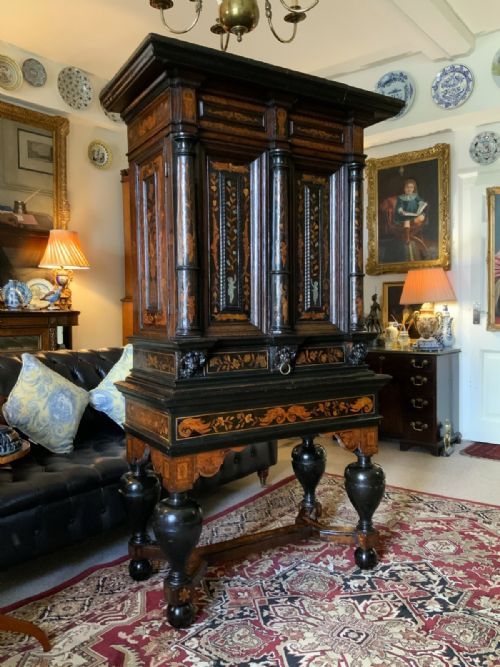
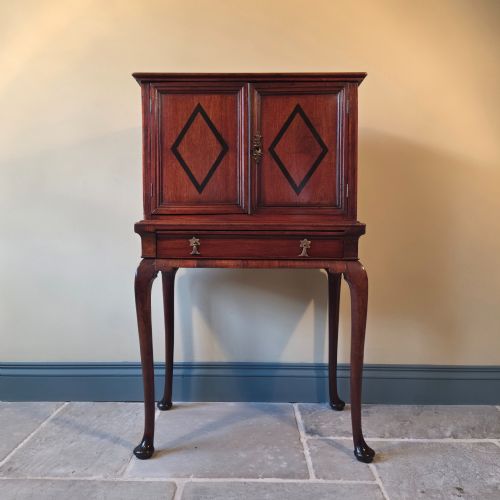
A period walnut cabinet encompasses a diverse group of case furniture built across the seventeenth, eighteenth and nineteenth centuries, including bureaux, escritoires and cabinets on stands. These forms reflect changing domestic needs, shifting from functional storage to sophisticated display and writing spaces.
The versions most commonly met on this page date from the William and Mary, Queen Anne and George periods. They span distinct regional traditions across England, France, Italy, Holland and Malta, each employing local cabinet-making techniques.
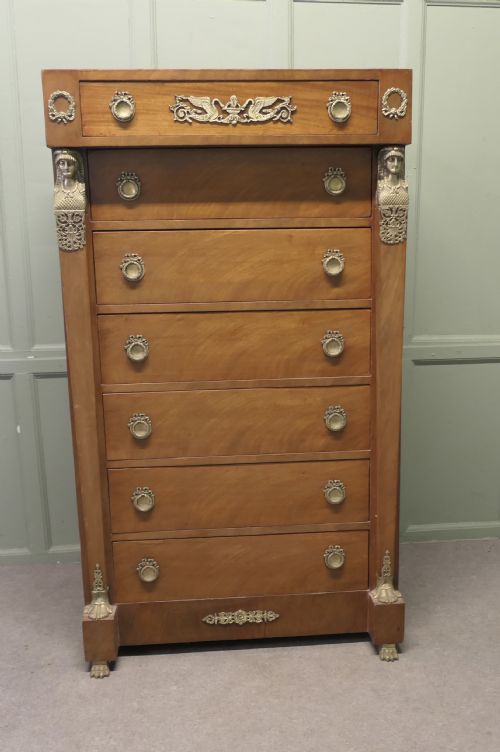
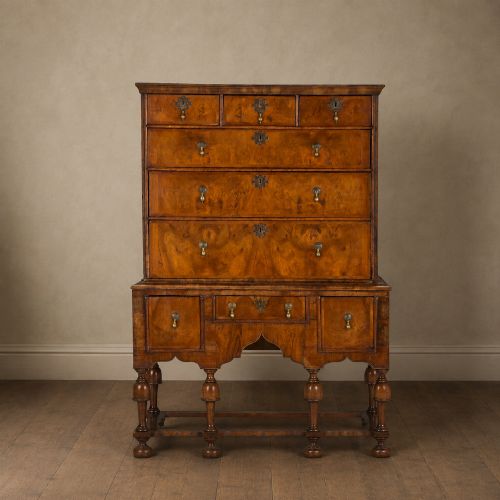
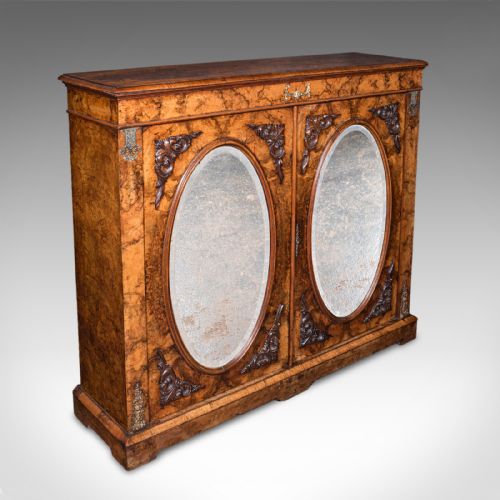
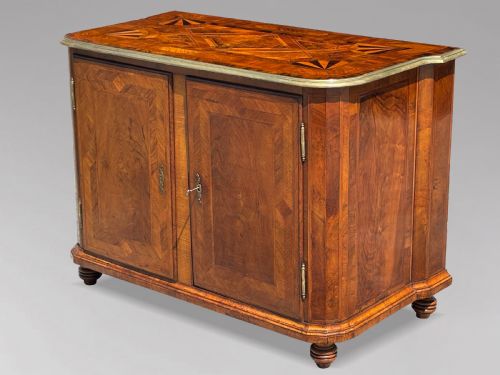
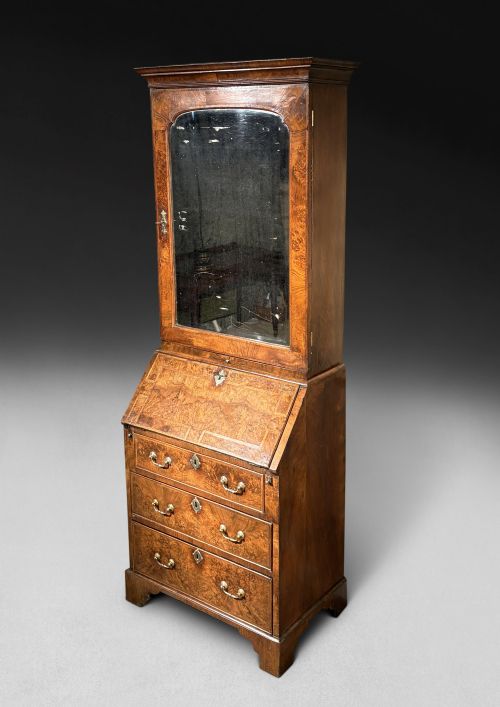
Forms vary significantly, from tall bureau bookcases and chests of drawers to specialised pieces like the Davenport desk, corner cupboards and credenzas. Each object reveals the structural priorities of its era, whether raised on slender stands or anchored by substantial bracket feet.
How they were made
Cabinet-makers relied on solid structural timbers like oak, applying figured walnut, burr walnut or oyster veneers across the primary exterior surfaces. Crossbanding and stringing in contrasting woods such as boxwood defined panels and borders.
Decoration relied on skilled grain matching, marquetry inlay, pewter inlay and ormolu mounts, depending on the prevailing style. Drawer interiors utilised secondary woods and traditional dovetail joinery to ensure durability.
Fittings incorporated brass handles, escutcheons, leather writing surfaces, glass doors and intricate internal pigeonholes. Structural support was provided by stands with turned legs, stretchers or bracket feet.
Period Walnut Cabinet Retail Price Guide 2026
Typical asking prices for period walnut cabinet among the pieces listed under this phrase on Sellingantiques today, from the lower quarter to the upper quarter. They describe what is for sale here now, not the wider market.
Listings feature walnut combined with oak, brass, glass, leather, boxwood and ormolu across multiple centuries.
What varies in quality
Quality rests upon the selection and preservation of the timber, particularly the choice of figured or burr walnut veneers. Superior examples display thoughtful grain matching across drawer fronts and harmonious patination developed over centuries.
The refinement of the joinery and the integrity of the secondary timbers dictate the structural standard of the piece. Crispness in marquetry, delicate inlay and original brass hardware elevate the status of a cabinet.
Proportion and architectural balance separate master workshops from provincial joinery. The survival of original fittings, stands and internal configurations determines the historical integrity of the piece.
Gillows
The Period Walnut Cabinet Glossary
- Cabinet on stand
- A form comprising an upper storage section raised upon a separate supporting frame with legs. This configuration was particularly popular during the late seventeenth century.
- Bureau bookcase
- A writing cabinet featuring a sloping fall-front desk compartment combined with upper shelving enclosed by doors. These pieces often incorporate numerous internal drawers and pigeonholes.
- Oyster veneer
- Circular sections sliced across small branches or roots to create repeating patterns resembling oyster shells. This technique is characteristic of late seventeenth-century cabinet-making.
- Escritoire
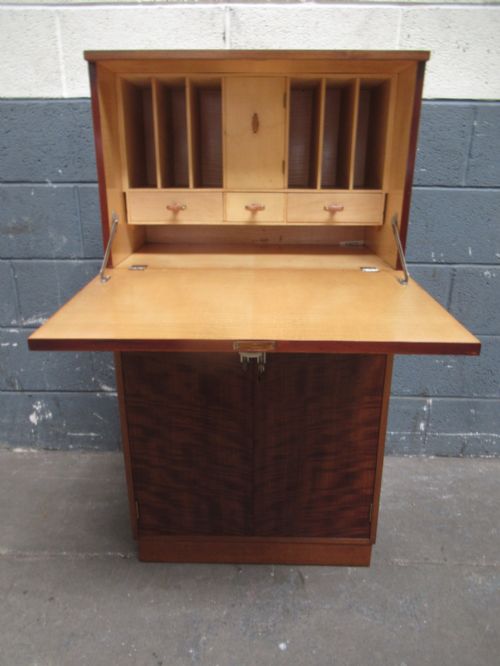
- A drop-front writing cabinet designed for correspondence and document storage. The falling front conceals a fitted interior of small compartments.
- Marquetry
- Decorative patterns formed by the insertion of contrasting wood veneers into a prepared background. Dutch and English makers utilised this technique to create elaborate floral or geometric designs.
- Crossbanding
- A veneer border applied perpendicularly to the surrounding grain to frame a panel. It provides a distinct visual boundary on drawer fronts and table tops.
Period Walnut Cabinet: Frequently Asked Questions
What is a walnut cabinet on stand?
A cabinet on stand is a distinct form where a primary storage chest or cabinet sits elevated upon a separate wooden frame with legs and stretchers. This design lifted precious storage off damp floors and provided an imposing architectural silhouette.
Such pieces date predominantly to the late seventeenth and early eighteenth centuries, reflecting the height of marquetry and oyster veneering techniques. They served both functional storage needs and as status symbols in wealthy homes.
How do I identify a Queen Anne walnut piece?
Queen Anne period furniture is characterised by clean, restrained lines that emphasise the natural beauty of figured walnut grain rather than heavy carving. You will frequently encounter cabriole legs, pad feet, and double-dome or flat-top bureau bookcases.
These pieces typically date from the turn of the eighteenth century, showing a transition towards greater comfort and domestic intimacy. Hardware became more refined, often featuring batwing brass drawer pulls and escutcheons.
Where were these cabinets placed in a home?
These cabinets occupied principal reception rooms, morning rooms, private studies and bedchambers where owners managed correspondence or displayed prized possessions. Bureau bookcases and escritoires functioned as private writing desks in administrative spaces.
Smaller pieces like cabinets on stands or corner cupboards made efficient use of parlour space while providing secure storage for linens, papers or tableware.
How should I care for antique walnut furniture?
Antique walnut requires stable environmental conditions away from direct sunlight and rapid temperature fluctuations to prevent timber movement and veneer lifting. Maintaining consistent indoor humidity helps preserve the structural integrity of the old woods and glue.
Periodic application of appropriate wax polish feeds the finish and maintains the historic patina. Avoid modern silicone sprays or excessive moisture during routine dusting.