

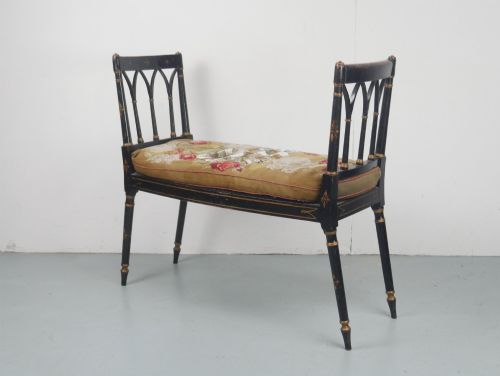
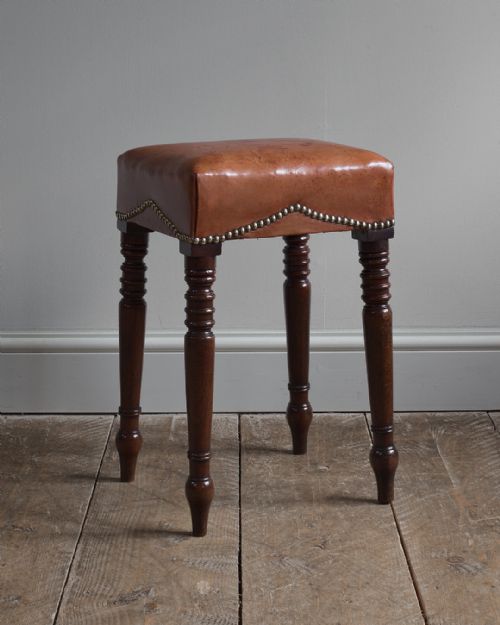
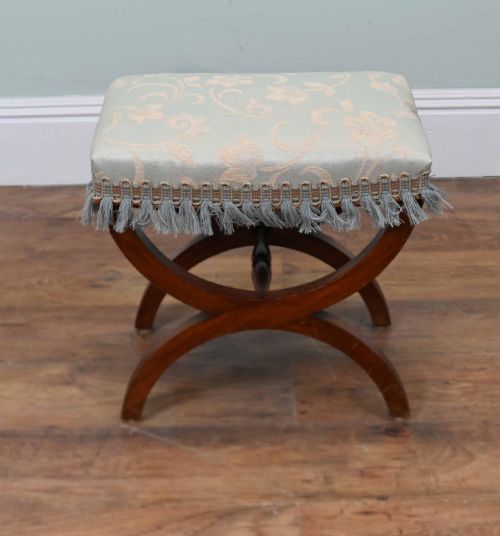
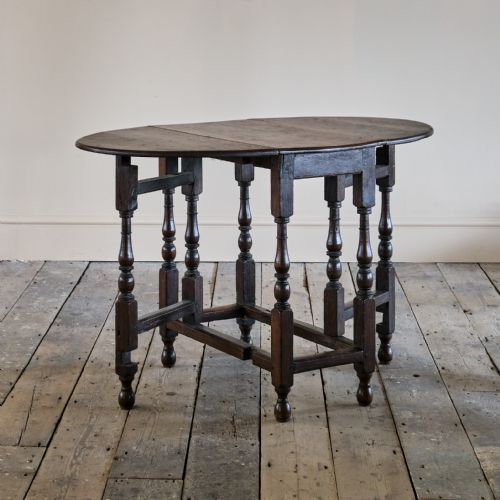
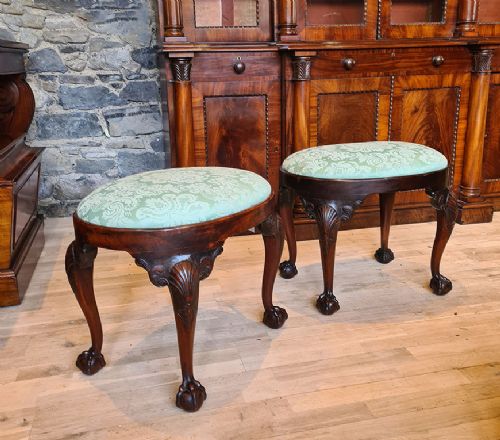


Period Style Stool
These period style stool examples span centuries of seating, offering authentic traditional design for any interior.
Period Style Stool
A period style stool encompasses diverse historic seating forms, from sturdy oak joint stools to upholstered window seats and ottomans. When you search for a period style stool, you encounter pieces spanning from the seventeenth century through to the early twentieth century.
Forms range from simple boarded and trestle structures to carved rectangular frames and oval shapes. These seats function practically as occasional seating or footstools while carrying distinct historical character into a room.
Materials and Construction
Makers utilised solid native hardwoods, principally oak, mahogany, and walnut, building robust frames designed for daily domestic use. Joinery techniques such as mortise and tenon joints define the construction of early wooden joint stools.
Upholstered variants incorporate traditional stuffing materials covered in durable textiles including leather, tapestry, and woven fabrics. Carved ornamentation adorns wooden frames, utilising techniques like chip carving and moulding to emulate specific historical eras.
Period Style Stool Retail Price Guide 2026
Typical asking prices for period style stool among the pieces listed under this phrase on Sellingantiques today, from the lower quarter to the upper quarter. They describe what is for sale here now, not the wider market.
Listings feature timbers such as oak, mahogany, walnut, and hardwood, alongside fabric, leather, and tapestry upholstery.
Assessing Quality and Character
Quality in these pieces rests upon the integrity of the timber and the crispness of any hand-carved detailing. Superior examples exhibit harmonious proportions and honest construction that reflect the period aesthetic they emulate.
The handling of materials distinguishes standard workshop output from finer artisan production, particularly in the precision of joints and the depth of surface patination accumulated over time.
The Period Style Stool Glossary
- Joint stool
- A traditional wooden stool constructed with pegged mortise and tenon joints rather than turned legs alone. These sturdy seats date back to the sixteenth and seventeenth centuries.
- Jacobean
- A design style spanning the reign of James I, characterised by heavy proportions, dark oak timber, and geometric carved decoration. Revival pieces borrow these distinct motifs.
- Gateleg table
- A folding table featuring hinged flaps supported by swing legs, appearing alongside stools in early timber furniture categories. It shares construction methods with joint stools.
- Ottoman
- A low upholstered seat or footstool without arms or a back, frequently associated with Regency and nineteenth-century interior schemes. They provide versatile seating and support.
- Patina
- The surface sheen and mellowing of colour developed on wood and leather through decades of handling and exposure. It indicates age and use.
Period Style Stool: Frequently Asked Questions
What is a joint stool?
A joint stool is a sturdy wooden seat made with pegged joints rather than turned legs, common in seventeenth-century interiors.
These pieces were originally used for seating at the table or as occasional stands before upholstered furniture became widespread.
How do I date a wooden stool?
Dating relies on examining the timber species, construction marks, tool methods, and the style of any carved ornamentation.
Earlier pieces show hand-tooling and pegged joinery, while revival pieces from later centuries often incorporate machine-cut components or mixed construction.
Where should I place a window stool?
A window stool or ottoman suits hallways, bedrooms, or living spaces where low seating is useful without blocking light.
Upholstered versions pair well with historic textile accents and provide functional spots for resting.
What is the difference between oak and mahogany stools?
Oak stools generally align with earlier seventeenth-century forms and heavy Jacobean revival styles, emphasising structural joinery.
Mahogany and walnut stools typically reflect eighteenth-century Georgian or Regency aesthetics, featuring finer carved details and upholstered tops.