
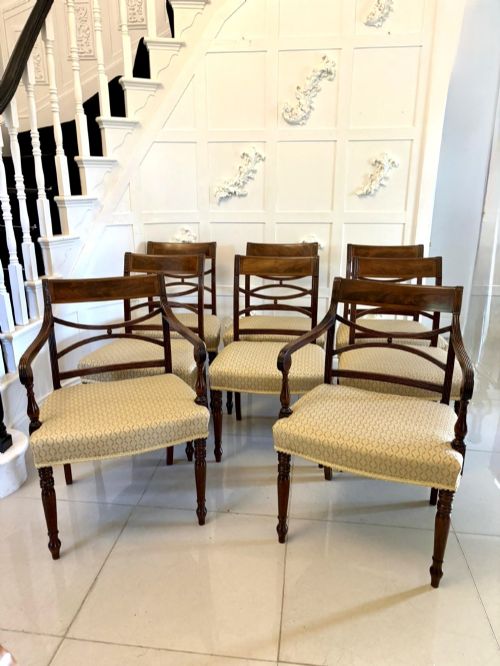
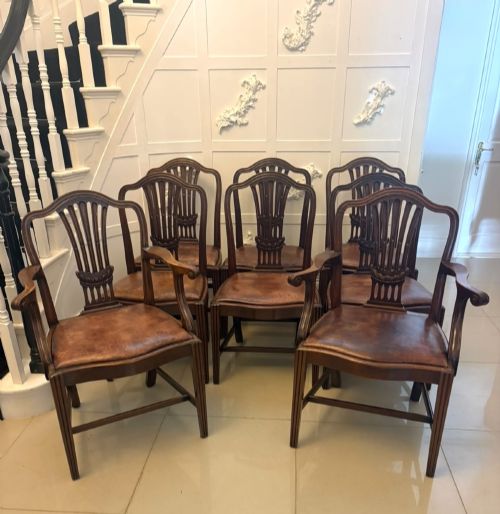
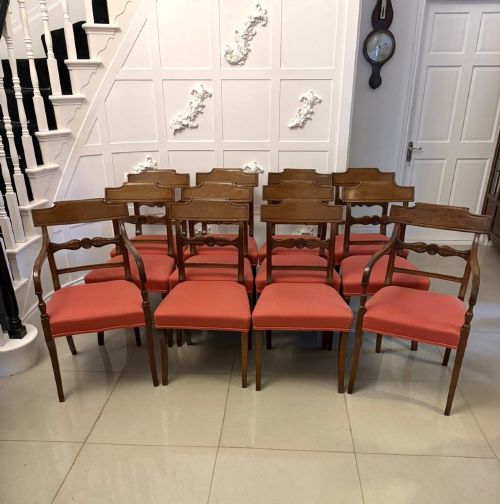
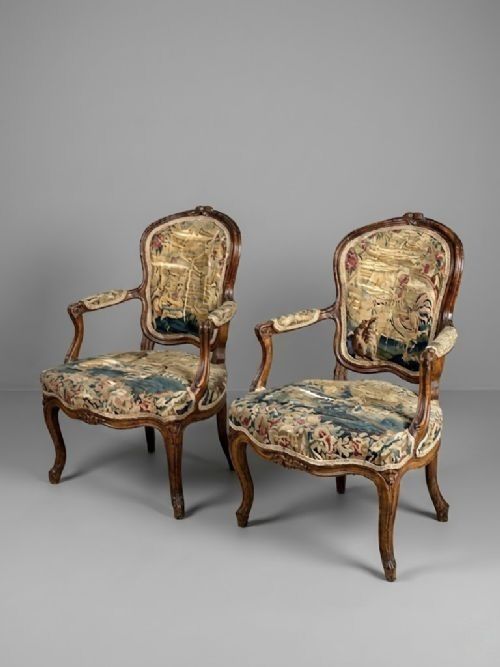
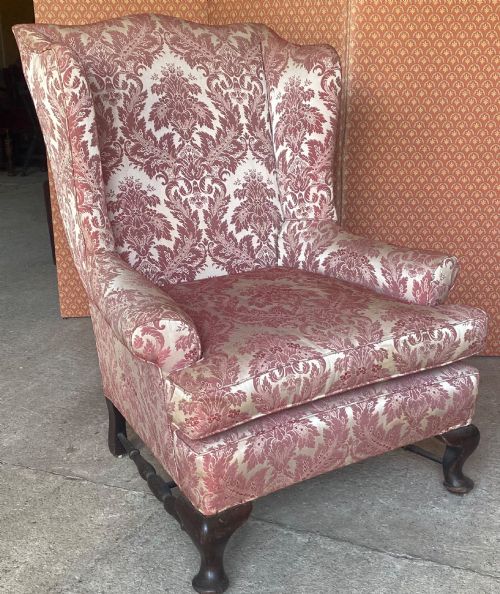
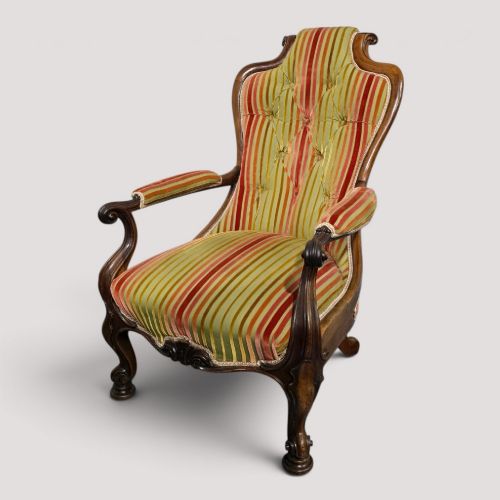
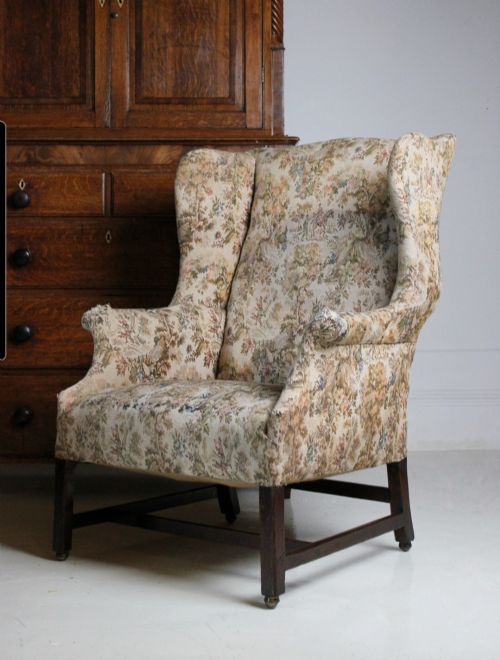
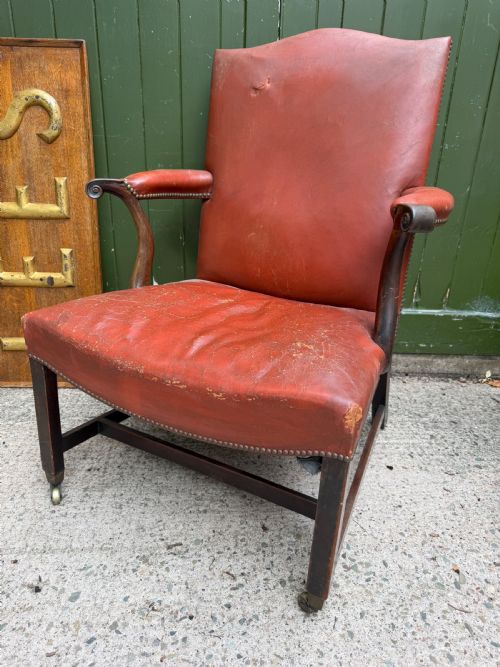
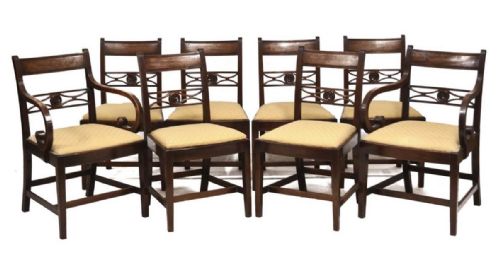
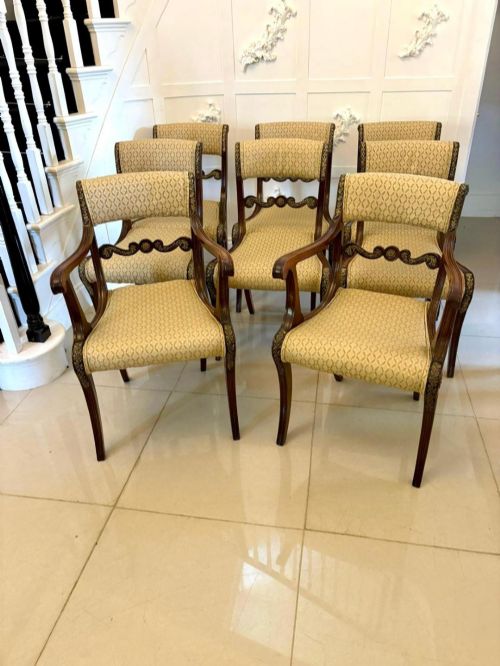

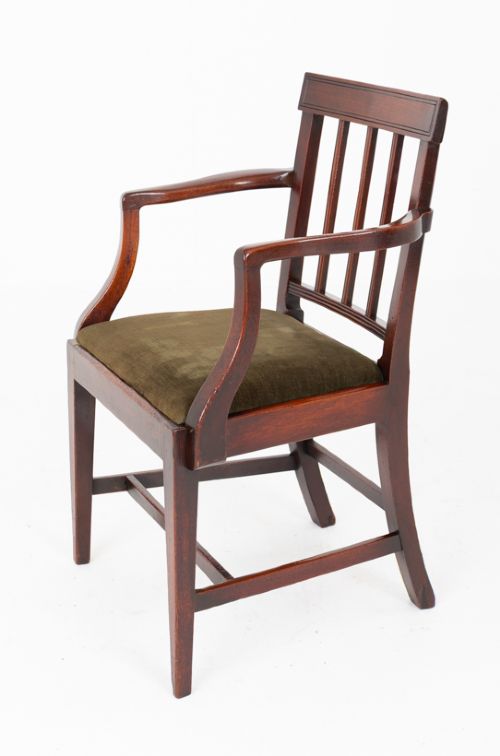
Period Style Armchair
A period style armchair brings historic design into a modern room, offering deep comfort alongside centuries of craftsmanship.
Period Style Armchair
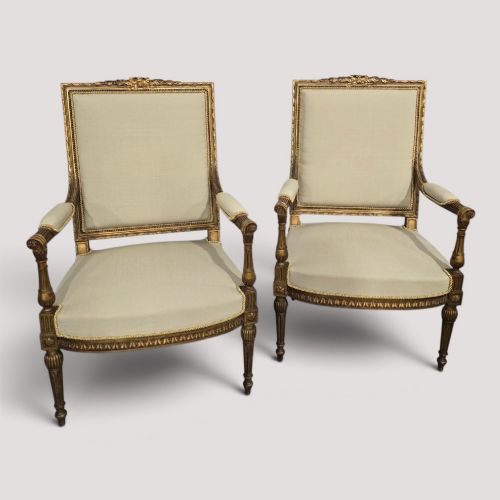
A period style armchair encompasses seating built to replicate or echo historical aesthetics, ranging from Georgian and Regency forms to French Chateau and Louis styles. Buyers searching for a period style armchair seek seating that anchors a room with traditional wood frames and heritage silhouettes.
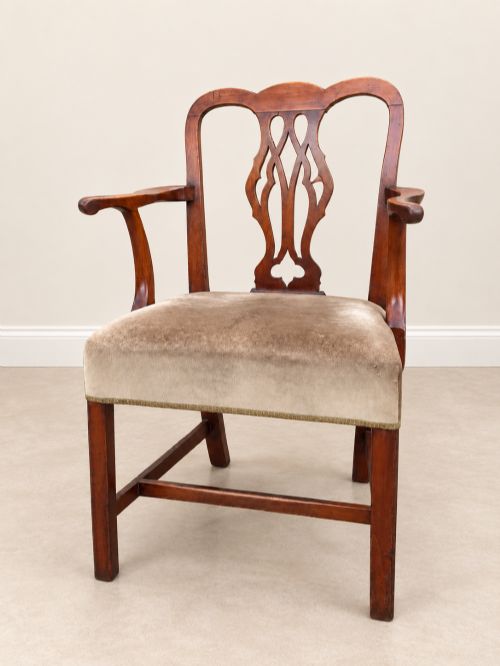
The selections available here lean heavily toward mahogany, walnut, and giltwood frameworks paired with upholstery fabric, leather, silk, or cane panels. Many examples draw directly on George III, Sheraton, and Victorian design vocabulary.
Origin points vary between English cabinet makers and continental European workshops, creating a diverse landscape of open armchairs, library chairs, and high-backed carvers. These pieces function as standalone focal points or complement existing antique dining and salon suites.
How they were made
Makers shaped structural elements from dense hardwoods like mahogany, walnut, oak, and maple, often applying giltwood or parcel gilt finishes to formal French chairs. Joinery relied on traditional mortise and tenon techniques to support upright frames and weight-bearing arms.
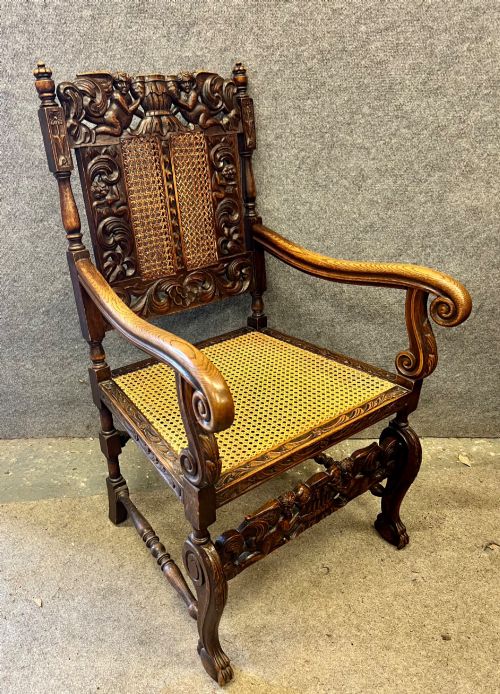
Upholstery methods utilised heavy textile coverings, including wool, tapestry, silk, velvet, and tan leather, frequently secured over cane panels or sprung interiors. Carving work on rails, splats, and cabriole legs was executed by hand using gouges and chisels to achieve motifs like shield backs and scroll terminals.
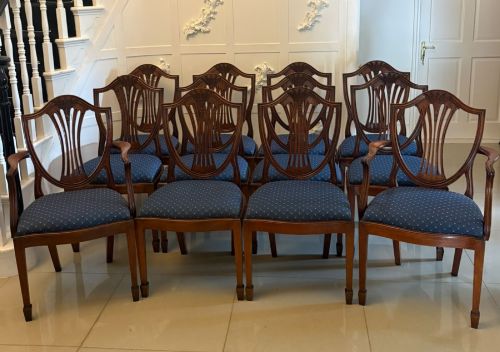
Several armchairs arrive accompanied by matching cohorts of up to twelve dining chairs, ensuring no single seat feels lonely at the table.
What varies in quality
The standard of carving determines much of the visual hierarchy, with crisply defined acanthus leaves, fluting, and moulding separating superior work from softer, mass-produced detailing. Timber selection also dictates grade, where dense-grained mahogany or figured walnut displays richer natural depth under the finish.
Integrity of construction shows in the rigidity of the joints and the preservation of original elements like cane inserts, gilding, and leather upholstery. Pieces retaining their historical textile coverings or patinated timber surfaces command greater appreciation among collectors.
Maple and Co·Jacob Desmalter·Alfred Allen of Birmingham·Gillows
The Period Style Armchair Glossary
- Carver chair
- An armchair designed with open sides to accommodate wider clothing, frequently produced as part of a larger set of dining chairs.
- Bergère
- An enclosed upholstered armchair with solid wooden sides and a built-in upholstered back, originating in France.
- Fauteuil
- An open-arm armchair with an exposed wooden frame, typically carved and gilded, stemming from French design traditions.
- Shield back
- A chair back shaped like a heraldic shield, popularized during the late eighteenth century by designers such as Hepplewhite and Sheraton.
- Wainscot armchair
- A heavy wooden chair constructed with panelled backboards, commonly associated with seventeenth-century English interiors.
Period Style Armchair: Frequently Asked Questions
What defines a carver chair?
A carver chair is an armchair built with open sides, traditionally placed at the heads of dining tables to match a set of single chairs.
These pieces allowed individuals wearing bulky historical garments to sit comfortably without restriction from enclosed armrests.
How do I identify French salon chairs?
French salon chairs typically exhibit exposed giltwood or painted frames, cabriole legs, and elaborate carved floral or scroll motifs along the crest rail.
Styles such as Louis XV and Louis XVI emphasise sweeping curves or neoclassical symmetry paired with fine tapestry, silk, or cane upholstery.
Where should I place a library armchair?
A library armchair suits studies, living rooms, or reading corners where its substantial wooden frame and upholstered back provide firm support.
Pairing the chair with a low reading table or placing it near a bookshelf highlights its heritage proportions and leather or fabric finish.
How do mahogany and walnut differ in these chairs?
Mahogany offers a dense, reddish-brown grain that takes sharp carving details well, making it a staple of Georgian and Regency dining sets.
Walnut presents a warmer, highly figured pattern often utilised in earlier decorative frames and continental seating designs.