



Period Study Furniture
Period study furniture brings tangible history into a working room, offering the desks, tables and armchairs that writers and scholars relied upon.
Period Study Furniture
When you search for period study furniture, you encounter the desks, writing tables, bureaus and armchairs that served libraries and studies from the eighteenth century into the twentieth century. These pieces reflect the functional needs of writers, scholars and administrators across successive historical eras.
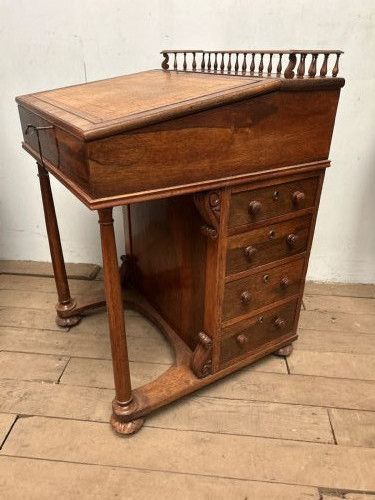
On this page, you are most likely to meet mahogany, walnut and rosewood desks originating from the Georgian, Regency and Victorian periods. Forms range from compact Davenport desks and lady's writing tables to substantial partners desks and library tables.
Materials and construction
Cabinetmakers utilised dense hardwoods such as mahogany, oak and walnut, frequently selecting figured veneers like burr oak and burr walnut for principal surfaces. Rosewood appears on refined Regency and nineteenth-century pieces, prized for its deep grain and rich tone.
Secondary materials include brass for hardware, galleries and drawer pulls, alongside inset leather writing surfaces. Construction relies on traditional joinery techniques, ensuring the structural stability of desks and armchairs intended for daily service.
Period Study Furniture Retail Price Guide 2026
Typical asking prices for period study furniture among the pieces listed under this phrase on Sellingantiques today, from the lower quarter to the upper quarter. They describe what is for sale here now, not the wider market.
Japanese calligraphy tables sit comfortably beside traditional English Davenport desks, proving that scholars worldwide shared a passion for neat ink.
Factors that separate the finest examples
Quality rests upon the selection of timber, where expertly matched burr veneers or finely figured mahogany elevate a piece far beyond standard utility grades. The precision of drawer dovetailing and the crispness of carved details indicate the hand of a skilled workshop.
Design ambition also distinguishes the range, moving from straightforward vernacular desks to exhibition-quality works by known designers with integrated fittings and superior secondary woods.
George Faulkner Armitage
The Period Study Furniture Glossary
- Davenport desk
- A compact writing desk featuring a sloping top, side drawers and a stationary compartment, popular through the nineteenth century.
- Partners desk
- A large double-sided desk designed for two people to work opposite one another, typically fitted with drawers and cupboards on both faces.
- Library table
- A freestanding table designed for the centre of a room, often fitted with frieze drawers and finished on all sides.
- Bureau
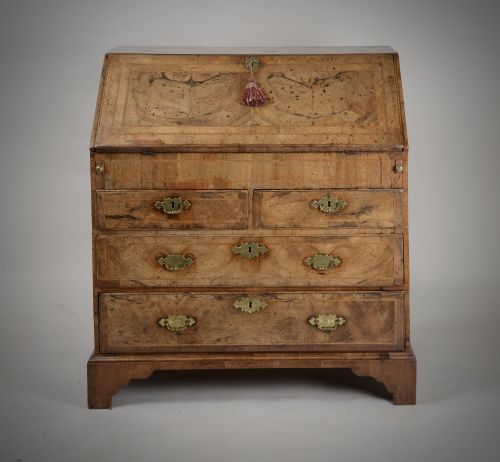
- A desk featuring a hinged sloping flap that opens to reveal internal pigeonholes and small drawers.
- Aesthetic Movement
- A late nineteenth-century design style emphasising artistic visual qualities over orthodox historical revivalism.
Period Study Furniture: Frequently Asked Questions
What defines period study furniture?
Period study furniture encompasses the desks, writing tables, bureaus and armchairs produced during past centuries for libraries, studies and private rooms.
These pieces reflect the changing domestic and scholarly habits of Georgian, Regency, Victorian and early twentieth-century makers.
How do I identify a Regency desk?
Regency desks date from the early nineteenth century and typically display classical restraint, clean architectural lines and rich timbers like rosewood or mahogany.
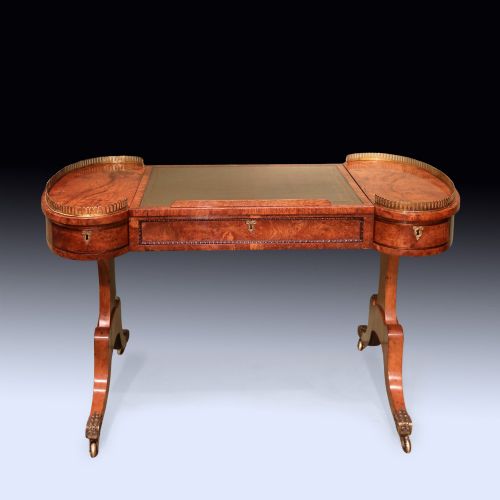
Details such as brass gallery rails, sabre legs and finely turned handles frequently characterise furniture from this period.
Were partners desks used at home?
Partners desks were originally built for offices, banks and grand estate libraries to allow two individuals to work face-to-face.
In modern settings, their double-sided configuration makes them practical centrepieces for large studies.
How should I care for antique leather writing surfaces?
Antique leather requires gentle cleaning and occasional conditioning to prevent the hide from drying and cracking over time.
Avoiding direct sunlight and excessive moisture helps preserve the original gilt tooling and supple texture of the leather.