

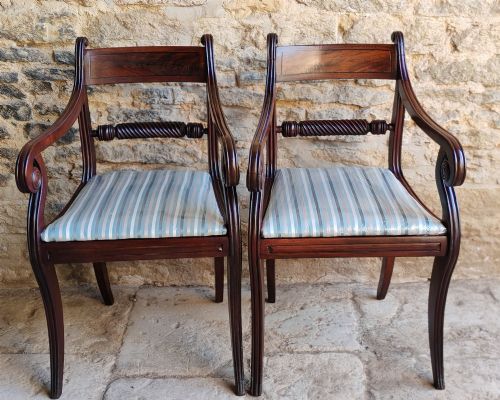
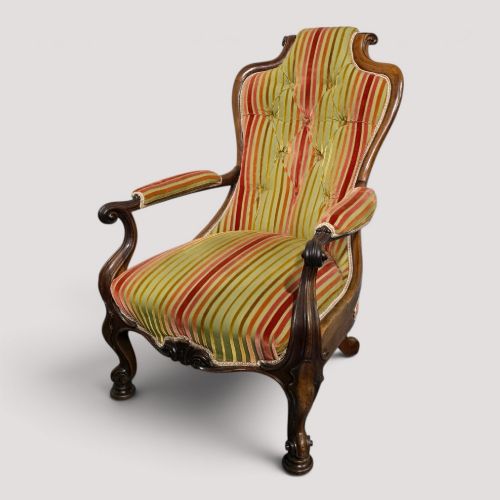
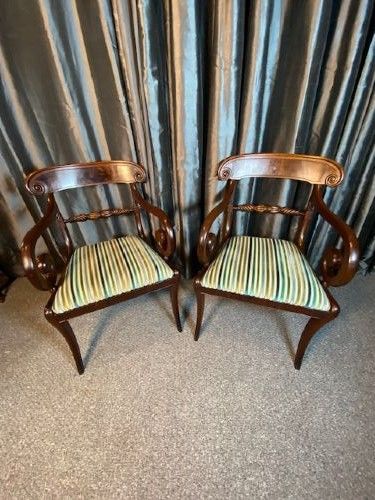
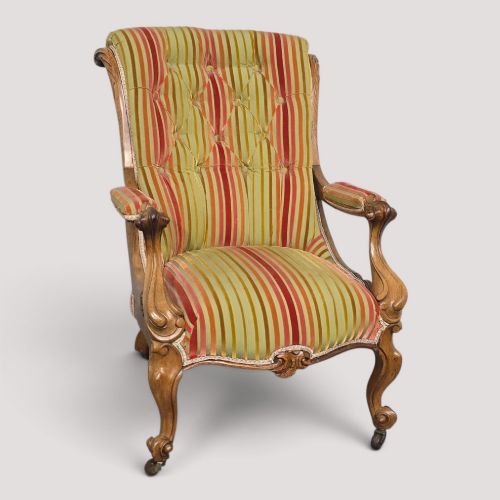




Period Striped Armchair
A period striped armchair brings distinct seating from the Regency, Georgian, and Edwardian eras into a room.
Period Striped Armchair
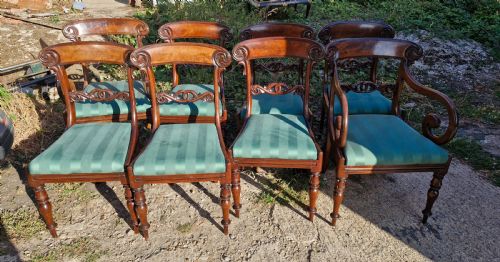
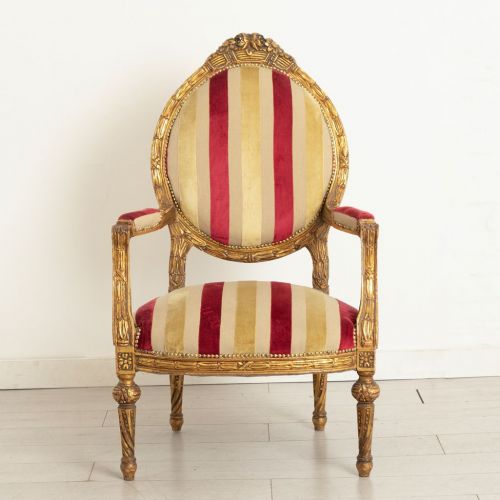
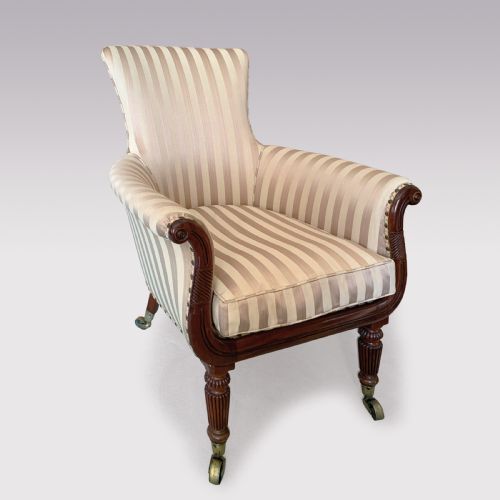
A period striped armchair encompasses seating forms spanning the Regency, Georgian, and Edwardian eras, alongside revival designs such as Louis XVI and Louis XV styles. Buyers searching this phrase encounter various seat types, including library armchairs, desk chairs, tub chairs, carvers, elbow chairs, and salon chairs.
The material evidence shows construction in mahogany, rosewood, walnut, and giltwood, paired with textiles, fabric, velvet, and brass. Pieces range from curule designs and reclining library armchairs to painted frames and lyre front tub chairs originating across the nineteenth and early twentieth centuries.
How they were made
Makers shaped these frames from dense hardwoods like mahogany, rosewood, and walnut, frequently incorporating carved details, giltwood finishes, or string inlay. Structural elements often involve scroll arms, curved supports, and specialised forms such as patent reclining mechanisms or curule X-frame geometry.
Upholstery relies on traditional textiles, fabrics, and velvet applied over wooden frames, sometimes accented with brass fittings. Cabinetmakers utilised timber grain and painted surfaces to define the character of library, desk, and salon seating.
Period Striped Armchair Retail Price Guide 2026
Typical asking prices for period striped armchair among the pieces listed under this phrase on Sellingantiques today, from the lower quarter to the upper quarter. They describe what is for sale here now, not the wider market.
Materials recorded across the inventory include mahogany, rosewood, walnut, giltwood, fabric, velvet, textile, and brass.
What varies in quality
Quality appears in the precision of the timber carving and the sophistication of the frame design, distinguishing standard seating from grand library armchairs or patent reclining models. The choice of primary wood, whether figured mahogany, rich rosewood, or gilded giltwood, elevates the stature of the piece.
The integration of specific stylistic details, such as lyre fronts, curule cross-frames, or intricate string inlay, marks the distinction between everyday dining or elbow chairs and high-status Regency and Georgian examples.
Gillows·Robert Daws
The Period Striped Armchair Glossary
- Carver chair
- An armchair designed to match a set of dining chairs, usually featuring open arms and a lighter frame suitable for pulling up to a table.
- Curule armchair
- A form of seating featuring an X-shaped frame derived from ancient Roman magistrate seats, prominent in Regency library designs.
- Giltwood
- Timber coated with a thin layer of gold leaf or metallic paint, frequently utilised on decorative revival armchairs and salon seating.
- Fauteuil
- An open-armed upholstered armchair with exposed wooden framing, originating in French design and influencing later revival styles.
Period Striped Armchair: Frequently Asked Questions
How do I identify a Regency armchair?
Regency armchairs often feature characteristic elements such as scroll arms, carved mahogany frames, and curule X-frame designs influenced by classical antiquity.
Makers of this period also utilised rosewood and incorporated specialised forms like library armchairs and tub chairs.
Were these chairs used at desks?
Yes, specific forms within this group include desk chairs and library armchairs designed for working or reading in period interiors.
These models frequently pair sturdy mahogany frames with comfortable upholstered seats and supportive armrests.
What woods were used for these chairs?
The listings show primary construction in dense timbers such as mahogany, rosewood, and walnut, alongside decorative giltwood surfaces.
Frames also incorporate brass details, painted finishes, and string inlay to complement the upholstered textile covers.