




Period Sofa Frame
A period sofa frame gives you the bare bones of historical seating, ready for your own choice of fabric and finish.
Period Sofa Frame
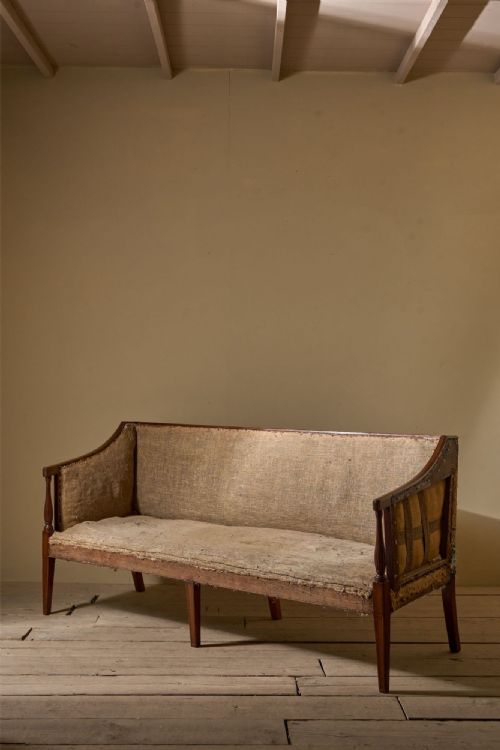
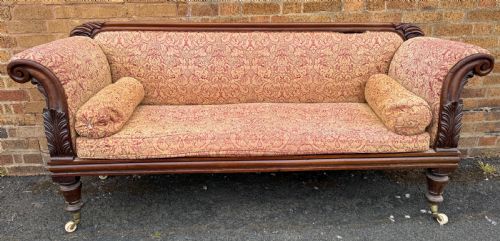
A period sofa frame represents the structural skeleton of historical seating, stripped down or preserved across the eighteenth and nineteenth centuries. When you search for a period sofa frame, you encounter substantial timber carcasses shaped in Georgian, Regency, and William IV styles. These pieces range from grand mahogany scroll-end settees to serpentine camel-back designs and French-influenced gilt frames.
Mahogany and rosewood provide the primary timber foundations for British examples, whilst walnut and giltwood appear in continental pieces. You will frequently find frames exposed after stripping, or retaining traces of hessian, leather, and upholstery fabric. The forms span two-seater settees, large three-seater couches, and salon suites originating from the eighteenth century up to nineteen hundred.
Materials and construction methods
Cabinet makers constructed these skeletons using dense timbers such as mahogany and rosewood, jointed to bear the weight of heavy squab cushions and springing. Carved details like scroll ends, herms, and floral motifs were worked directly into the solid wood before any surface polishing took place.
Giltwood and gold-painted finishes involved applying thin metal leaf or pigment over prepared gesso surfaces on beech or walnut. Internal webbing relied on robust linen hessian stretched across frames to support early stuffing materials beneath top covers of damask, leather, or plain upholstery.
Period Sofa Frame Retail Price Guide 2026
Typical asking prices for period sofa frame among the pieces listed under this phrase on Sellingantiques today, from the lower quarter to the upper quarter. They describe what is for sale here now, not the wider market.
Among the timber and upholstery, a stray nineteenth-century portrait of novelist Catherine Hutton occasionally wanders into the sofa listings.
Factors of structural distinction
The integrity of the timber carcass dictates the standing of a frame, separating deeply carved architectural forms from simpler domestic carpentry. Superior examples display crisp hand-carving on arms and legs, whereas lesser pieces rely on applied mouldings or plain turnings.
Proportion and scale define the architecture of the piece, with finer frames maintaining balanced serpentine lines or bold scrollwork. The choice of primary wood also influences the grade, as finely figured mahogany and rosewood command greater presence than secondary utility timbers.
The Period Sofa Frame Glossary
- Scroll end
- A sweeping terminal to the arm of a sofa, curling outward in mahogany or rosewood. This feature dominates Regency and William IV designs.
- Serpentine
- A gentle undulating line curving inward and outward along the front rail or back of a settee. It characterises eighteenth-century Georgian and Hepplewhite styles.
- Giltwood
- Timber coated with gold leaf over a prepared gesso ground. It appears frequently on French revival salon pieces and nineteenth-century frames.
- Show frame
- An exposed timber structure designed to be seen around the upholstered portions of a settee. These wooden borders define the silhouette of Victorian and William IV drawing room seating.
- Herm
- A sculpted human bust or figure tapering into a pillar, often integrated into the arm supports of Regency sofas. They reflect classical revival motifs of the early nineteenth century.
Period Sofa Frame: Frequently Asked Questions
What is a period sofa frame?
A period sofa frame is the exposed wooden skeleton of an antique settee or couch, dating from the eighteenth or nineteenth century. These pieces display the carved arms, legs, and rails characteristic of styles like Georgian, Regency, and William IV.
Buyers acquire these frames to restore them with bespoke upholstery fabric, leather, or damask. They offer a genuine historical silhouette ready for modern or traditional interior schemes.
How do I choose the right wood?
Mahogany and rosewood dominate British pieces from the Georgian and Regency eras, offering deep grain patterns and solid weight. Walnut and giltwood tend to appear on French revival frames from the later nineteenth century.
Consider the existing furniture in your room when selecting a timber tone. Dark polished mahogany suits formal drawing rooms, whilst lighter or gilded frames bring brightness to a salon.
Can I use modern upholstery?
Traditional frames accept modern webbing, springs, and fire-retardant fillings during restoration work. Restorers retain the historical exterior wood while updating internal comfort to contemporary standards.
Choosing the right top cover, whether plain linen, leather, or patterned damask, allows you to integrate the antique structure into daily domestic use.
How do I spot a Regency frame?
Regency frames typically feature bold architectural lines, outward-curling scroll ends, and occasionally carved wooden herms or brass inlay. The timber is frequently dark mahogany or figured rosewood of substantial weight.
Look for classical motifs derived from Greek and Roman design. These proportions set them apart from the lighter curves of earlier eighteenth-century Georgian pieces.