
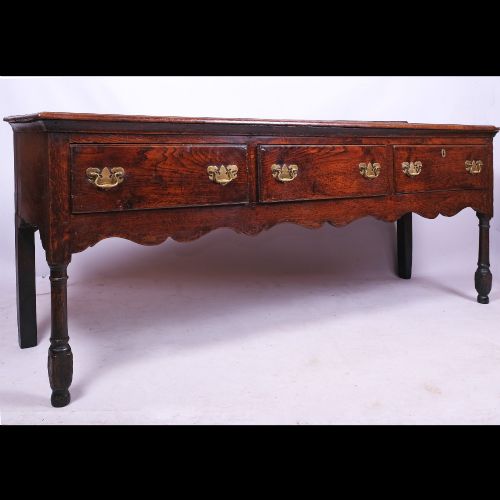
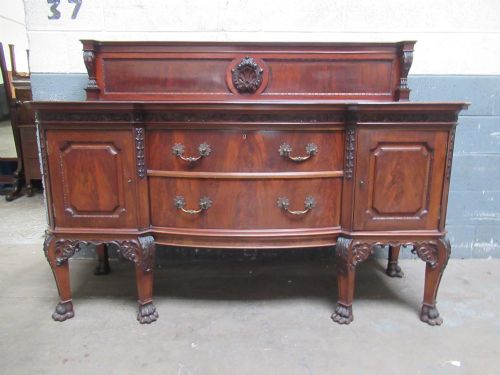
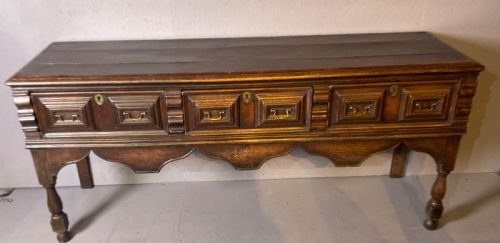


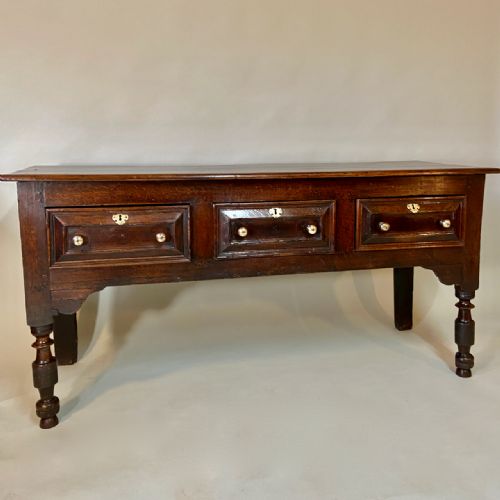
Period Sideboard Base
A period sideboard base anchors a dining room with honest timber and centuries of utilitarian service behind every drawer and board.
Period Sideboard Base
A period sideboard base serves as the foundational storage unit of a traditional dining space, offering deep drawers and sturdy cupboards for household linen and plate. When searching for a period sideboard base, buyers encounter robust pieces designed for daily domestic utility rather than mere display.
The examples gathered here span from the seventeenth century through to the early twentieth century, showing how these heavy storage units evolved in height, width, and ornamentation. Oak dominates the earlier centuries, while mahogany and rosewood emerge in later Regency and Edwardian workshop traditions.
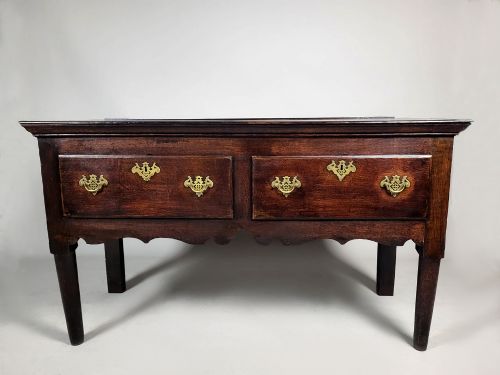
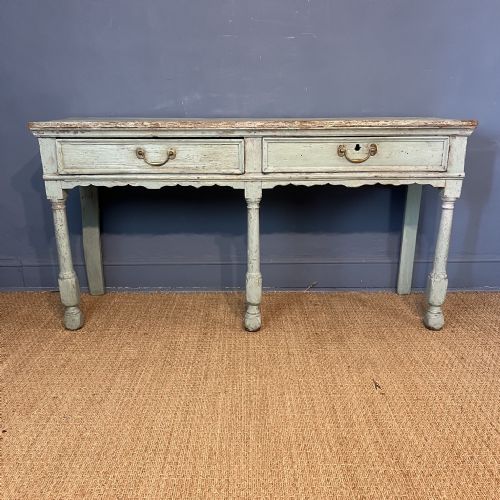
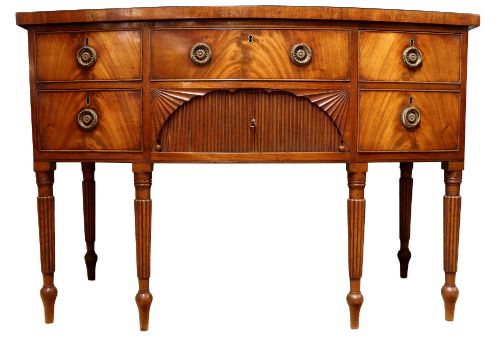
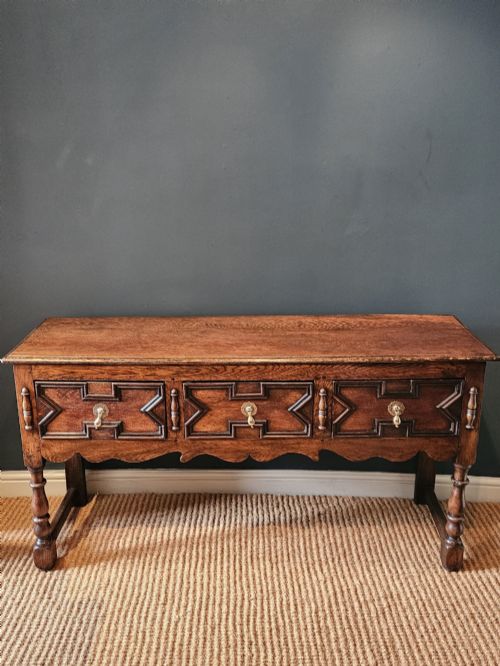
Forms range from low potboard dressers to geometric moulded drawer units and breakfront carcases. Each surviving piece demonstrates the regional preferences of its maker, from English oak constructions to French provincial cedarwood variants.
How they were made
Cabinet makers built these heavy bases using solid native hardwoods like oak and mahogany, often applying flame veneers on later Regency carcases to catch the light. Joinery relied on mortise and tenon frames, pegged joints, and hand-cut dovetails that held fast under centuries of weight.
Surface treatments included wax polishing, applied paint on pine, and geometric mouldings routered directly into drawer fronts. Iron and brass fittings such as drop handles and original backplates were secured by hand, finishing the functional structure.
Listings feature oak, mahogany, and rosewood across centuries spanning the seventeenth to the twentieth.
What varies in quality
Quality rests in the integrity of the timber selection and the retention of original surface patination. Pieces that retain their early brasses and untouched drawer linings show greater historical cohesion than those rebuilt with later replacements.
The crispness of hand-cut mouldings and the precision of the dovetail joints separate standard workshop production from finer cabinet work. Proportion and balance also dictate standing, as well-balanced proportions in low dressers and court cupboards command stronger visual presence.
The Period Sideboard Base Glossary
- Potboard
- An open slatted lower shelf on a dresser base designed for airing heavy earthenware and platters. It sits just above the floorboards on sturdy stile feet.
- Dovetail
- A traditional interlocking joint used to bind drawer corners together securely without metal fasteners. Hand-cut versions feature narrow, irregular pins.
- Breakfront
- A cabinet or sideboard whose central section projects forward from the flanking outer wings. This architectural arrangement creates depth across the front elevation.
- Geometric Moulding
- Raised wooden mouldings applied in geometric patterns to drawer fronts and door panels. It is characteristic of late seventeenth and early eighteenth-century joinery.
- Flame Mahogany Veneer
- A decorative wood slice cut from the fork of a mahogany tree where the branch meets the trunk. It creates a fiery, feather-like grain pattern.
Period Sideboard Base: Frequently Asked Questions
What is a period sideboard base used for?
These low storage units provide substantial surface space for serving food and deep drawers for storing table linens, cutlery, and silverware. Historically, they anchored the dining room or kitchen as central working furniture.
Today, they function well in modern hallways, living rooms, or dining spaces as credenzas or media consoles while maintaining their traditional storage capacity.
How do I tell an 17th century base from a Georgian one?
Seventeenth-century pieces typically feature heavy oak construction, pegged mortise and tenon joints, and geometric mouldings with a darker, heavier patination. They often include potboards or court cupboard configurations.
Georgian examples shift toward lighter woods like mahogany, cleaner drawer lines, and finer brass hardware. The proportions become more refined as cabinet making techniques advanced through the eighteenth century.
Are original brasses important?
Original brass handles and backplates contribute significantly to the historical integrity and visual harmony of a antique base. They show the natural wear and oxidation matching the age of the wood.
Replaced hardware is common on older furniture due to centuries of heavy use, though surviving original fittings remain desirable for collectors.
How do I care for an oak sideboard base?
Maintain the timber by applying a traditional beeswax polish sparingly to nourish the grain and protect against dryness. Avoid placing the unit near direct heat sources or strong sunlight to prevent wood movement.
Dust regularly with a soft, dry cloth and lift items rather than sliding them across the top surface to preserve the antique finish.