





Period Serving Stand
These period serving stand pieces bring timeless dining room utility and elegant tiers to your home.
Period Serving Stand
A period serving stand encompasses multi-tiered dumb waiters, butler trays on stands, and serving tables designed for formal dining rooms. These pieces originate from the Georgian, Regency, and Victorian eras, serving practical roles in the presentation of food and drink.
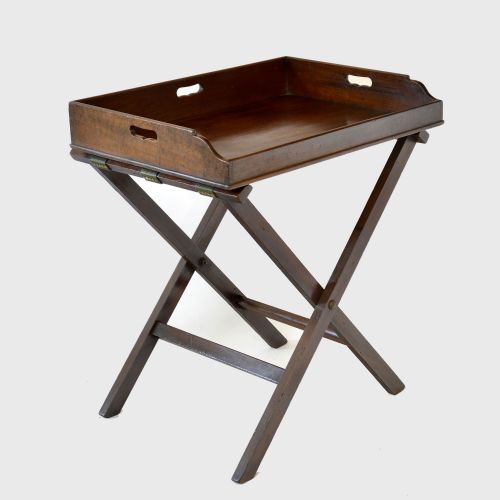
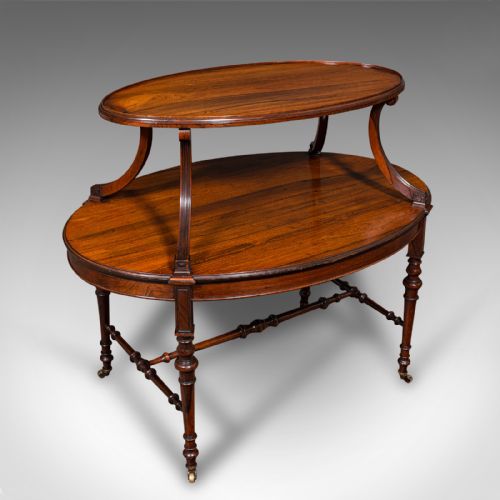
The version most commonly met on this page is the multi-tiered mahogany dumb waiter, often featuring circular or octagonal revolving tiers. Butler trays on folding stands also appear frequently, alongside occasional serving tables and buffets.
Makers and craftsmen of the 18th and 19th centuries built these pieces to assist servants during meals, allowing dishes to be kept close at hand. Today, they function wonderfully as display furniture or drinks stands in traditional and contemporary interiors alike.
How they were made
Carpenters and cabinet makers constructed these stands primarily using solid mahogany and rosewood, prized for their rich grain and durability. Brass fittings, such as castors and hinges, provide structural support and functional movement on folding trays and revolving tiers.
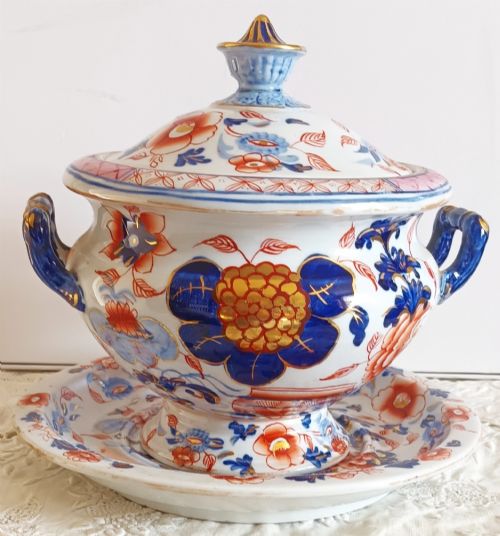
Pottery examples incorporate earthenware finished with a glaze, seen specifically in blue and white printed patterns. Woodworking techniques involve drop-leaf mechanisms, folding X-frames for trays, and tiered revolving columns mounted on tripod bases.
Period Serving Stand Retail Price Guide 2026
Typical asking prices for period serving stand among the pieces listed under this phrase on Sellingantiques today, from the lower quarter to the upper quarter. They describe what is for sale here now, not the wider market.
Listings feature mahogany, rosewood, and glazed earthenware across Georgian, Regency, and Victorian periods.
What varies in quality
The distinction between standard examples and the finest pieces lies in the sophistication of the timber selection and the complexity of the design. Octagonal drop-leaf configurations and multi-tier revolving mechanisms demand advanced carpentry skills that elevate a piece.
Quality also shows in the crispness of the turning on central columns and the original condition of brass castors and hinges. Pieces retaining their stable folding stands and rich, unblemished polish represent the pinnacle of period manufacture.
The Period Serving Stand Glossary
- Dumb waiter
- A multi-tiered freestanding piece of dining room furniture used for holding food and tableware without the presence of servants. These typically feature two or three graduating circular or octagonal revolving trays.
- Butler tray
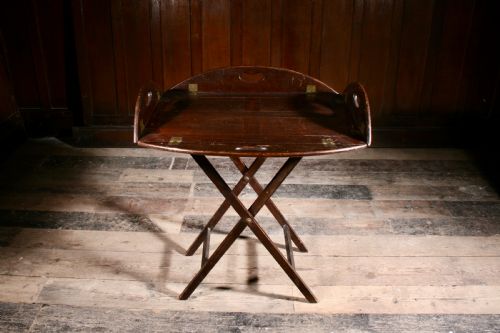
- A portable wooden tray with hinged sides, designed to be lifted off its folding stand for serving. In period examples, these rest upon X-frame wooden supports.
- Drop-leaf
- A table or tray design featuring hinged flaps that can be folded down to save space or raised to expand the surface area. This mechanism appears frequently on late 18th century folding stands.
- Earthenware
- Porous pottery fired at lower temperatures, commonly found with a protective glaze and decorative blue and white transfer printing. These serve as platters and trays within the broader category.
- Buffet
- A sideboard or serving table used for displaying food and porcelain during formal meals. Regency and George IV period versions incorporate multiple tiers for presentation.
Period Serving Stand: Frequently Asked Questions
What is a period serving stand used for?
These pieces function as tiered serving furniture, originally designed to hold dishes, glassware, and wine during formal meals without servants present.
Today, they adapt easily into living spaces as display tables, side tables, or elegant stands for drinks and plants.
How do I identify a Georgian dumb waiter?
Georgian dumb waiters typically date from the late 18th century and feature multiple graduating tiers supported by a central pillar and tripod legs. Look for mahogany construction and revolving circular or octagonal trays.
Maker styles from this era often include Sheraton influences, characterised by refined proportions and folding drop-leaf mechanisms.
Are butler trays fixed to their stands?
Traditional butler trays are designed to lift off their folding wooden stands entirely, making them portable for carrying items between rooms.
The stands themselves usually fold flat using an X-frame design for easy storage when not in use.
How do I care for mahogany serving stands?
Maintain the wood by applying a quality beeswax periodically to nourish the grain and preserve the deep natural colour.
Keep these pieces away from direct heat sources and strong sunlight to prevent the timber from drying out or warping.