





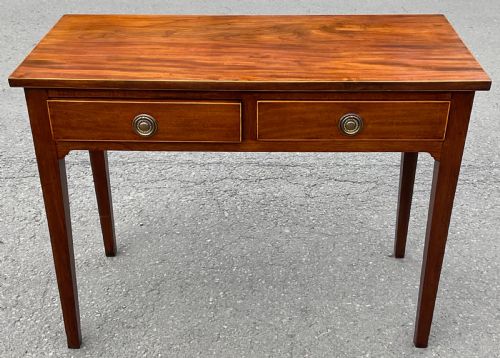


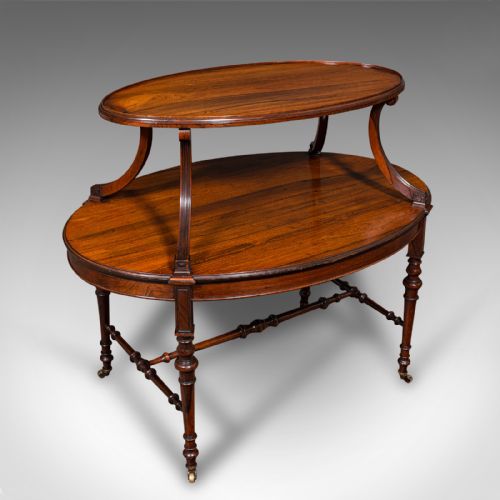
Period Serving Console
A period serving console brings the grounded elegance of mahogany, oak, and rosewood directly into your dining room or hallway.
Period Serving Console
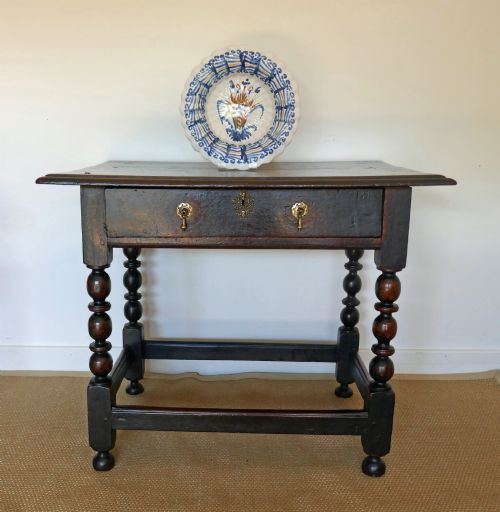
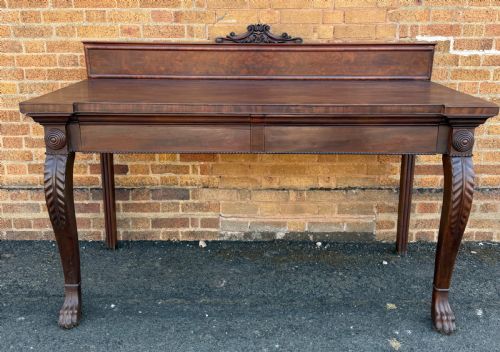
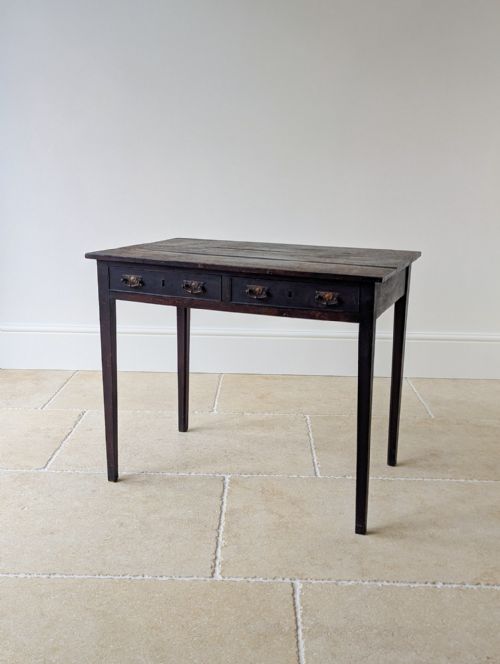
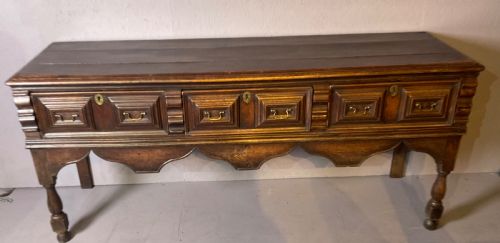
You will encounter various functional forms including side tables, serving tables, console tables, dressers, and lowboys. These items originate from English, Irish, and Welsh workshops, displaying regional preferences in timber choice and structural proportion.
Georgian and Regency examples tend to show refined mahogany grains, sometimes enhanced by flame mahogany veneer, satinwood, and boxwood stringing. Meanwhile, seventeenth-century pieces rely heavily on solid oak and bold proportions to create an impression of enduring utility.
Materials and construction
Cabinet makers relied predominantly on solid mahogany and oak as structural timbers, frequently applying veneers such as flame mahogany to visible drawer fronts and table tops. Secondary woods provided internal support for framing and drawer construction.
Decorative surface detailing involved precise inlay work utilising contrasting timbers like satinwood and boxwood, alongside brass hardware for drawer pulls and mounts. Joinery techniques varied from early pegged oak construction to refined eighteenth-century framing and dovetailing.
Period Serving Console Retail Price Guide 2026
Typical asking prices for period serving console among the pieces listed under this phrase on Sellingantiques today, from the lower quarter to the upper quarter. They describe what is for sale here now, not the wider market.
Console forms range from seventeenth-century oak lowdressers and lowboys to grand nineteenth-century Irish serving tables and butler's buffet stands.
Assessing quality in antique consoles
Quality reveals itself in the selection of timber figures, where richly grained flame mahogany or well-figured oak elevates a piece above standard utility items. The crispness of carved details, such as those found on Chippendale period examples, dictates the level of craftsmanship invested by the maker.
Proportion and scale separate ordinary items from exceptional ones. Pieces that maintain balanced dimensions and retain their original brassware, timber surfaces, and structural integrity hold greater fidelity to their original period design.
Gillows·Mack Williams and Gibton
The Period Serving Console Glossary
- Lowboy
- A small oak or mahogany table with drawers, typically originating from the late seventeenth or eighteenth century. It served various domestic functions before evolving into a dedicated dressing or side table.
- Console table
- A table designed to be fixed against a wall, frequently supported by front legs with the rear secured to the wall structure. These often functioned as serving or pier tables in formal rooms.
- Dresser base
- The lower section of a Welsh or English country house dresser featuring cupboards and drawers. These robust pieces provided essential storage and serving surfaces in domestic kitchens and dining spaces.
- Flame mahogany
- A veneer cut from timber where the grain branches out, creating a distinctive flame-like pattern. Cabinet makers used this technique during the Georgian and Regency periods to decorate prominent surfaces.
- Cross-banding
- A strip of veneer applied to the border of a table top or drawer front with the grain running perpendicular to the main panel. This decorative technique frames the primary wood surface.
Period Serving Console: Frequently Asked Questions
What is a period serving console used for?
These tables served as auxiliary surfaces for dishing up meals, holding platters, and displaying silver or porcelain in grand dining rooms. They also functioned in hallways as pier tables beneath large mirrors.
Today, they adapt easily into modern interiors as hallway display tables, sideboard alternatives in smaller dining areas, or media surfaces in living rooms.
How do I date a mahogany serving table?
Dating relies on examining the timber species, construction joints, handle hardware, and stylistic traits like Chippendale carving or Sheraton inlay. Eighteenth-century pieces often display hand-cut dovetails and rich, patinated mahogany.
Later nineteenth-century and Edwardian revival items may incorporate machine-sawn timbers or different secondary woods beneath their polished exterior surfaces.
Are Irish serving consoles different from English ones?
Irish serving tables from the Georgian and Regency periods frequently display bolder proportions and heavier carving than their English counterparts. Makers in Ireland often utilised dense mahogany and distinctive stretcher bases.
These robust design choices give Irish examples a commanding presence that distinguishes them within country house collections.
How do I care for an antique oak console?
Maintain oak surfaces by dusting with a dry, soft cloth and occasionally applying natural beeswax to nourish the dry timber. Avoid placing antique wood in direct sunlight or near heat sources to prevent warping and splitting.
Keep indoor humidity stable to protect the historic grain and original polish of the wood over time.