

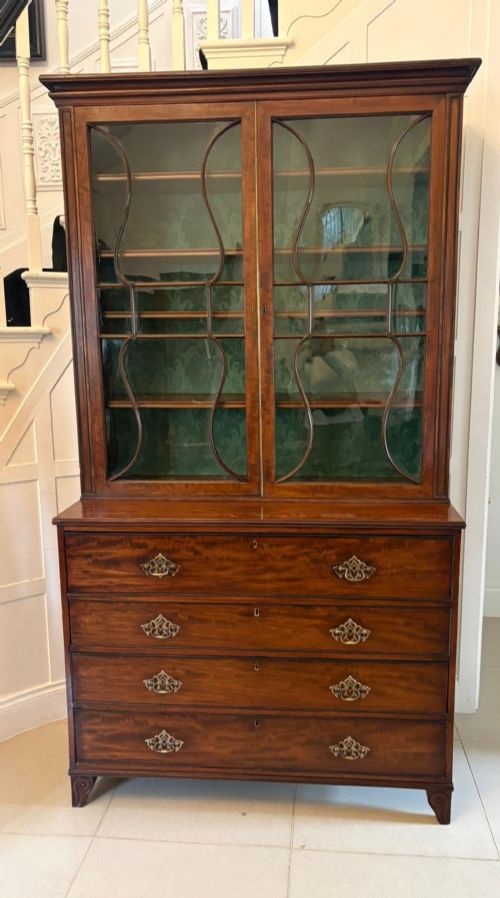
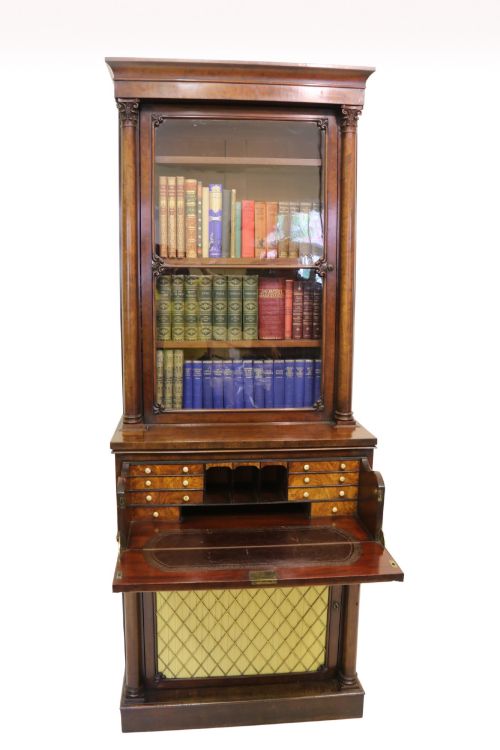
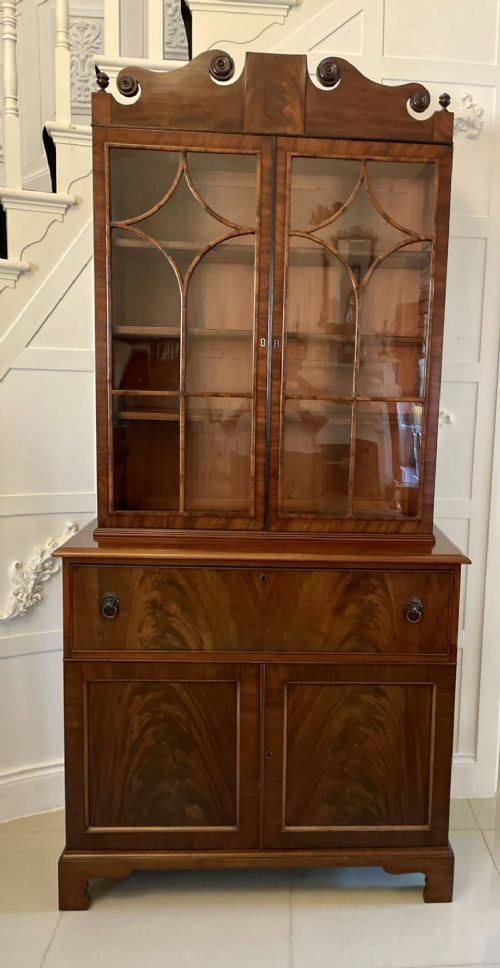
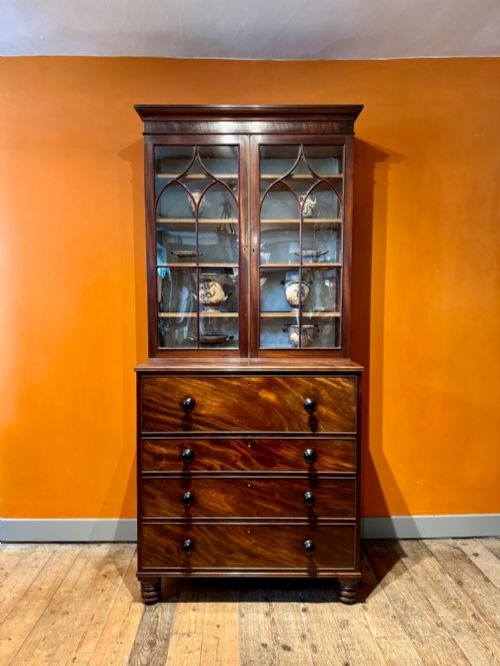
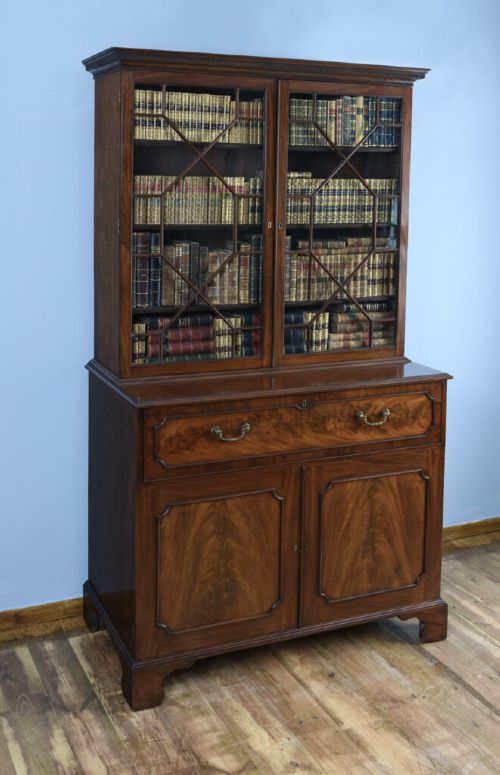


Period Secretaire Bookcase
These period secretaire bookcase examples combine a display cabinet with a pull-down writing desk, offering practical storage and workspace.
Period Secretaire Bookcase
A period secretaire bookcase unites a bookcase top with a lower cabinet containing a fitted writing drawer that drops forward on hinges. These items serve both as libraries and as writing stations within domestic rooms.
The versions met most frequently on this page belong to the Regency, Georgian, and 18th Century periods, constructed with tall glazed doors above and cupboard doors or drawers below. Forms span breakfront designs, smaller writing cupboards, and traditional cabinet layouts.
Makers and designers working in the manner of Thomas Hope or through firms such as Gillows of Lancaster shaped the aesthetic development of these pieces. Their proportions range from modest writing furniture to imposing breakfront bookcases.
How they were made
Cabinet makers utilised solid timber and figured veneers, applying mahogany across the primary surfaces alongside satinwood for lighter highlights. Accents of ebony and brass furnish structural detail and key escutcheons.
Glazing bars divide the upper door glass into geometric panes, while internal fitted drawers and pigeon holes provide organisation for correspondence. Leather writing surfaces are inset into the drop-down desk flaps.
Period Secretaire Bookcase Retail Price Guide 2026
Typical asking prices for period secretaire bookcase among the pieces listed under this phrase on Sellingantiques today, from the lower quarter to the upper quarter. They describe what is for sale here now, not the wider market.
Concealed small drawers inside the fitted interior often held secret compartments for private correspondence.
What varies in quality
The selection of timber grain, particularly figured mahogany and satinwood veneer, dictates the visual depth of the exterior. Uniformity in the internal fittings and the precision of the brass hardware distinguish finer workshops.
Proportion and cabinetwork execution separate standard utility pieces from sophisticated designs reflecting Chippendale or Sheraton traditions. The integration of the secretaire drawer mechanism within the overall carcass structure demonstrates the maker's skill.
Gillows of Lancaster·Thomas Hope
The Period Secretaire Bookcase Glossary
- Secretaire
- A desk or cabinet featuring a pull-down flap that reveals a fitted interior of small drawers and pigeon holes. This writing surface drops down to provide a stable workspace.
- Breakfront
- A piece of furniture where the central section projects forward from the flanking wings. This architectural layout creates depth and presence in larger bookcases.
- Glazed doors
- Framework doors holding panes of glass to display books within the upper cabinet. These often feature wooden glazing bars arranged in specific geometric patterns.
- Satinwood
- A durable hardwood yielding a yellowish timber with a lustrous, satin-like sheen. Cabinet makers prized it for fine 18th Century and Sheraton period veneers.
- Escutcheon
- A flat plate of brass surrounding a keyhole to protect the surrounding wood from wear. They frequently match other hardware elements on the cabinet.
Period Secretaire Bookcase: Frequently Asked Questions
What is a period secretaire bookcase?
A period secretaire bookcase is a tall dual-purpose piece of furniture combining upper display shelving behind glass doors with a lower desk section. The central drawer pulls out and folds down to create a writing surface.
Such items date from the 18th Century through the Regency era, offering both a bookcase and a bureau within a single unified cabinet.
How were secretaire bookcases used?
Owners stored volumes in the upper glazed section while managing correspondence and writing letters at the pull-down desk below. The internal compartments kept paper, ink, and valuables organised and out of sight.
Closed up, the piece presented the formal appearance of a standard bookcase or cabinet rather than a working desk.
How do I identify a Regency secretaire bookcase?
Regency examples frequently display figured mahogany timbers, classical architectural lines, and occasionally brass inlay or mounts. They reflect the design influences of the early 19th Century.
Proportions tend to be robust, sometimes incorporating panelled doors or glass panes arranged in geometric patterns characteristic of the period.
How do I care for mahogany furniture?
Keep mahogany furniture away from direct sunlight and heat sources to prevent the wood and veneer from drying out or fading. Maintaining stable room humidity preserves the joints and polish.
Dust regularly with a dry cloth and avoid applying modern silicone-based polishes that can build up on historical surfaces.