



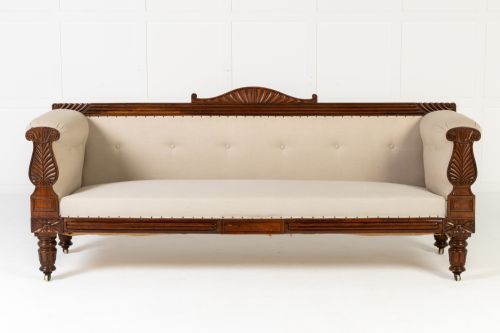


Period Scroll Arm Settee
A period scroll arm settee brings a sculptural silhouette to a room, offering generous seating rooted in nineteenth-century craftsmanship.
Period Scroll Arm Settee
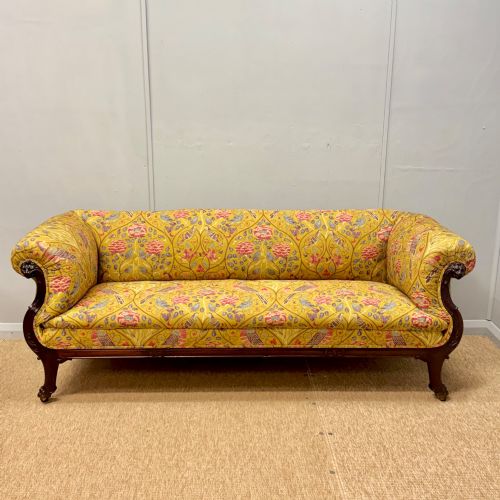
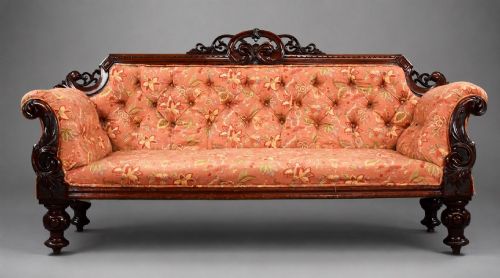
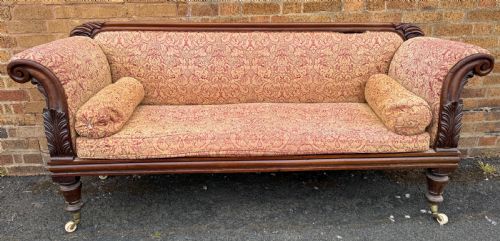
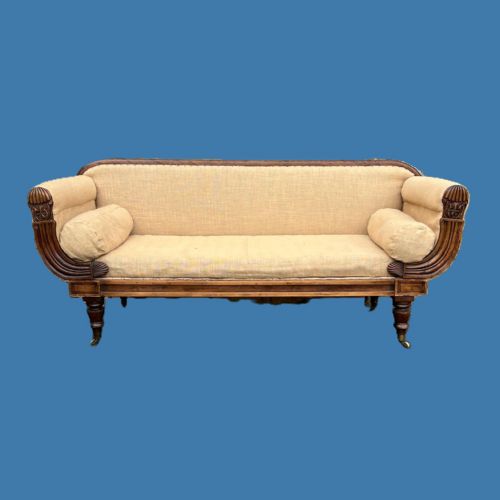
A period scroll arm settee represents a seating form defined by sweeping, rolled ends that originate predominantly from the Regency, William IV, and Victorian eras. These large pieces function as principal seating for drawing rooms and country house interiors alike.
Most examples encountered on this page date from the nineteenth century, constructed primarily in rich timbers like mahogany and rosewood. The form ranges from double scroll-ended sofas to expansive four-seater settees and campaign models.
Makers such as Howard and Sons also appear among the selections, bringing renowned nineteenth-century workshop quality to the form. Buyers encounter both show-frame showpieces and upholstered designs tailored for formal reception spaces.
How they were made
Frames rely on dense hardwoods such as mahogany and rosewood, sometimes finished as simulated rosewood to achieve a uniform grain. Cabinetmakers shaped the timber into bold scroll arms and carved show-frames using traditional joinery techniques.
Upholstery depended on sturdy foundations of webbing and hessian, finished with textiles including velvet and standard upholstery fabric. Brass castors frequently facilitated movement across heavy carpets in nineteenth-century drawing rooms.
Period Scroll Arm Settee Retail Price Guide 2026
Typical asking prices for period scroll arm settee among the pieces listed under this phrase on Sellingantiques today, from the lower quarter to the upper quarter. They describe what is for sale here now, not the wider market.
Brass castors hide beneath these grand frames, ready to roll across the drawing room floor at a moment's notice.
What varies in quality
Quality rests in the architectural boldness of the timber frame and the crispness of any carved detailing along the show-frame and scroll ends. Pieces with superior proportions and substantial scale command greater presence in a room.
The choice of primary timber also distinguishes individual examples, with finely figured rosewood and richly patinated mahogany marking out the finer productions of the nineteenth century.
Howard and Sons
The Period Scroll Arm Settee Glossary
- Scroll arm
- A structural arm curving outward in a spiral or scroll shape. This defining feature characterises nineteenth-century settees and sofas.
- Show-frame
- A wooden structural frame left visible around the upholstered portions of a seat. It displays the carved mahogany or rosewood timber.
- Simulated rosewood
- A painted or stained finish applied to a secondary timber to imitate the dark grain of rosewood. Makers used this technique during the Regency period.
- Lyre shaped
- A decorative motif resembling an ancient stringed instrument, often incorporated into the arm supports or end frames of Regency seating.
Period Scroll Arm Settee: Frequently Asked Questions
How do I identify a Regency settee?
Regency settees typically display classical proportions, dark timbers like rosewood or mahogany, and often incorporate carved scroll ends or lyre motifs.
Cabinetmakers of the period favored bold design and architectural lines that distinguished their work from later Victorian iterations.
Where should I place a large settee?
Large settees suit spacious drawing rooms, libraries, or long hallways where their substantial scale and sculptural scroll arms can be viewed from multiple angles.
Their finished backs and show-frames allow them to sit away from walls as central room furnishings.
What materials were used?
Nineteenth-century makers primarily utilised solid hardwoods such as mahogany and rosewood, occasionally employing simulated rosewood finishes on alternative woods.
Upholstery schemes relied on traditional foundations of hessian and webbing beneath velvet or patterned fabric.