



Period Rosewood Cabinet
A period rosewood cabinet brings rich dark grain and polished brass into a room, joining utility with refined Regency or nineteenth-century design.
Period Rosewood Cabinet
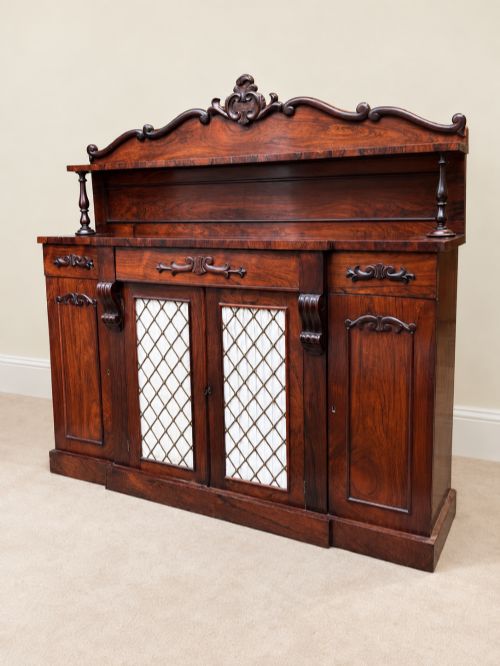
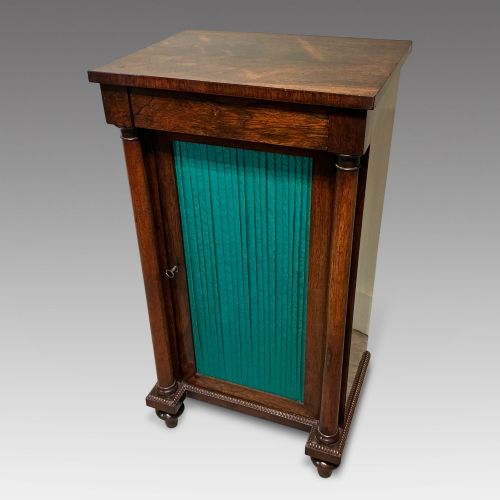
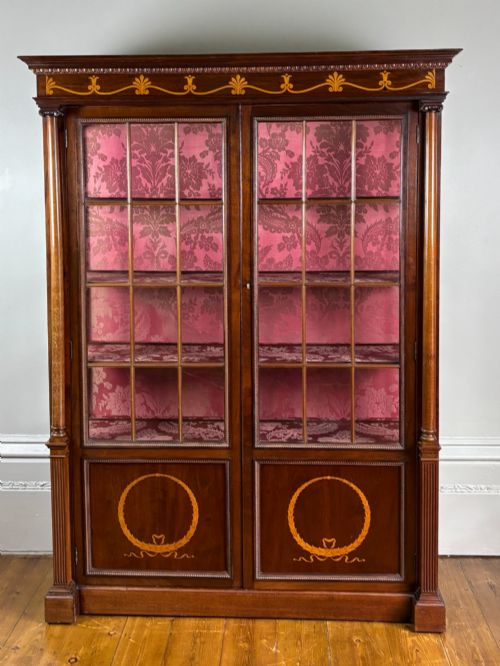
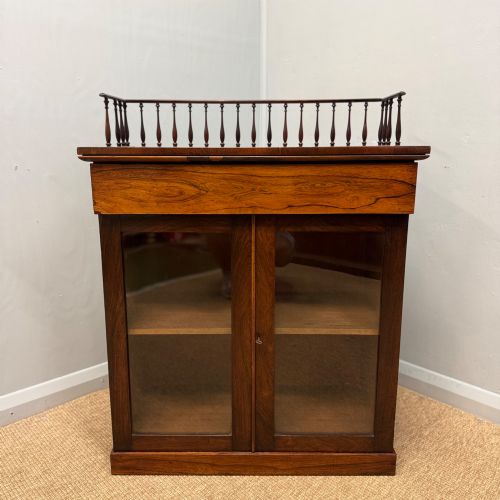
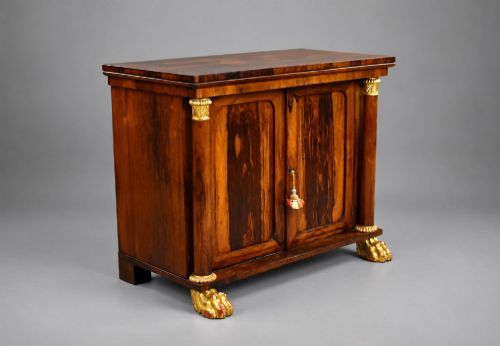
A period rosewood cabinet encompasses forms designed for storage and display, ranging from compact pier cabinets to larger breakfront bookcases, side cabinets, and chiffoniers. These pieces emerge predominantly from the Regency era and the broader nineteenth century, capturing the formal elegance associated with George IV and William IV design.
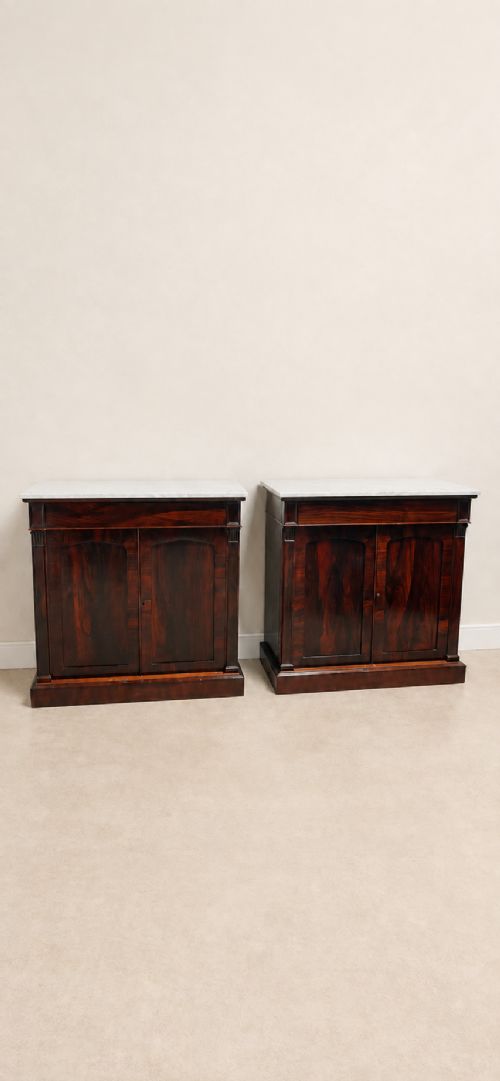
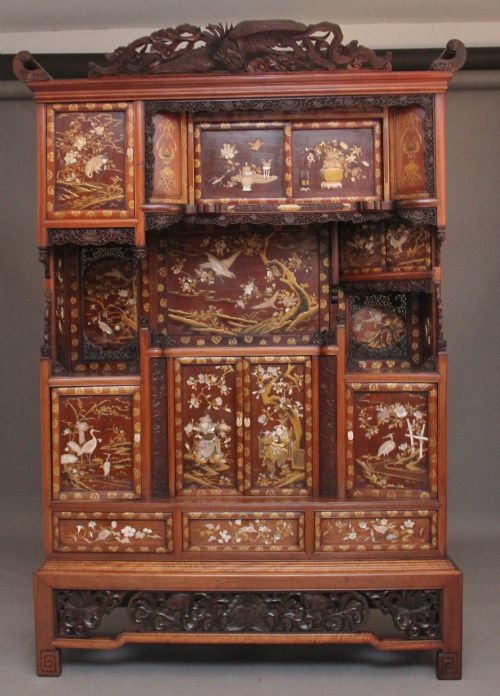
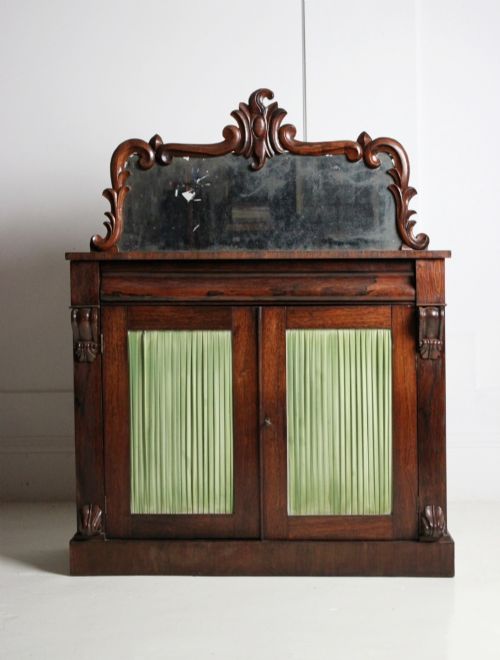
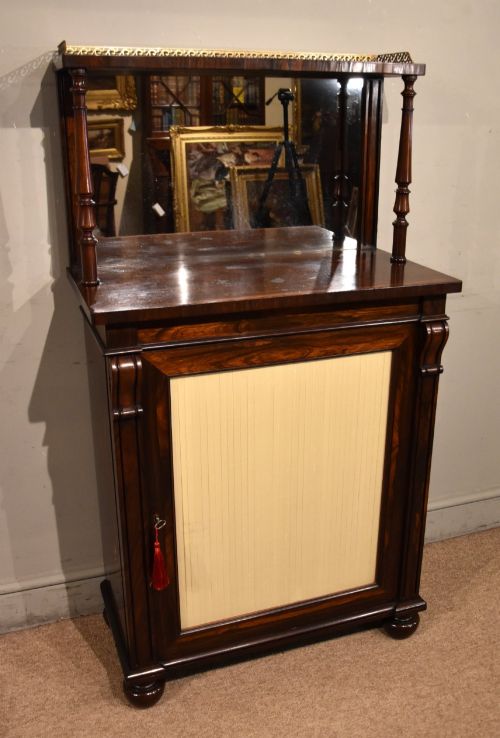
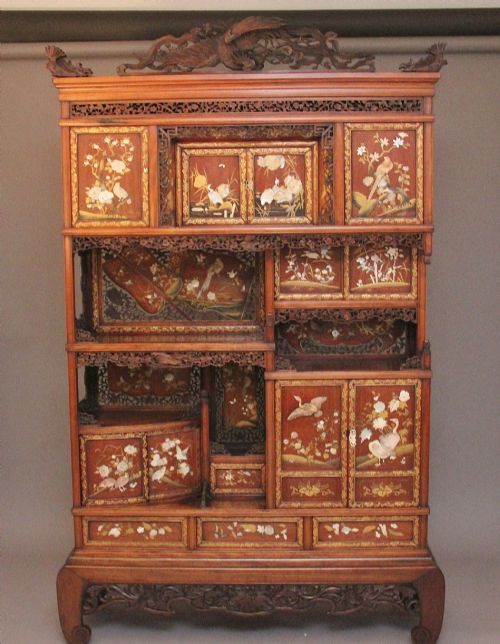
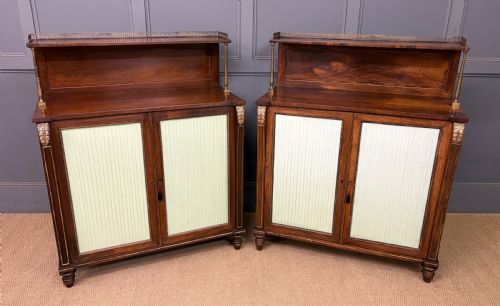
The version most frequently encountered on this page is the Regency chiffonier or side cabinet, often fitted with lower doors and upper shelving or fabric-backed panels. Alongside British cabinet work, Japanese Meiji period shodana display cabinets appear, offering intricate partitioning and distinct stylistic contrast within the rosewood medium.
Origins span British workshops of the early eighteen-hundreds, alongside occasional continental pieces and Japanese export works. Buyers encounter items functioning as desks, low bookcases, and display units, each reflecting the domestic requirements of polite nineteenth-century interiors.
Materials and construction
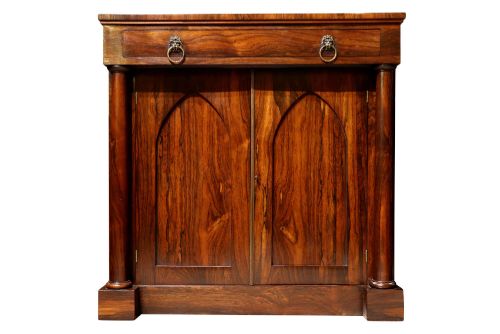
Makers utilised dense tropical rosewood timber, frequently applied as fine veneers over sturdy hardwood carcases to display striking grain patterns. Selected pieces incorporate alternative secondary timbers such as satinwood and kingwood, or employ simulated rosewood finishes on substitute woods.
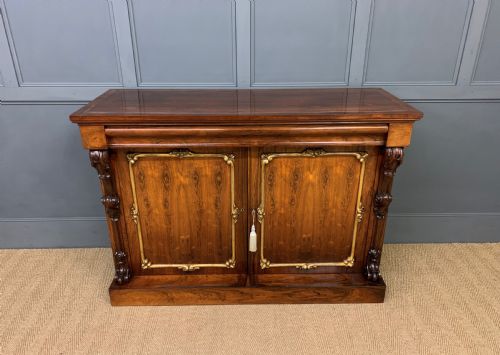
Brass formed an essential component of the construction, appearing as inlaid stringing, pierced gallery rails, grilles, and decorative mounts. Fabric panels, marble tops, and glass doors further distinguished the repertoire of materials handled by period cabinet makers.
Period Rosewood Cabinet Retail Price Guide 2026
Typical asking prices for period rosewood cabinet among the pieces listed under this phrase on Sellingantiques today, from the lower quarter to the upper quarter. They describe what is for sale here now, not the wider market.
Listings span the Regency, Georgian, and late nineteenth-century Meiji periods, uniting British cabinet forms with Japanese export furniture.
Distinctions in execution
The calibre of a piece rests on the precision of its brass inlay and the harmonious selection of timber veneers across the facade. Superior examples exhibit continuous grain matching and crisp, hand-cut brass work that remains flush with the surrounding wood.
Structural integrity and the retention of original mounts, glazed doors, and silk or pleated chiffon panels separate standard utilitarian pieces from exceptional cabinet work. The subtlety of internal fittings and the refinement of carved details like pilasters or feet indicate the workshop's original standing.
A. Solomon·Louis Constantin Le Gaigneur·Gillows
The Period Rosewood Cabinet Glossary
- Chiffonier
- A low cabinet featuring enclosed cupboards below, sometimes surmounted by a shelf or a raised back. This form became a staple of Regency and nineteenth-century drawing rooms for storing books and tableware.
- Shodana
- A traditional Japanese multi-tiered display cabinet featuring asymmetrical shelving and compartments. These nineteenth-century import pieces showcase meticulous joinery and distinct decorative aesthetics.
- Pier cabinet
- A low shelving unit or cupboard designed specifically to fit the wall space between windows. They often incorporate glazed doors to protect collections of ceramics or small books.
- Goncalo Alves
- A dense exotic hardwood with bold dark figuring, occasionally utilised in place of standard rosewood during the Regency period. Its striking contrast appealed to makers seeking dramatic visual impact.
- Breakfront
- A piece of furniture whose central section projects forward from the flanking wings. This architectural arrangement creates depth and rhythm across large side cabinets and bookcases.
Period Rosewood Cabinet: Frequently Asked Questions
What is a Regency chiffonier?
A Regency chiffonier is a low storage unit equipped with enclosed lower cupboards, frequently paired with upper shelving supported by pillars. These pieces served as versatile sideboards in nineteenth-century parlours.
Cabinet makers often fitted them with brass grilles or pleated fabric panels behind the doors to conceal contents while maintaining a light visual profile.
How do I identify a Meiji period shodana?
A Meiji period shodana is recognised by its complex, asymmetrical arrangement of shelves, sliding doors, and small drawers. These Japanese display cabinets prioritise intricate joinery and decorative panels over symmetry.
They stand apart from European forms through their distinct structural rhythm and integration of contrasting exotic woods.
Where should I place a rosewood cabinet?
A rosewood cabinet suits a principal reception room, study, or hallway where its dark, figured grain can anchor the interior scheme. Low side cabinets and pier units function effectively beneath windows or against plain walls.
Keep these pieces away from direct sunlight and sudden temperature shifts to protect the sensitive timber veneers and brass inlays from movement.
How do I distinguish a Davenport desk?
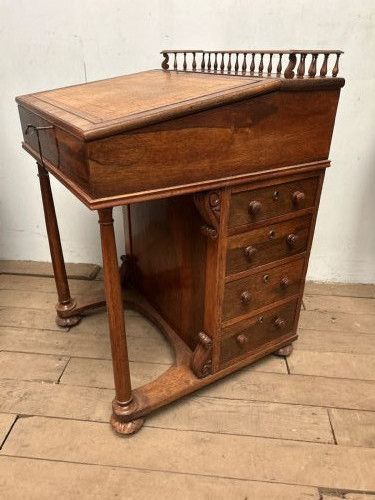
A Davenport desk is a compact writing box featuring a sloping, leather-lined top above a pedestal of drawers. Regency examples often incorporate a sliding top mechanism and side compartments.
Their small footprint made them ideal for writing letters in drawing rooms where space remained at a premium.