
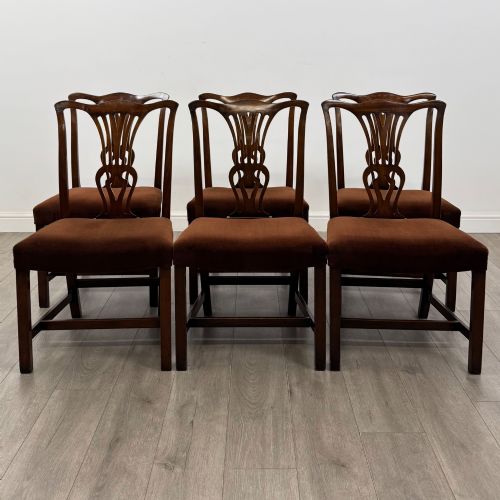
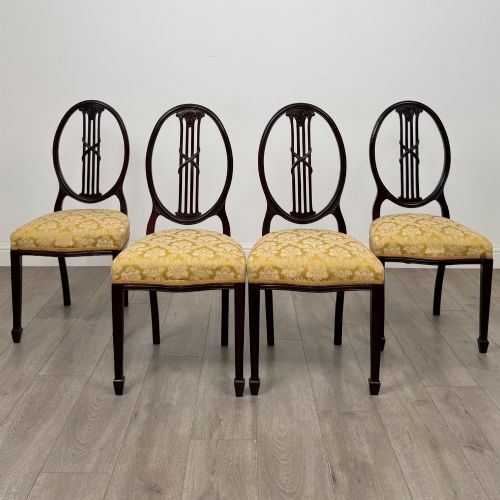
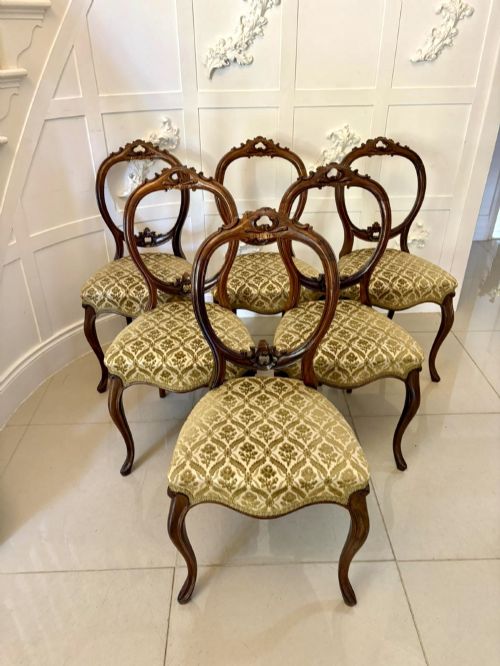
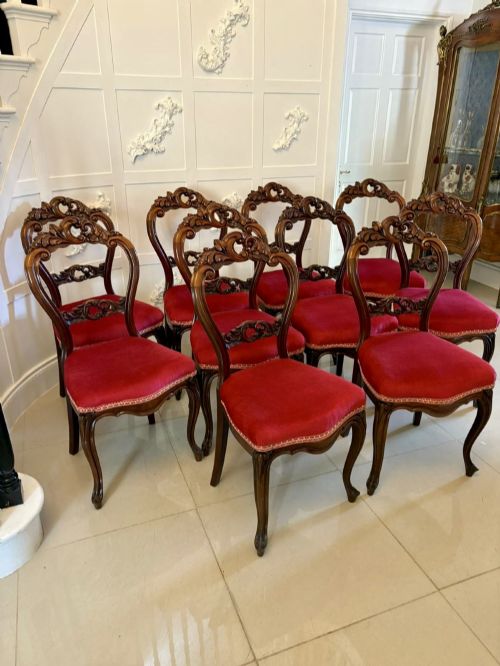
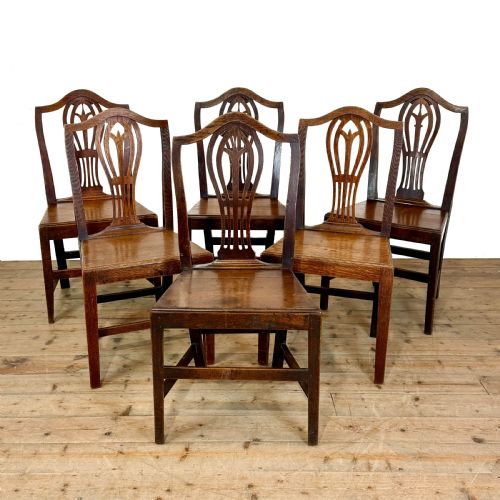
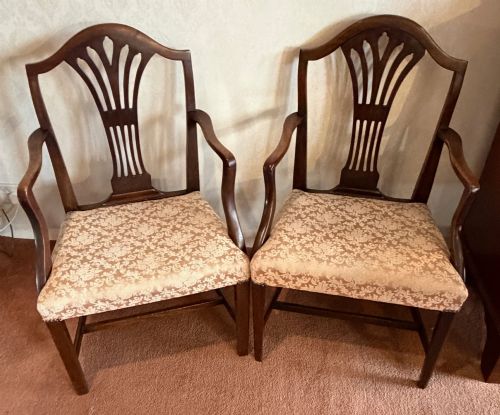

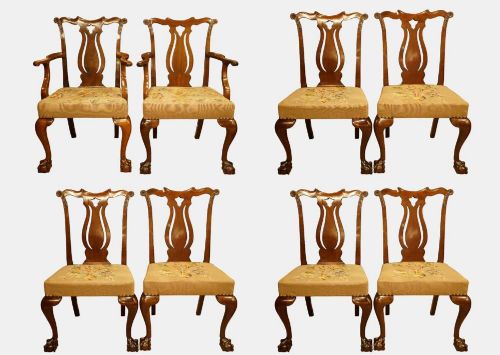
Period Revival Seating
Period revival seating brings earlier centuries back to the dining room and parlour through faithful interpretations of past forms.
Period Revival Seating
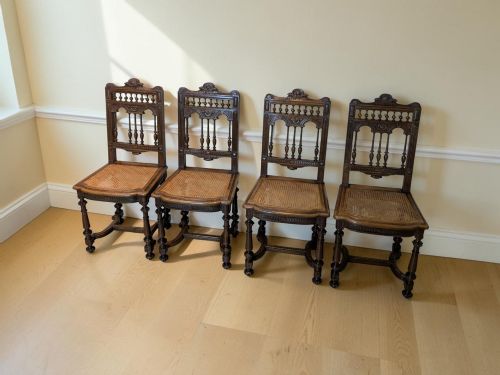
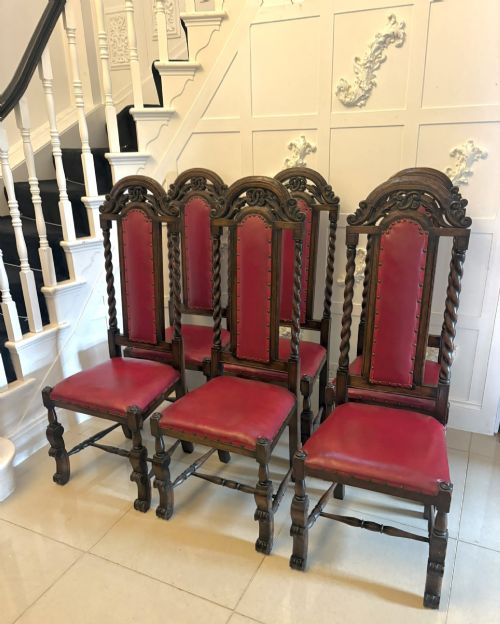
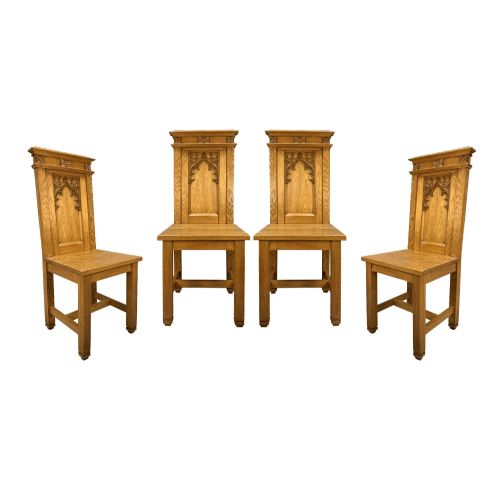
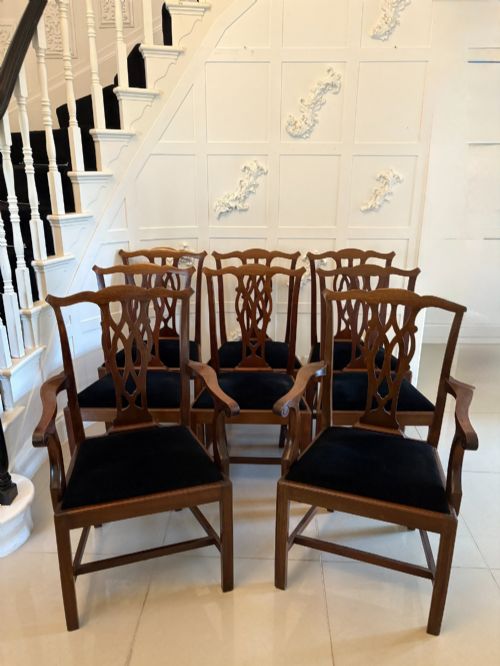
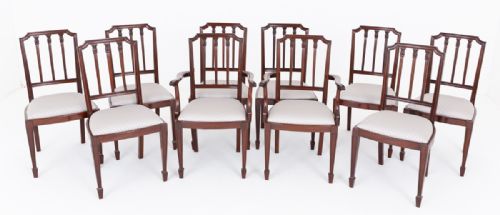
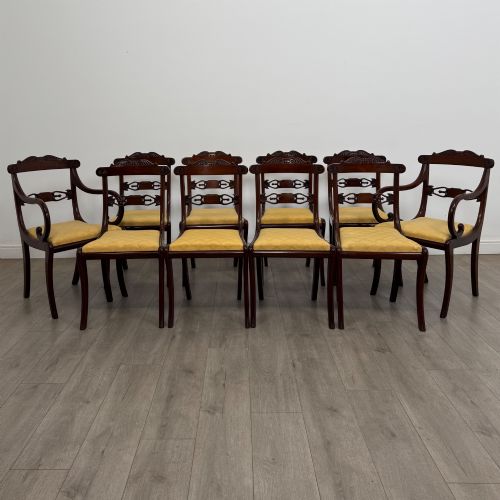
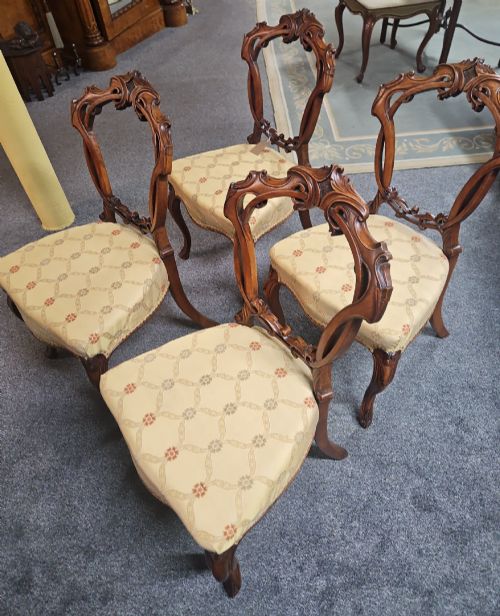
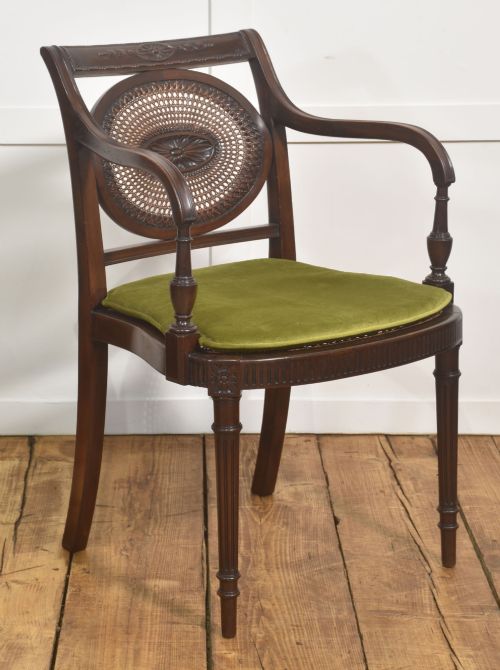
Period revival seating encompasses chairs, armchairs, and settees built in later eras to emulate historical designs. When searching for period revival seating, buyers encounter dining chairs, armchairs, desk chairs, and settees spanning the nineteenth and early twentieth centuries.
The selection here draws primarily from Victorian, Edwardian, and early twentieth-century workshops producing retrospective designs. Forms span dining sets, library armchairs, and matching carvers rooted in earlier Georgian, Regency, and seventeenth-century aesthetics.
Materials and construction
Cabinetmakers utilised dense timbers such as mahogany, walnut, and oak to construct sturdy frames capable of supporting intricate hand-carved details. Satinwood appears for decorative inlay work on select desk and salon pieces.
Upholstery completed the seating, utilising fabrics, velvet, tapestry, and cane inserts. Original covers sit alongside later textile replacements on frames joined by traditional cabinetmaking methods.
The documented periods range from nineteenth-century Victorian production through Edwardian workshops up to the nineteen-thirties.
Factors that govern quality
The depth and crispness of hand-carved ornament separate standard workshop production from superior examples. Ribbon backs, scrollwork, and moulded frames reveal the carver's hand most clearly.
Timber selection dictates overall substance, with figured walnut, burr walnut, and dense mahogany providing superior visual weight. Frame integrity and the retention of original upholstery materials influence the standing of individual sets.
Charles Bevan
The Period Revival Seating Glossary
- Carver armchair
- An armchair designed to match a set of single dining chairs, typically featuring open arms and a wider seat.
- Ribbon back
- A chair back design where the central splat resembles interlaced ribbons, common in eighteenth-century styles.
- Wainscot chair
- A heavy wooden armchair constructed with panelled backboards, originating in the seventeenth century.
- Settee
- A long wooden or upholstered seat with a back and arms, designed to accommodate multiple people.
- Splat
- The vertical strip of wood running from the seat to the top rail in the centre of a chair back.
Period Revival Seating: Frequently Asked Questions
What is period revival seating?
Period revival seating comprises chairs and settees made in the nineteenth and twentieth centuries that replicate historical designs from earlier epochs.
These pieces allow buyers to enjoy classical aesthetic proportions paired with the sturdier structural condition typical of later manufacturing dates.
How do I identify the style?
Identification relies on examining signature decorative motifs such as cabriole legs, carved splats, and specific woodwork details like twist legs or ribbon backs.
Comparing the overarching silhouette to known eighteenth-century or seventeenth-century precedents clarifies which specific historical period a piece emulates.
Are dining chairs sold in sets?
Many dining chairs appear in matched sets ranging from four up to twelve pieces, often including a pair of carver armchairs.
Larger configurations typically combine primary single chairs with accompanying armchairs sharing identical timber and carved details.
How should I care for timber frames?
Wooden frames require protection from direct sunlight and steady indoor humidity levels to prevent timber shrinkage or veneer cracking.
Routine dusting with a dry cloth preserves the finish, avoiding heavy silicone polishes that build up on antique surfaces over time.