



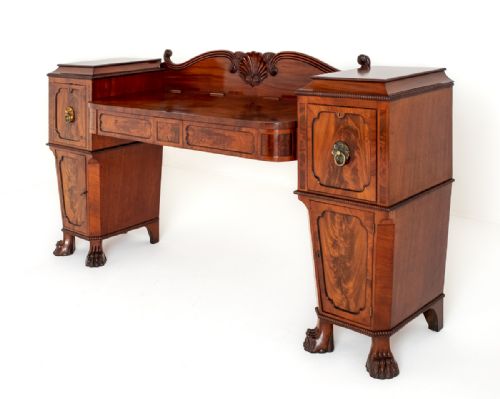


Period Pedestal Sideboard
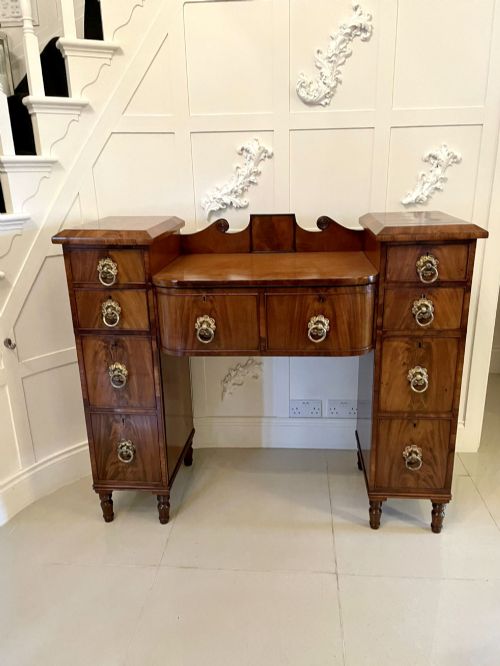
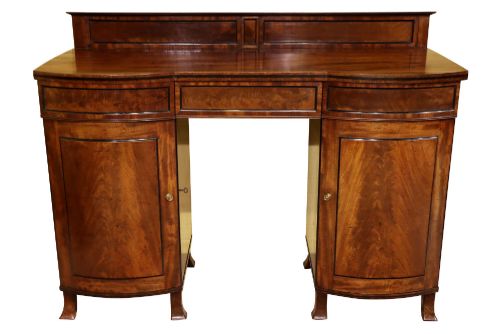
A period pedestal sideboard brings serious presence to a dining room, offering deep pedestals and striking mahogany grain that instantly anchors a formal interior.
Period Pedestal Sideboard
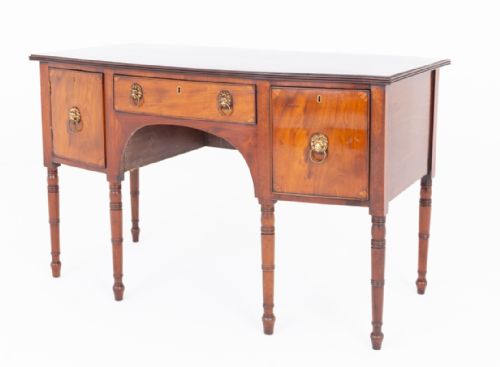
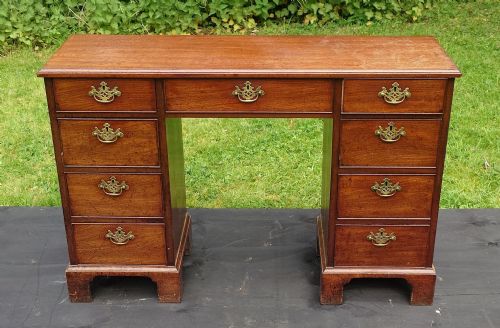
A period pedestal sideboard is a substantial dining room storage piece featuring flanking pedestals connected by a central counter or recess. These forms emerge strongly from the Georgian and Regency eras, constructed to meet the demands of grand dining rooms.
Buyers browsing this selection will most frequently encounter nineteenth-century and Georgian interpretations in mahogany. Pieces often incorporate drop wells, brass galleries, or flanking cupboards within the pedestals for serving silver and wine.
Materials and construction
Cabinetmakers relied heavily on solid mahogany and flame mahogany veneer over sturdy secondary timbers, selected for rich colour and striking figure. Surfaces were often enhanced with delicate boxwood and satinwood stringing or geometric wood inlay.
Structural elements frequently included brass details such as gallery rails and decorative mounts. Construction methods demanded precise cabinetwork to manage large pedestal doors and heavy writing drawers.
Period Pedestal Sideboard Retail Price Guide 2026
Typical asking prices for period pedestal sideboard among the pieces listed under this phrase on Sellingantiques today, from the lower quarter to the upper quarter. They describe what is for sale here now, not the wider market.
Listings span the Georgian, Regency, and Edwardian periods, utilising mahogany, satinwood, and brass.
Judging quality and proportion
Quality rests significantly on the choice of timber veneer, where dramatic flame mahogany or carefully matched grain elevates a piece far above plain stock. The crispness of inlaid stringing and the integration of original brass hardware also signal superior workshop standards.
Proportion dictates desirability, particularly in narrower examples or smaller-scale side cabinets where maintaining balanced lines is more difficult. Pieces retaining their original fitted interiors or working brass galleries command greater respect among purists.
Gillows·S Jamar
The Period Pedestal Sideboard Glossary
- Pedestal sideboard
- A large dining room sideboard featuring two distinct side cupboards or pedestals flanking a central section. This form provides substantial interior storage for china and silverware.
- Flame mahogany
- A highly figured timber veneer prized for its rippled, flame-like pattern. Cabinetmakers used it on prominent drawer fronts and cupboard doors to create visual depth.
- Brass gallery
- A decorative metal railing fitted to the rear top surface of a sideboard. It originally prevented serving dishes from sliding off during use.
- Drop well
- A depressed central section in the top surface of certain sideboards. This lowered profile accommodated tall serving pieces or made carving easier.
Period Pedestal Sideboard: Frequently Asked Questions
How do I spot a Regency sideboard?
Regency sideboards typically display clean classical lines, rich mahogany veneers, and sometimes brass gallery rails or lion paw feet. They often incorporate restrained brass inlay rather than heavy carving.
Look for architectural proportions and classical restraint, which distinguish Regency work from the more heavily carved Victorian pieces that followed.
Where should I place a sideboard?
A period sideboard belongs naturally against the longest wall of a dining room, where its substantial length can balance the dining table. Ensure you allow enough clearance around the pedestal doors to open them fully.
Because these pieces are deep and heavy, measuring your room clearances carefully before purchase is essential for a comfortable fit.
How do I care for mahogany?
Protect mahogany surfaces by keeping them away from direct sunlight and maintaining steady room humidity to prevent the veneer from lifting. Dust regularly with a soft, dry cloth and avoid silicone-based polishes.
Feeding the wood occasionally with a traditional beeswax polish helps maintain the natural warmth and depth of the timber grain.