

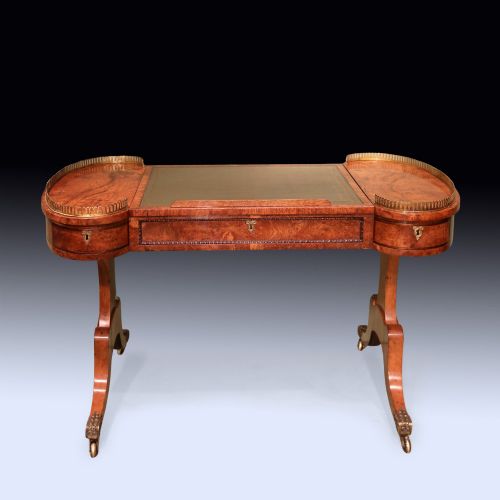
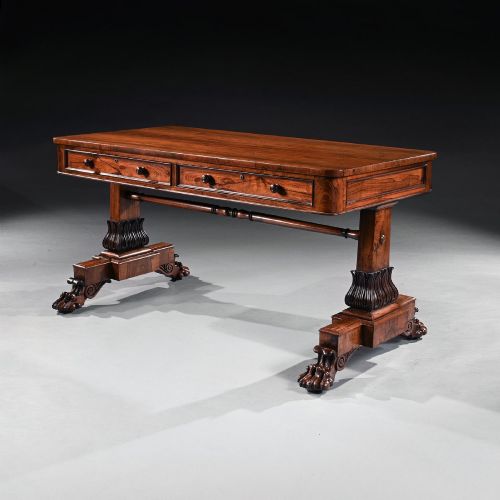

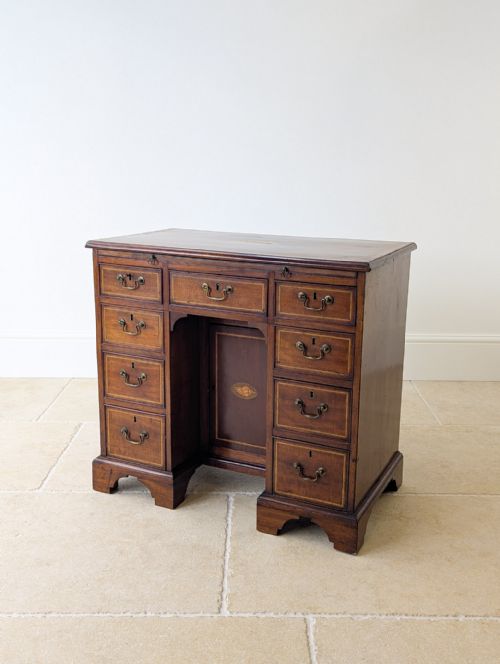
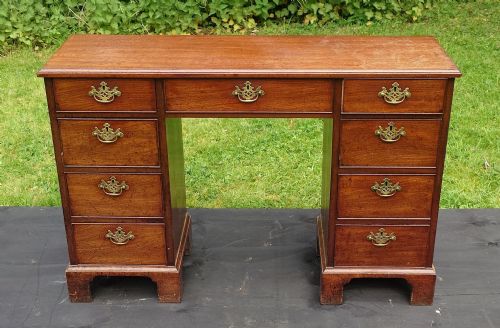


Period Pedestal Desk
A period pedestal desk provides a substantial writing surface underpinned by banks of drawers, grounding a study with timber and history.
Period Pedestal Desk
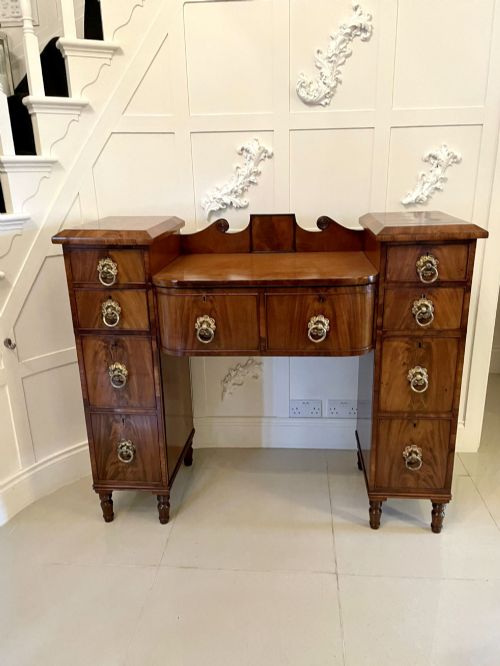
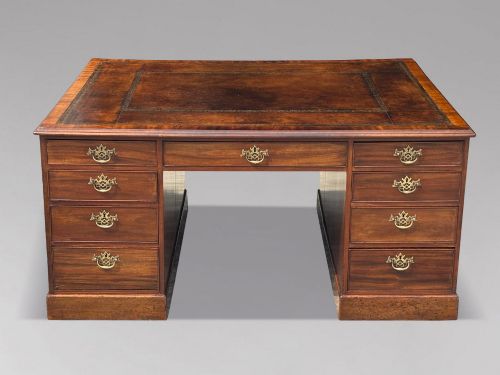
When you examine a period pedestal desk, you look at substantial writing furniture designed with two supporting banks of drawers flanking a central opening. These pieces emerge from Georgian, Regency, and Victorian workshops, utilising dense timbers built for persistent administrative work.
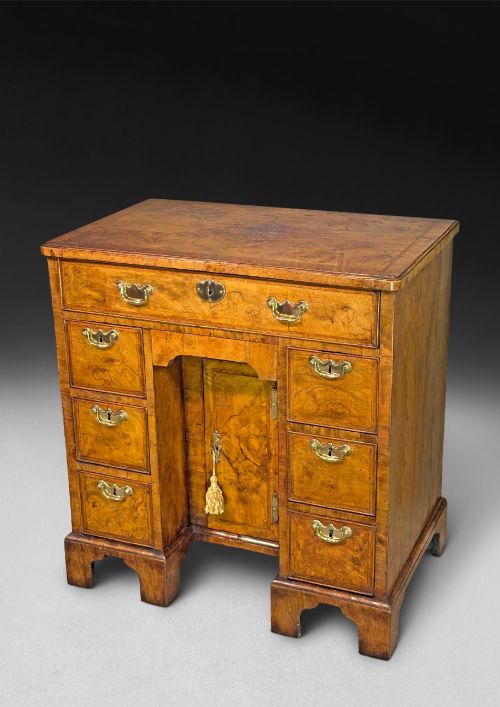
The versions you meet most frequently on this page belong to the Georgian and Regency eras, constructed in mahogany or rosewood with inset leather writing surfaces. They range from kneehole configurations to large partners desks designed to accommodate two users face to face.
Cabinetmakers of the eighteenth and nineteenth centuries shaped these desks to serve libraries, studies, and grand offices. Their architecture prioritises symmetry, structural rigidity, and deep storage capacities within dual pedestals.
Distinctions in craftsmanship and design
Quality separates ordinary utility pieces from exhibition examples through the selection of timber veneers and the crispness of carved details. Superior desks display continuous grain matching across drawer fronts and finely executed cockbeading.
Internal construction reveals the maker's discipline through secondary wood selection, such as solid oak drawer linings rather than deal. The precision of dovetailing and the retention of original brass fixtures further elevate a piece within the tier.
Some desks hide secret compartments behind dummy drawer fronts, built for concealing private correspondence from curious household staff.
George Faulkner Armitage·Gillows of Lancaster
The Period Pedestal Desk Glossary
- Partners desk
- A large double-sided desk designed for two people to work opposite each other, featuring drawers on both longitudinal faces.
- Kneehole desk
- A compact form of writing desk with a central recess for the legs, flanked by single or double columns of small drawers.
- Cockbeading
- A narrow convex moulding applied to the edges of drawer fronts to frame them and protect the veneer boundaries.
- Dovetail
- An interlocking joint formed by wedge-shaped fingers, prized by cabinetmakers for its immense tensile strength in drawer construction.
- Escutcheon
- A protective plate surrounding a keyhole, commonly cast in brass and shaped to match the prevailing style of the period.
Period Pedestal Desk: Frequently Asked Questions
What defines a partners desk?
A partners desk provides workspace and drawer storage on both sides, allowing two individuals to sit opposite one another.
Cabinetmakers engineered these large pieces for use in libraries and administrative offices where multiple people required shared access to documents.
What timbers were used for these desks?
Mahogany, rosewood, walnut, and oak serve as the primary structural and decorative timbers found across these listings.
Cabinetmakers selected these hardwoods for their density, structural stability, and capacity to accept fine carving and polished finishes.
How should I care for the leather top?
Leather writing surfaces require gentle dusting and occasional treatment with appropriate leather dressings to prevent cracking.
Avoid excessive moisture and direct sunlight to preserve the hand-tooled gold leaf borders and suppleness of the hide.