




Period Open Shelves
Period open shelves offer accessible display and storage, bringing timber grain and architectural form into daily rooms.
Period Open Shelves
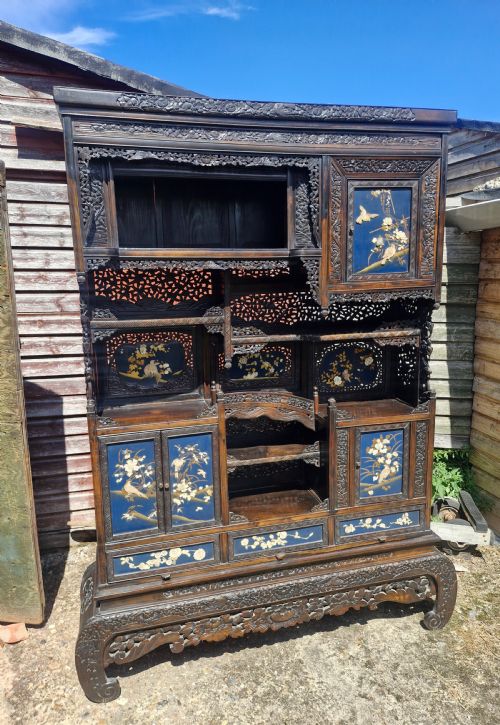
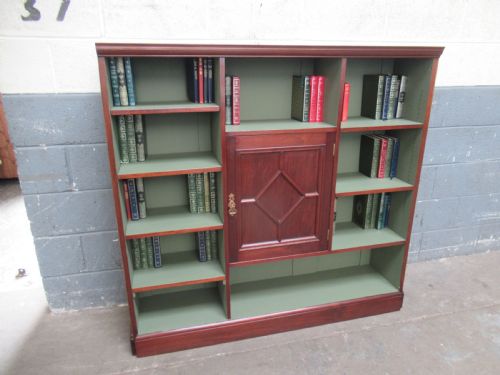
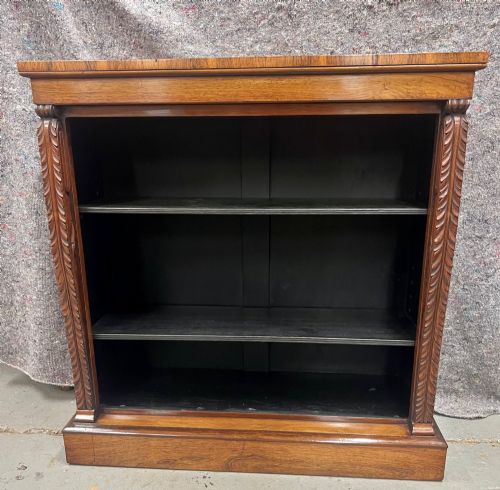
When searching for period open shelves, buyers encounter a variety of freestanding bookcases, tiered etageres, wall-mounted units, and display cabinets designed to hold books and decorative objects. These items emerge from Georgian, Regency, William IV, Victorian, and Edwardian eras, alongside Japanese Meiji period examples.
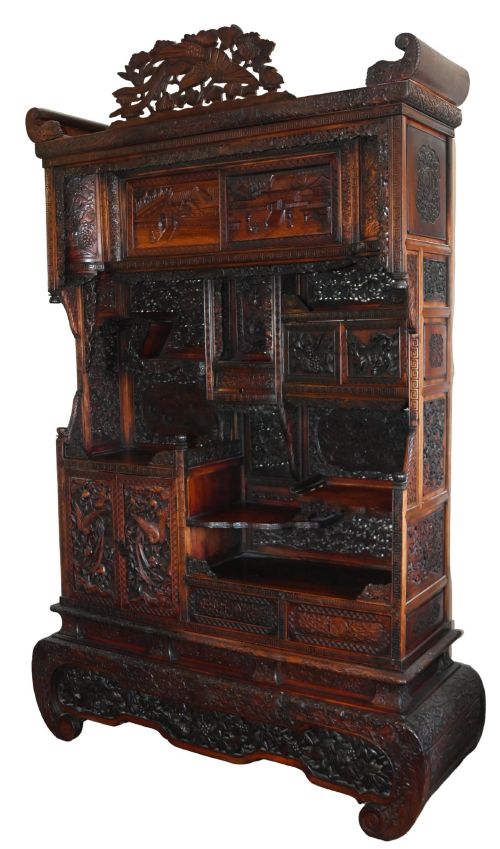
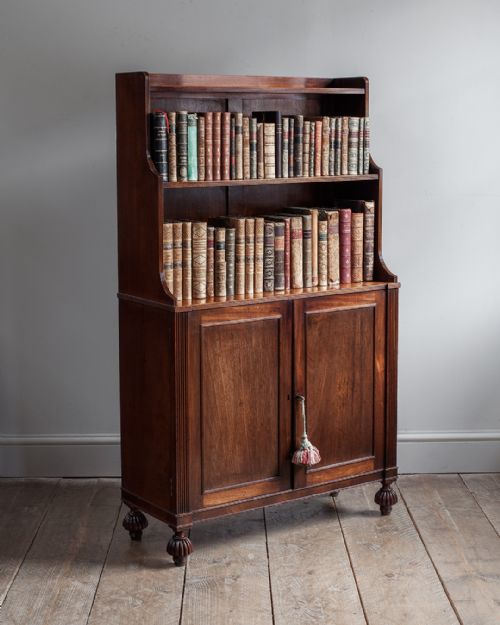
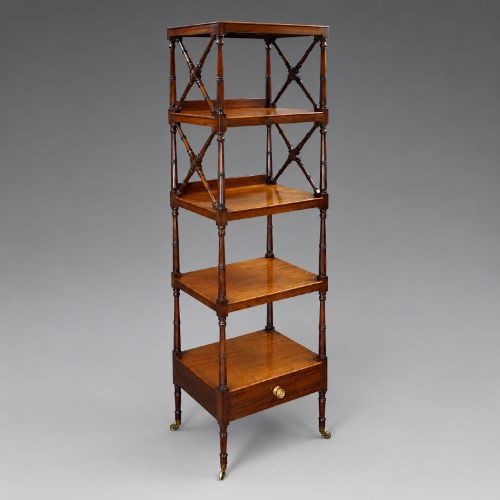
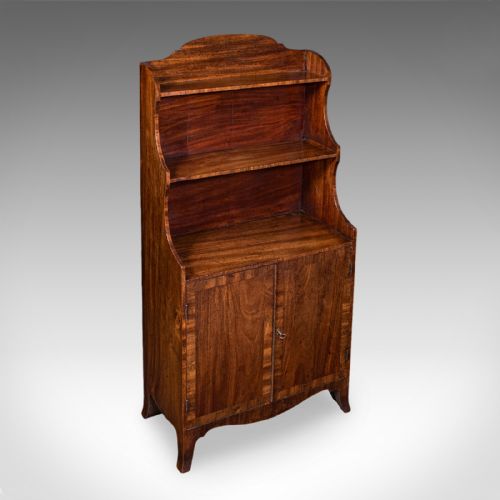
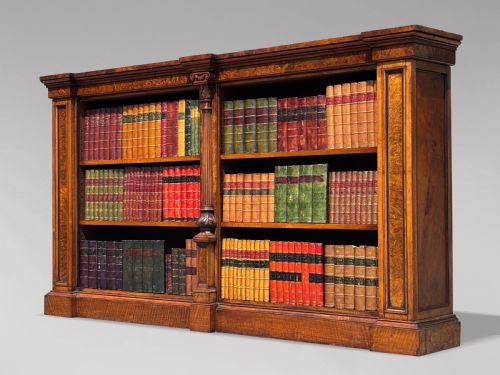
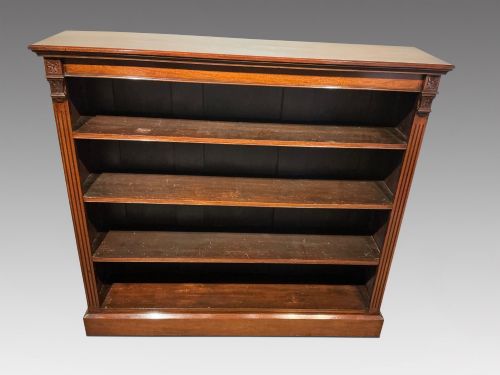
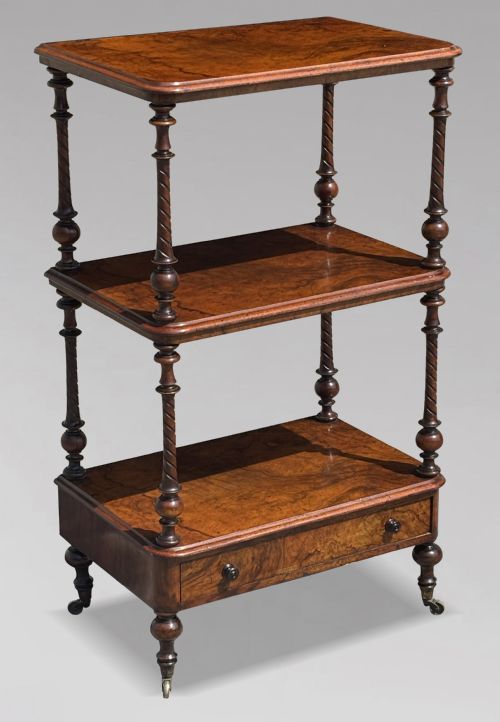
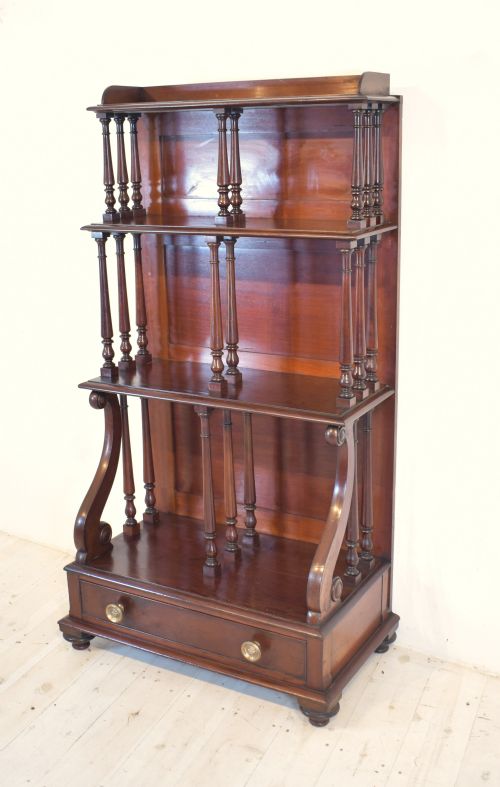
The most common form met on this page is the mahogany or rosewood bookcase from the Regency or Victorian periods, often arranged with open tiers or waterfall steps. Alongside these sit multi-tiered whatnots and specialised display pieces like Shodana cabinets.
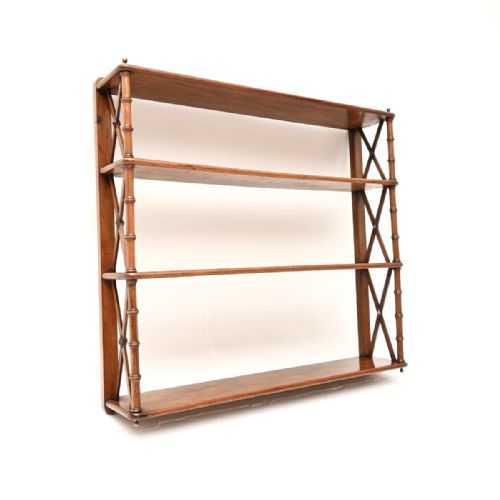
Origins span English workshops and Japanese makers, utilising native hardwoods alongside exotic imports to create functional furniture for libraries, drawing rooms, and studies. Pieces range from small wall-hanging compartments to large breakfront floor units.
Materials and Construction
Makers relied heavily on dense timbers such as mahogany, rosewood, walnut, and oak, often selecting figured veneers or solid planks for upright supports and shelves. Brass mounts, leather inserts, and mother of pearl detailing occasionally supplement the primary woodwork.
Construction techniques include straightforward dowelled and rebated joints for fixed shelving, alongside graduated tiers for waterfall designs and multi-tiered whatnots supported by turned columns. Lacquer work and intricate carving appear on Japanese pieces from the Meiji period.
Period Open Shelves Retail Price Guide 2026
Typical asking prices for period open shelves among the pieces listed under this phrase on Sellingantiques today, from the lower quarter to the upper quarter. They describe what is for sale here now, not the wider market.
Listings feature woods such as mahogany, rosewood, walnut, and oak, alongside brass and mother of pearl details across various nineteenth-century periods.
Evaluating Quality
Quality rests upon the selection of timber grain, the crispness of turned supports, and the structural integrity of the tier joints. Rich, unblemished rosewood or figured mahogany with deep natural patination denotes superior material selection by the cabinetmaker.
Proportion and restraint in design distinguish the finer examples from standard production pieces. Well-balanced waterfall curves, precise brass detailing, and harmonious proportions lift a simple shelving unit into a distinguished piece of period furniture.
The Period Open Shelves Glossary
- Etagere
- A piece of furniture consisting of a set of open shelves for displaying small articles and bric-a-brac. The term shares a close historical overlap with the whatnot.
- Waterfall bookcase
- A shelving unit where each tier steps back progressively from the one below it, creating a cascading profile. These pieces frequently date to the Regency and Victorian eras.
- Shodana
- A traditional Japanese cabinet or shelving unit with asymmetrical compartments, sliding doors, and display ledges. These items arrived in Western collections during the Meiji period.
- Breakfront
- A cabinet or bookcase design where the central section projects forward from the flanking wings. This architectural arrangement adds depth and shadow to large library walls.
Period Open Shelves: Frequently Asked Questions
What rooms suit an open bookcase?
These units fit comfortably in studies, sitting rooms, and bedrooms where quick access to books or display items is desired. Their open construction maintains a sense of light and space within domestic interiors.
Taller breakfront or floor-standing variants anchor larger living spaces, while petite wall-mounted shelves or three-tier whatnots utilise compact corners and narrow walls.
How do I care for rosewood shelves?
Dust timber surfaces regularly with a soft, dry cloth to prevent particulate buildup on polished rosewood and mahogany. Avoid placing furniture in direct sunlight or near heat sources to protect the grain.
Apply a light microcrystalline wax periodically to nourish the wood and maintain the natural lustre without sealing the pores. Keep leather writing inserts or dummy book facades away from excess moisture.
How do I identify a Victorian piece?
Victorian open shelves often utilise darker walnut or robust mahogany timbers, displaying heavier proportions than their Georgian or Regency predecessors. Common markers include simple architectural mouldings and three-tier formats.
Construction details from this era frequently involve machine-sawn elements alongside hand-finished joints, reflecting the transition in manufacturing techniques during the nineteenth century.