

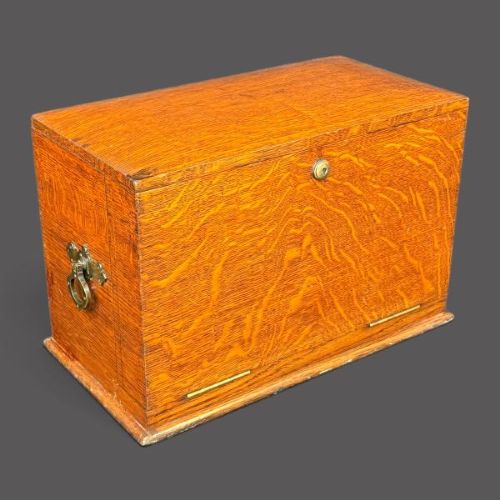
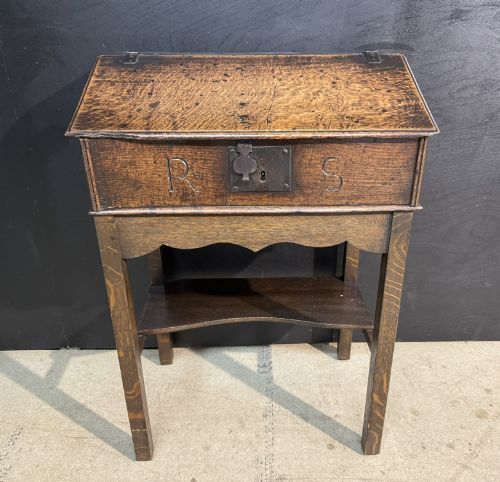
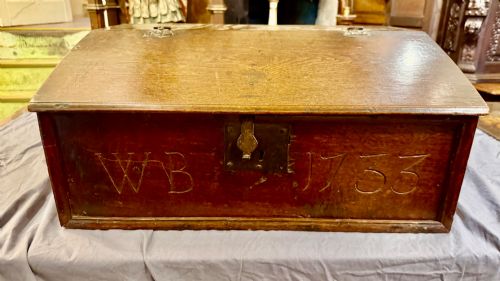

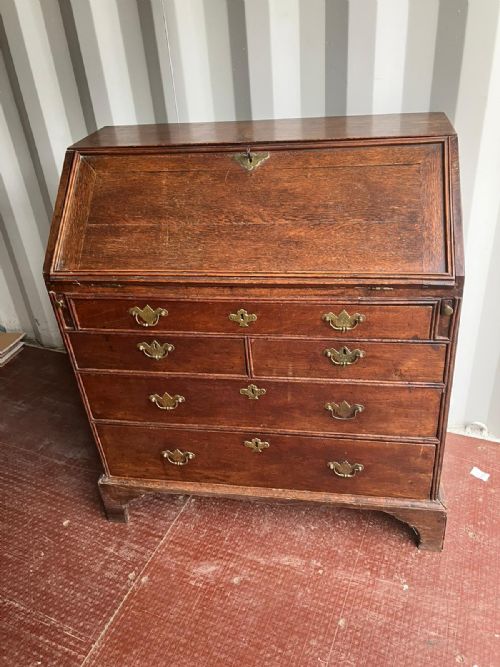


Period Oak Writing Slope
A period oak writing slope offers sturdy seventeenth and eighteenth-century craftsmanship for daily use on a tabletop.
Period Oak Writing Slope
When you search for a period oak writing slope, you encounter practical desk boxes, Bible boxes, and table top bureaus spanning the seventeenth century through the Georgian era. These utilitarian pieces provided a secure place to store writing materials and a slanted surface for correspondence before standalone desks became common in every household.
The versions most frequently met on this page range from plain seventeenth-century desk boxes to refined eighteenth-century bureaus featuring fitted interiors and occasional inlay work. Examples from the William and Mary and George III periods demonstrate the evolution of these portable and tabletop writing surfaces over generations.
Buyers appreciate these items for their honest construction and tactile timber surfaces that show centuries of use. Each piece reflects the domestic writing habits of its era, combining storage compartments with functional slopes tailored for quill and ink.
Materials and construction methods
The primary material across these listings is solid oak, selected for durability and finished with simple hand-carving or left with a plain planked surface. Workshops employed traditional joining techniques to construct the box and desk bodies, ensuring the timber could withstand regular opening and closing.
Hardware such as iron and brass hinges, lock plates, and escutcheons provided security and structural reinforcement for the lids and interior compartments. Secondary decorative touches like holly and bog oak inlay appear on select eighteenth-century boxes, adding contrast to the dark oak ground.
Leather inserts occasionally surface on the writing surfaces of later bureaus, providing a smooth plane for penwork. These materials combine to create heavy, resilient objects built to serve writers across decades.
Period Oak Writing Slope Retail Price Guide 2026
Typical asking prices for period oak writing slope among the pieces listed under this phrase on Sellingantiques today, from the lower quarter to the upper quarter. They describe what is for sale here now, not the wider market.
Some seventeenth-century writers stored spare quill nibs and sealing wax so securely in these boxes that tiny wax drips still linger inside.
Distinctions in quality and execution
Quality in these pieces rests upon the integrity of the timber and the complexity of the interior arrangement, rather than surface ornament alone. A simpler Bible box relies entirely on sound plank construction and original iron or brass fittings, whereas a bureau presents intricate small drawers and pigeonholes behind the slant front.
The presence of decorative techniques like carving or contrasting holly and bog oak inlay elevates the visual interest of an 18th-century desk box. Original hardware and undisturbed interior layouts distinguish pieces that retain their complete historical character from those with replaced components.
The Period Oak Writing Slope Glossary
- Bible box
- A small wooden chest with a slanted lid, originally built to hold a large family Bible and later utilised for correspondence and writing materials.
- Slant front
- A hinged lid that slopes downward toward the user, providing an ergonomic angle for handwriting when closed and access to internal compartments when opened.
- Bureau
- A desk form featuring a sloping writing flap that opens to reveal drawers and pigeonholes, often resting on a table frame or set atop drawer chests.
- Escutcheon
- A protective plate surrounding a keyhole, typically formed from brass or iron to prevent the wood from splintering around the lock.
- Bog oak
- Subfossil oak that has been buried in peat bogs for centuries, turning a deep dark brown or black colour and utilised for decorative inlay.
Period Oak Writing Slope: Frequently Asked Questions
What is a period oak writing slope?
A period oak writing slope is a portable or tabletop box with an angled lid, designed to hold writing equipment and provide a firm surface for letters. These items date primarily from the seventeenth and eighteenth centuries.
They represent an era when paper was expensive and writing was conducted at portable desks placed upon common tables rather than dedicated writing desks.
How were these slant front boxes used?
Users placed the box on a table, opened the slanted lid to retrieve paper and ink from internal compartments, and wrote directly upon the sloping exterior. The angle of the lid reduced glare and provided a comfortable hand position for quills.
When correspondence concluded, letters and seals were locked securely inside the main body of the box to protect them from moisture and prying eyes.
How do I date a seventeenth-century oak box?
Seventeenth-century pieces typically display pegged joints, hand-sawn boards, and simpler structural designs without complex internal drawer systems. Iron hinges and lock mechanisms from this period reflect early blacksmithing techniques.
Surface patination, timber shrinkage, and traditional tool marks help distinguish these early examples from later eighteenth-century interpretations.
Where should I place a desk box at home?
These compact boxes sit well on modern sideboards, studies, or dressing tables where their dark oak timber complements surrounding furniture. They require little surface area while offering practical storage for modern stationery or keepsakes.
Keeping them away from direct heat sources protects the old oak timbers and historical finishes from drying out over time.