
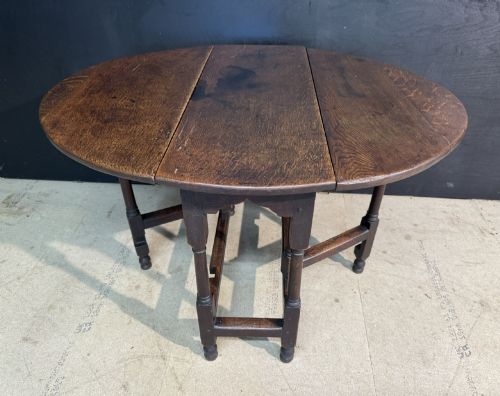
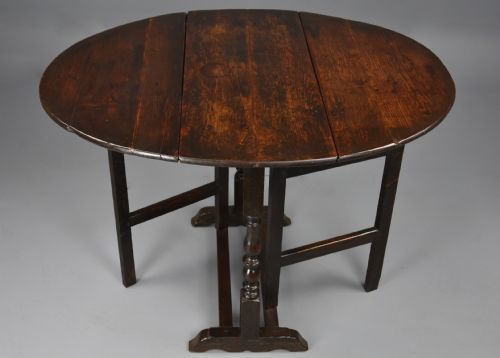
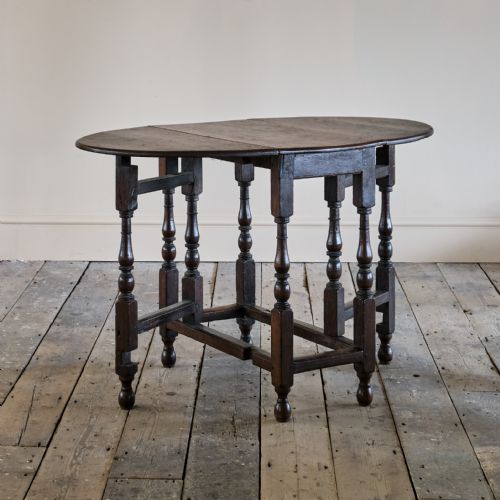
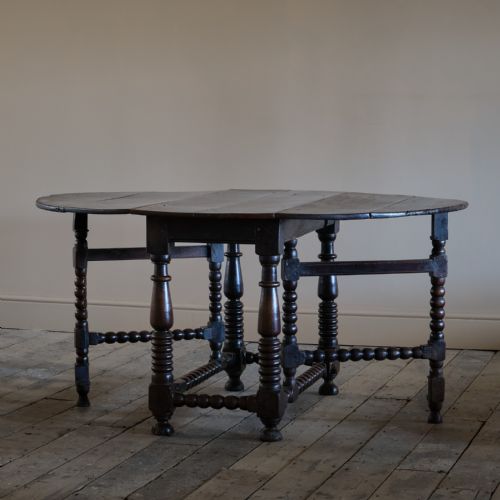
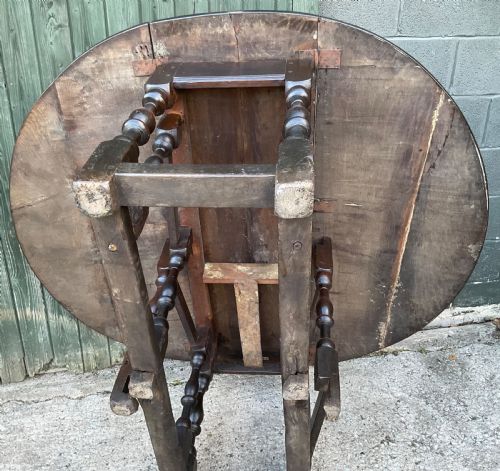


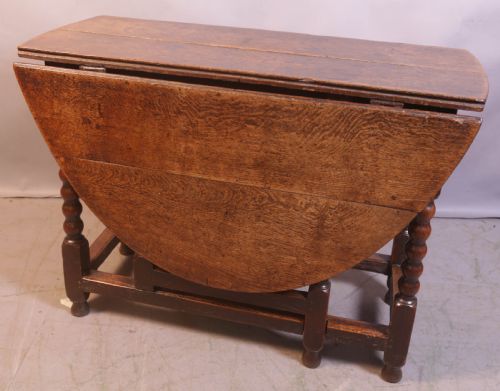


Period Oak Gate Leg Table
A period oak gate leg table is a sturdy folding dining surface built to save space, valued for rich timber tones and functional antique character.
Period Oak Gate Leg Table
A period oak gate leg table combines drop leaves with pivoting swing legs to support extended surfaces when dining or entertaining. These pieces emerge chiefly from seventeenth and eighteenth century workshops, spanning smaller occasional formats up to large farmhouse dining versions.
The version most commonly met on this page is the seventeenth century or eighteenth century oak gateleg table, often built with solid oak timber. Examples range from compact small proportions suitable for side placement to large seventeenth century oak gate leg dining tables.
Makers designed these items for domestic utility, utilising sturdy timbers and drop leaves that fold flat against a central frame. Surviving specimens carry distinct regional English country styles alongside Jacobean, Georgian, and rustic farmhouse aesthetics.
Materials and construction
Joiners constructed these tables from solid oak timber, frequently augmented with iron or brass hardware for hinges and pivots. Planks formed the top surfaces and leaves, supported by turned or straight structural legs.
Makers employed traditional joinery techniques, creating joined oak frames that could bear the weight of folding drop leaves. Turning methods produced bobbin turned gate leg table variants, utilising lathe work for the structural supports.
Listings span the seventeenth, eighteenth, and nineteenth centuries, featuring solid oak alongside iron and brass components.
Aspects of quality
Quality separates through the integrity of the original timber and the retention of authentic surface condition. Tables displaying deep original patina and minimal structural replacement command greater regard among collectors.
Proportion and scale also define finer pieces, particularly where delicate turnings balance the heavy weight of solid oak leaves. The stability of the gate mechanism and the preservation of early base structures indicate superior workshop execution.
The Period Oak Gate Leg Table Glossary
- Gateleg table
- A table featuring hinged drop leaves supported by one or more swinging legs that move like a gate. This design allowed furniture to fold compactly against a wall when not in use.
- Bobbin turning
- A type of lathe-turned leg or stretcher shaped like a series of rounded bobbins or spools. This decorative turning style frequently appears on seventeenth century examples.
- Drop leaf
- A hinged section of a tabletop that raises to extend the surface area and drops down when the extra space is unneeded. It forms the primary mechanism for adjusting table size.
- Patina
- The deep sheen and surface coloration developed by wood through age, handling, and light exposure over centuries. It serves as an indicator of genuine period surfaces.
- Joined oak
- Furniture constructed using mortise and tenon joints secured by wooden pegs rather than modern fasteners. This technique defines seventeenth and eighteenth century cabinetmaking.
Period Oak Gate Leg Table: Frequently Asked Questions
How do I date an oak gate leg table?
Dating relies upon examining construction methods, hinge types, and timber patination. Early seventeenth century pieces often show bobbin turnings and pegged joinery, while eighteenth century versions display smoother lines and Georgian proportions.
Hardware and tool marks also guide the assessment. Hand-sawn boards and forged iron fittings indicate older periods, whereas standardised screws point to later nineteenth century production.
Were gate leg tables used for dining?
Large formats served primary dining functions in country houses and farmhouses. Their folding leaves allowed households to clear floor space between meals.
Smaller formats functioned as side tables, occasional tables, or breakfast surfaces. Their adaptability made them central items in historical domestic interiors.
How do I care for solid oak furniture?
Solid oak requires stable indoor humidity to prevent timber splitting or warping. Regular dusting with a dry cloth protects the surface without building up chemical residues.
Direct sunlight and extreme heat sources should be avoided. Applying appropriate furniture wax periodically helps nourish the historic timber finish.
What is the difference between Jacobean and Georgian styles here?
Jacobean period tables feature heavier turnings, darker oak tones, and robust joined frames typical of the seventeenth century. They often present a rustic or architectural presence.
Georgian period examples trend towards lighter proportions and refined leg shapes. They reflect changing domestic fashions of the eighteenth century while retaining practical gate leg utility.