
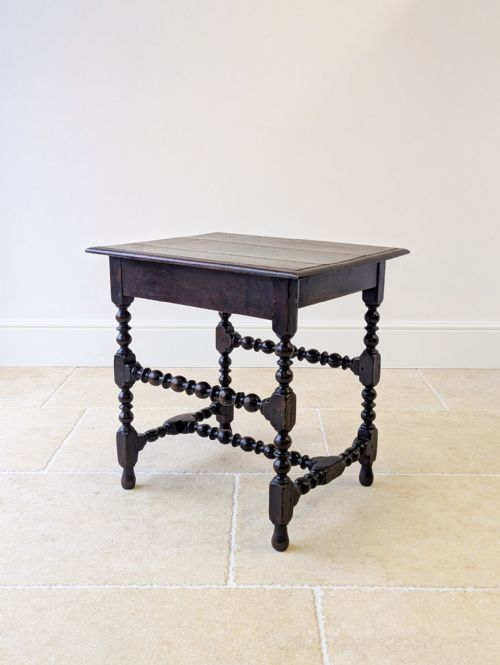


Period Oak End Table
A period oak end table brings centuries of British grain and honest carpentry straight to your sitting room.
Period Oak End Table
When you search for a period oak end table, you encounter compact tables designed for side use, lamp placement, and occasional service. The evidence shows these pieces span from the seventeenth century through the Georgian and Regency eras, alongside occasional later twentieth-century forms such as Art Deco nests.
The most common forms on this page are side tables, lamp tables, and occasional tables shaped from solid timber. They appear in seventeenth-century styles like William and Mary and Charles II, as well as eighteenth-century Georgian formats.
Many examples rely on regional English and Welsh workshop traditions, prioritising utility beside a chair or sofa. Their smaller proportions make them adaptable additions to modern rooms while maintaining historical character.
How they were made
Makers constructed these tables primarily from solid oak, frequently augmented with secondary timbers such as elm, yew, and pine. Selected pieces incorporate decorative surfaces using burr oak and wood veneer.
Structural integrity relied on traditional joinery, complemented by turned wooden legs like bobbin-turning, and augmented occasionally by brass or iron hardware. These construction methods ensured durability through generations of daily use.
Some tables retain the exact wobble of a seventeenth-century floor, reminding you that human hands shaped them before electricity existed.
What varies in quality
The distinction between ordinary and superior examples lies in the quality of the timber selection and the crispness of the carpentry. Tables featuring richly figured grain, such as burr oak or yew, stand apart from plain-timber counterparts.
Proportion and restrained detail separate masterwork joinery from basic utility pieces. Finer items display balanced turnings, tight joints, and surfaces that have developed a deep, honest patina over centuries.
Arthur Simpson Of Kendal
The Period Oak End Table Glossary
- Bobbin-turning
- A form of lathe-turned furniture leg resembling a string of spools or bobbins. This decorative turning method appears frequently on seventeenth-century pieces.
- Occasional table
- A small, movable table designed for intermittent use around a room. These versatile items function well beside seating to hold lamps or books.
- Pollard oak
- Timber taken from trees that were pollarded, resulting in dense, highly figured grain patterns. Cabinetmakers utilised this wood for decorative veneering on Regency tables.
- Refectory table
- A long dining table traditionally used in communal dining halls. Evidence shows these grand extending forms appearing alongside smaller occasional furniture.
- William and Mary
- A stylistic period spanning the late seventeenth and early turn of the eighteenth century. Furniture from this era often displays Dutch-influenced turning and geometric paneling.
Period Oak End Table: Frequently Asked Questions
How do I use a period oak end table today?
These compact tables serve admirably beside armchairs and sofas to hold reading lamps, drinks, or small decorative items. Their modest scale allows them to fit easily into modern layouts without dominating the room.
Positioning them away from direct heat sources protects the historic timber from drying out. Regular gentle polishing preserves the rich finish developed over hundreds of years.
How can I tell a seventeenth-century table from an eighteenth-century one?
Seventeenth-century examples often feature heavier structural elements, joined construction, and distinctive turnings such as bobbin patterns. Styles from this era frequently reflect Jacobean or William and Mary design sensibilities.
Eighteenth-century tables generally move towards lighter proportions and cleaner Georgian lines. Examining the construction underneath often reveals the transition in joinery techniques between these centuries.
What woods were used besides oak?
While oak forms the primary structural material across most pieces, makers frequently incorporated regional timbers. Elm, yew, and pine appear regularly in secondary elements or table tops.
More decorative items utilise burr oak and wood veneers to create striking surface patterns. Iron and brass fittings provide functional support and contrast against the warm timber.
Are these tables sturdy enough for daily use?
Solid oak construction and traditional joinery methods make these tables remarkably resilient. Centuries of survival prove their inherent structural strength under normal household conditions.
Treating them with standard care ensures they remain fully functional furniture pieces. Avoid overloading smaller occasional tables with excessive weight to protect their historic joints.