






Period Mahogany Shelf
A period mahogany shelf offers refined timber storage across forms from hanging wall tiers to floor bookcases.
Period Mahogany Shelf
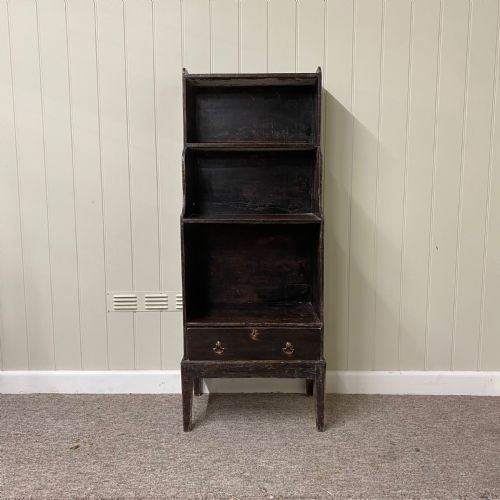
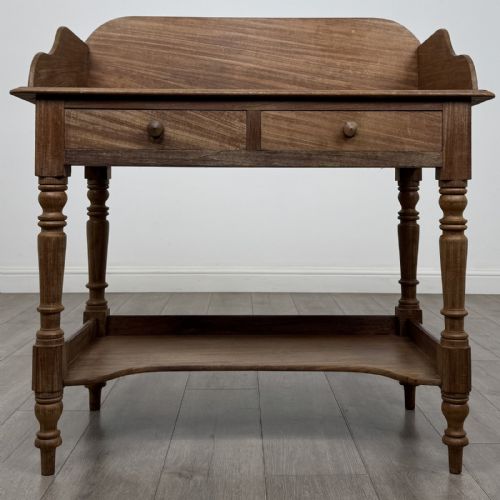
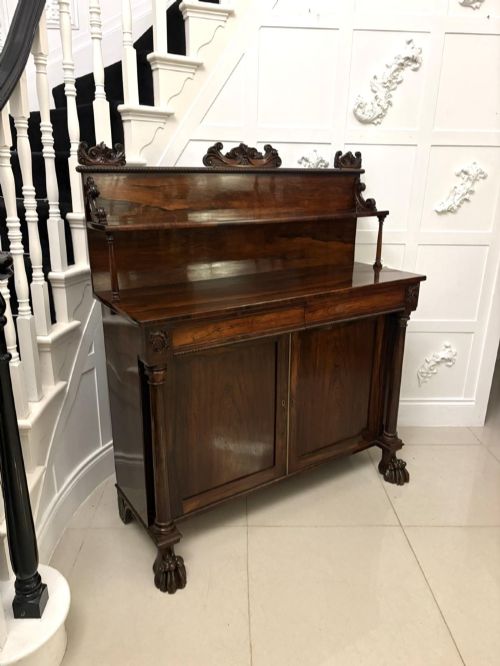
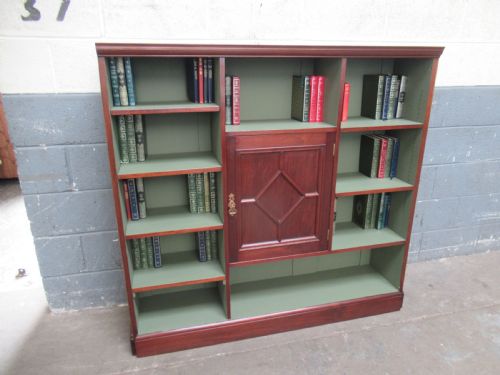
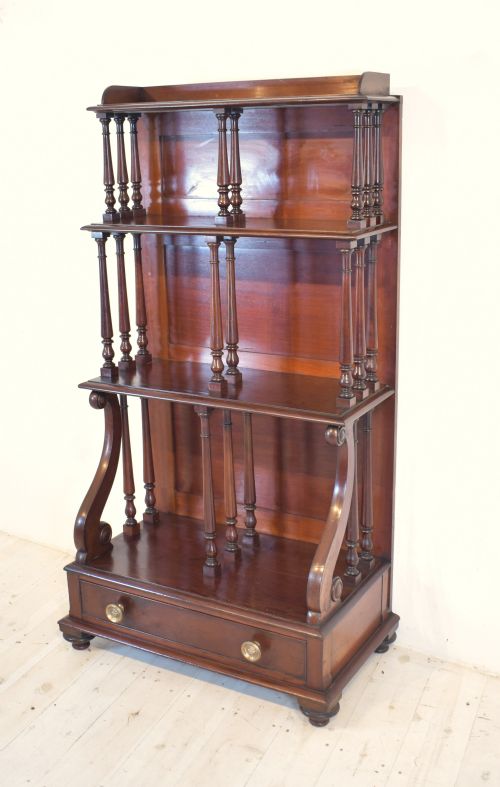
A period mahogany shelf encompasses various timber storage formats found throughout domestic interiors of past centuries. Buyers seeking a period mahogany shelf encounter versatile forms such as hanging wall shelves, open bookcases, multi-tiered étagères, and waterfall bookcases.
The selections span distinct historical eras, appearing predominantly in Regency, Georgian, and Victorian designs. These pieces range from compact bedside or hanging units to substantial breakfront floor bookcases and side cabinets with shelved superstructures.
Originating largely from British workshops, these utilitarian and display furnishings reflect the domestic requirements of the 18th, 19th, and early 20th centuries. Their enduring appeal lies in combining practical shelving with the rich grain of solid timber.
Construction and Materials
Makers utilised solid mahogany and flame mahogany veneer applied over secondary timbers to achieve deep reddish-brown tones and striking surface patterns. Selected sections often display figured grain that catches the light across flat panels and upright supports.
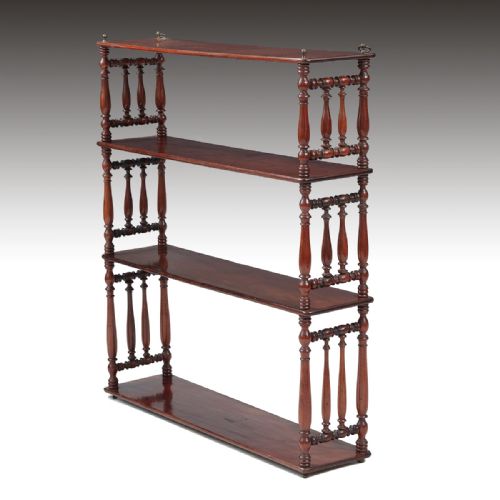
Construction techniques combine traditional joinery with decorative accents including brass fittings, glass panels, and occasional leather inserts. Hanging shelves utilise sturdy wall brackets, while floor-standing étagères and bookcases rely on tiered platforms and upright turnings.
Period Mahogany Shelf Retail Price Guide 2026
Typical asking prices for period mahogany shelf among the pieces listed under this phrase on Sellingantiques today, from the lower quarter to the upper quarter. They describe what is for sale here now, not the wider market.
Listings feature mahogany, brass, flame mahogany veneer, fabric, glass, rosewood, and leather across multiple eras.
Judging Quality
Superior examples distinguish themselves through the choice of timber figure, particularly symmetrical flame mahogany veneer, and the crispness of turned or carved details. Scale and proportion also govern desirability, with unusually small or neat formats commanding particular attention from collectors.
The integrity of original brass mounts, the subtlety of fitted drawers or cabinet doors beneath the shelving, and the overall harmony of the design separate workshop output from standard production pieces.
Gillows·Seikosha
The Period Mahogany Shelf Glossary
- Étagère
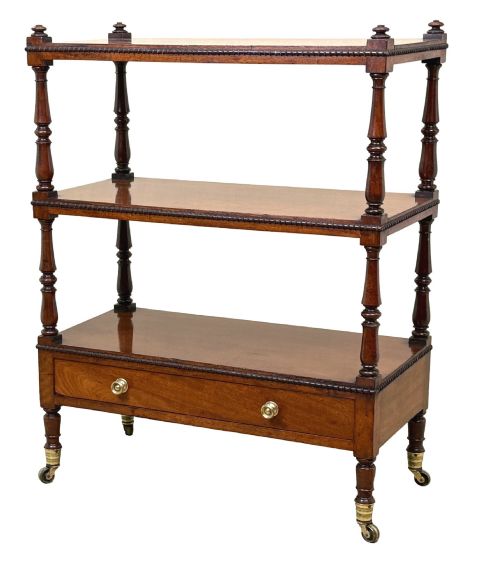
- An open piece of furniture with multiple tiers for displaying small objects or books. These freestanding display units date frequently to the Regency and Victorian periods.
- Whatnot
- A multi-shelved stand used for ornaments, books, or writing supplies. Often fitted with slender upright supports and sometimes mounted on castors.
- Waterfall bookcase
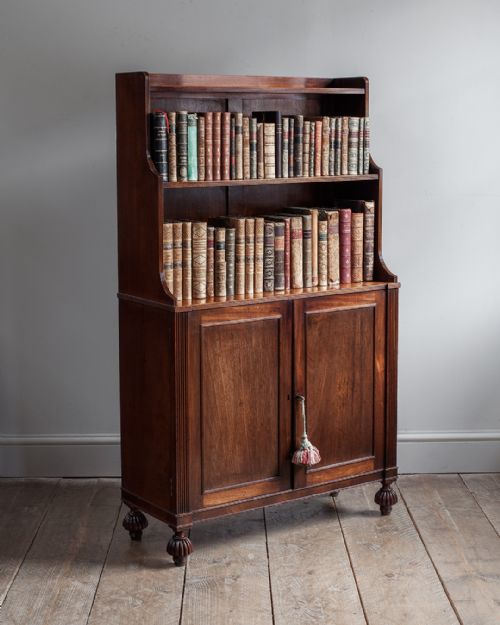
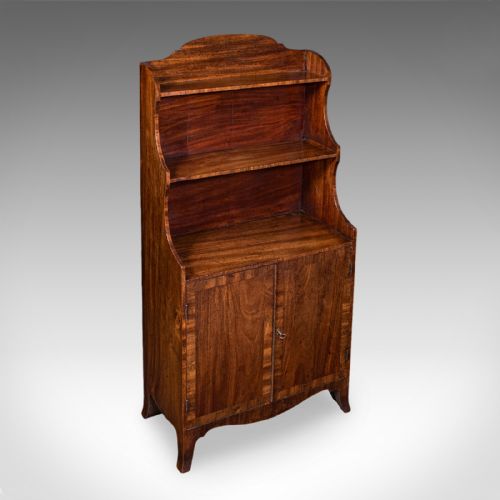
- A tiered shelving unit where each successive shelf steps back from the one below it. This profile creates a cascading effect popular in Georgian and Regency design.
- Chiffonier
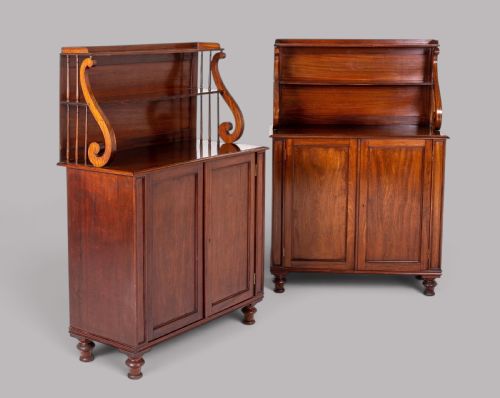
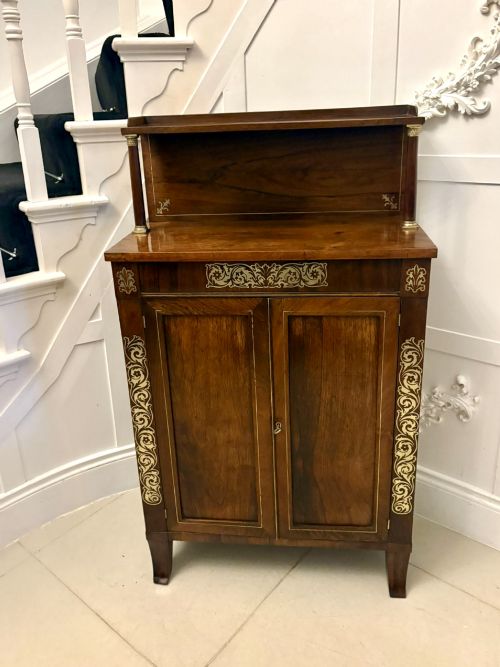
- A low cabinet featuring a shelved superstructure or mirror back above enclosed storage. These hybrid pieces combine sideboard utility with display space.
Period Mahogany Shelf: Frequently Asked Questions
How do I distinguish a chiffonier from a sideboard?
A chiffonier typically includes a raised back fitted with one or more shelves positioned above a low enclosed cabinet. Sideboards generally provide broader storage surfaces without the superstructure.
Both forms utilise mahogany timber, but the chiffonier serves a more intimate display function within a dining room or parlour.
Are hanging shelves sturdy enough for heavy books?
Hanging shelves are designed primarily for lighter volumes, decorative ornaments, and display pieces rather than heavy folio collections. Their structural strength depends entirely upon secure wall fixings and the integrity of the original hanging brackets.
Checking the wall attachment points ensures safe daily use in modern domestic settings.
What period do most mahogany étagères date from?
Most mahogany étagères originate from the Regency and Victorian eras, spanning the early to late 19th century. These pieces reflect a strong preference for multi-tiered display furniture in formal interiors.
Earlier George III examples also appear, showcasing lighter proportions and finer turning work.