

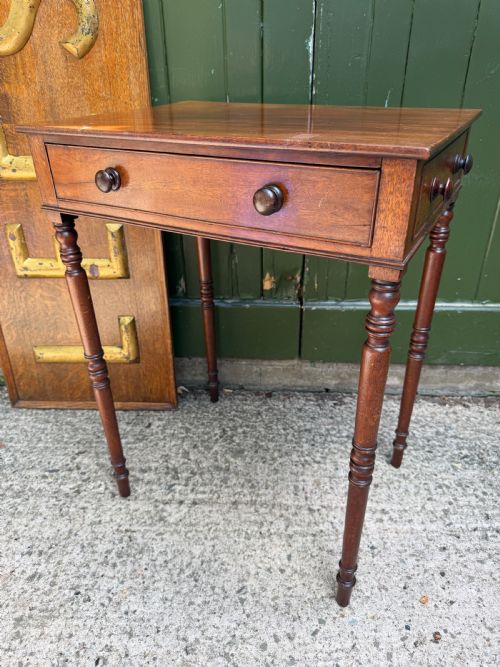
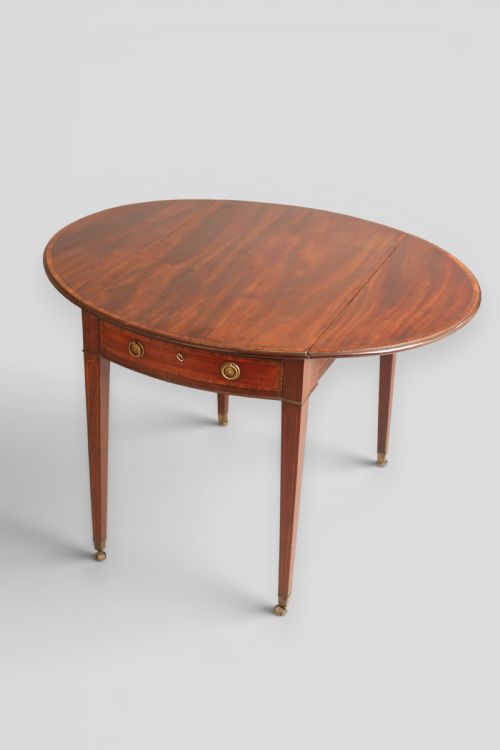

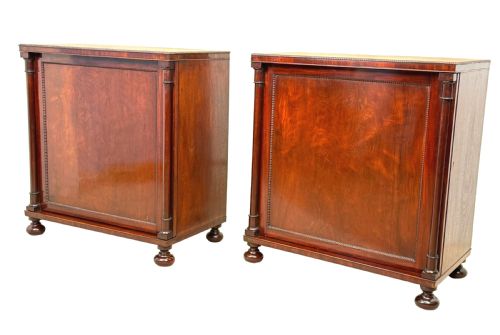
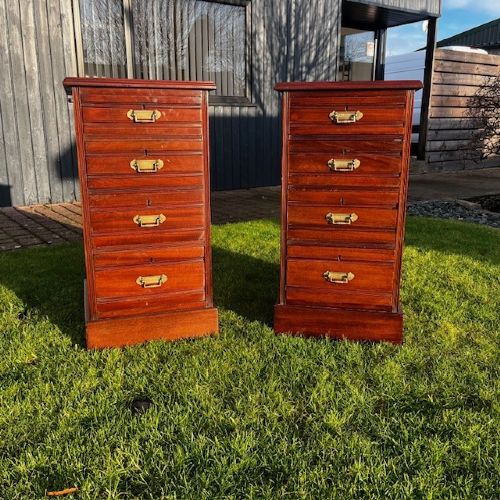


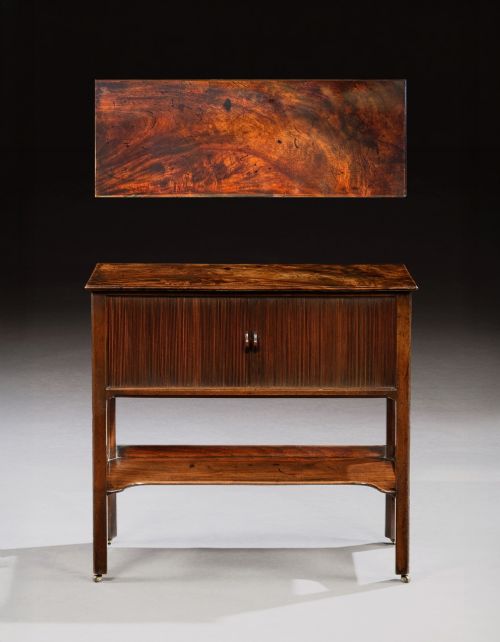


Period Mahogany Nightstands
Period mahogany nightstands offer timeless utility and rich timber grain, standing ready to elevate any bedroom scheme.
Period Mahogany Nightstands
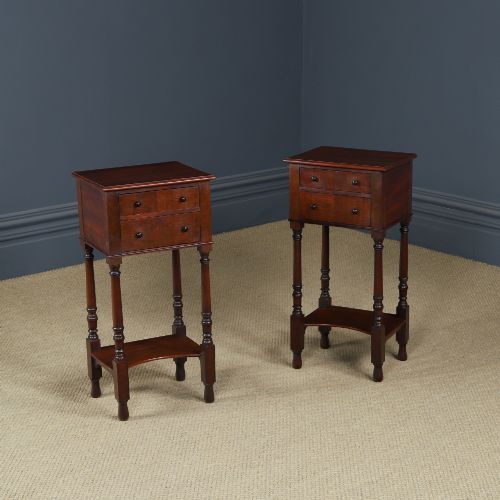
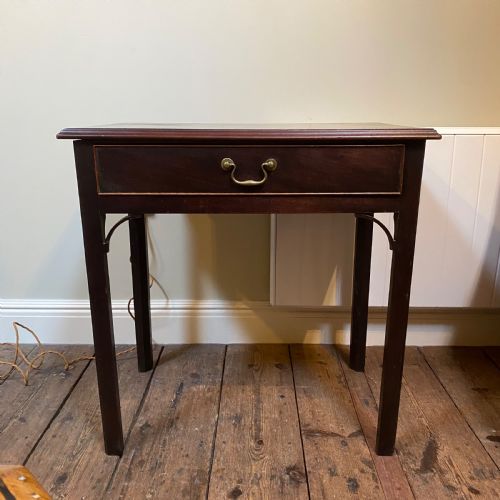
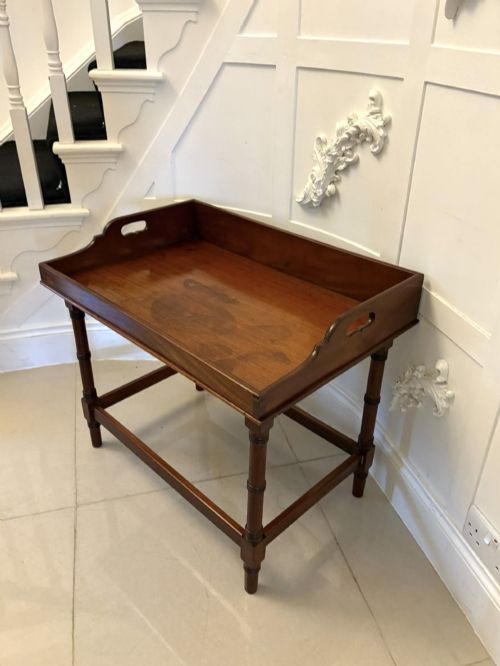
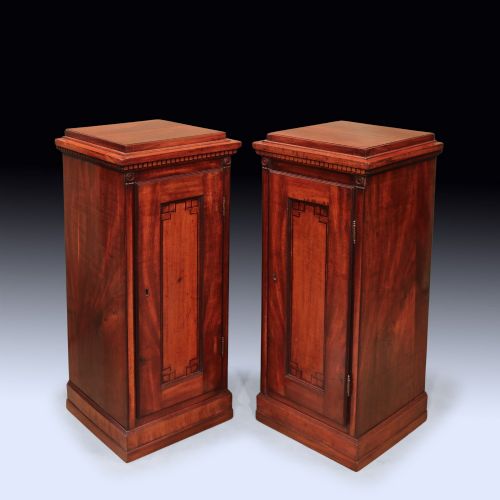
When you search for period mahogany nightstands, you encounter a selection of eighteenth and nineteenth-century forms designed for bedside storage and surface use. These pieces range from Georgian tray top commodes and George III pedestal cupboards to Regency cylindrical cabinets and Victorian bedside chests.
Originating across the Georgian, Regency, and Victorian periods, these items display the shifting tastes of British and continental cabinet makers. Buyers select them for their compact proportions and functional versatility within modern or traditional interiors.
Quality factors
The standard of a piece rests upon the choice of timber grain, particularly the vibrancy found in flame mahogany veneers and the precision of boxwood or ebony inlay. Superior examples display thoughtful proportions and careful timber selection across less visible areas.
Design sophistication separates standard utility pieces from exceptional works, such as cylindrical pedestals with architectural column details or serpentine commodes with integrated pull-out steps. Original brass fittings and sound structural joinery elevate the standing of any piece.
Period Mahogany Nightstands Retail Price Guide 2026
Typical asking prices for period mahogany nightstands among the pieces listed under this phrase on Sellingantiques today, from the lower quarter to the upper quarter. They describe what is for sale here now, not the wider market.
Listings span from the Georgian period through the Regency era and into late Victorian times, showing shifts in domestic cabinet design.
The Period Mahogany Nightstands Glossary
- Commode
- A low cabinet or chest of drawers, often enclosing a chamber pot in earlier periods. These pieces frequently feature tray tops or enclosed doors.
- Flame mahogany
- A veneer cut from timber where the branches join the main trunk, creating a distinct flickering flame pattern. Cabinet makers utilised this figure to highlight drawer fronts and cabinet doors.
- Tray top
- A raised rim around the upper surface of a table or commode to prevent items from rolling off. This feature appears frequently on Georgian bedside tables.
- Pedestal cupboard
- A freestanding, column-like cabinet enclosing storage space behind a single door. Regency examples often take a cylindrical form.
- Inlay
- A decorative technique where contrasting woods such as boxwood or ebony are fitted into the primary mahogany surface. This creates fine lines and geometric borders.
Period Mahogany Nightstands: Frequently Asked Questions
What is a nightstand from the Georgian era?
A Georgian nightstand typically takes the form of a small bedside cupboard, commode, or lamp table, constructed primarily from mahogany during the eighteenth or early nineteenth century.
These pieces provided enclosed storage beside the bed, often featuring tray tops, panelled doors, or pull-out sections for chamber pots.
How do I identify a Regency period piece?
Regency pieces often display architectural influences, cylindrical shapes, concave fronts, and contrasting ebony or boxwood line inlay.
Cabinet makers of this era favoured clean structural lines, rich flame mahogany veneers, and freestanding forms suited for prominent placement.
Were these tables used only as bedside cabinets?
Many forms listed as nightstands or bedside cupboards functioned originally as lamp tables, occasional tables, or wash stands.
Their compact proportions allow them to serve easily today as lamp tables in sitting rooms or small storage cabinets in hallways.
What wood should I expect to see?
The primary timber across these listings is mahogany, often highlighted by striking flame mahogany figuring on doors and drawer fronts.
Secondary materials include brass for handles and pulls, alongside boxwood and ebony used for delicate line inlay.