


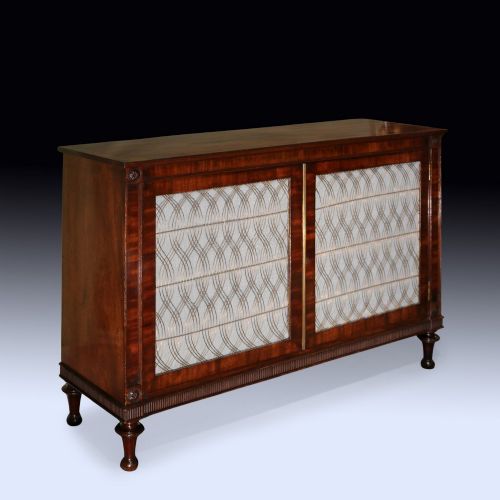
Period Low Bookcase
A period low bookcase brings books and decorative objects down to eye level, grounding a room with rich timber and quiet authority.
Period Low Bookcase
A period low bookcase is typically encountered in Regency, Georgian, or Victorian forms, serving as both shelving for volumes and a surface for display.
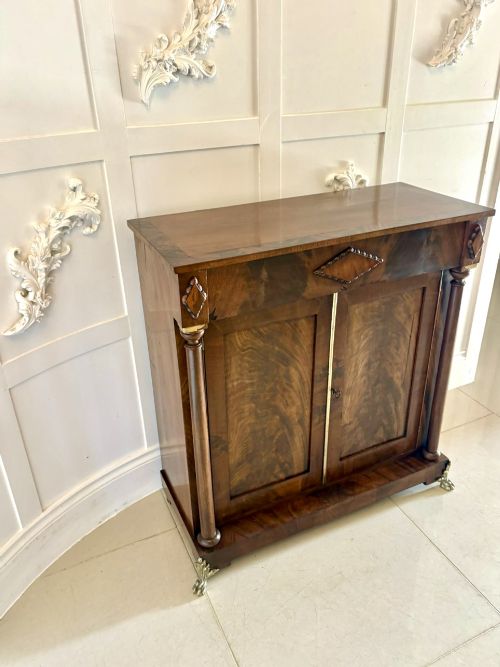
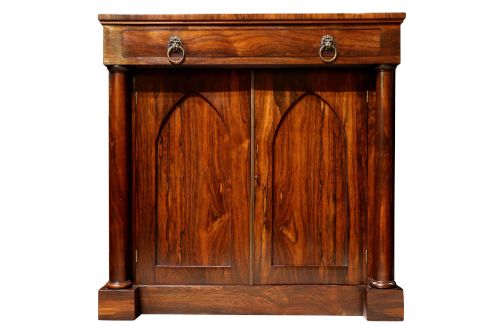
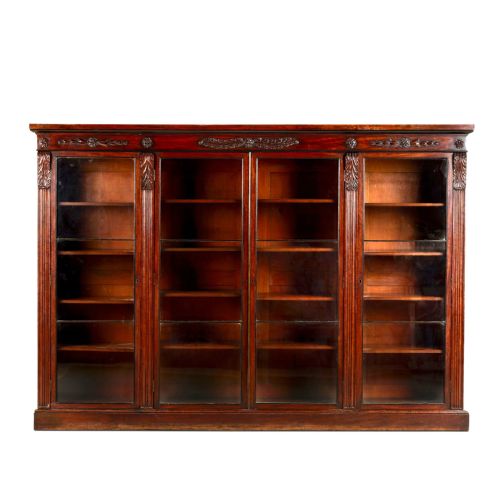
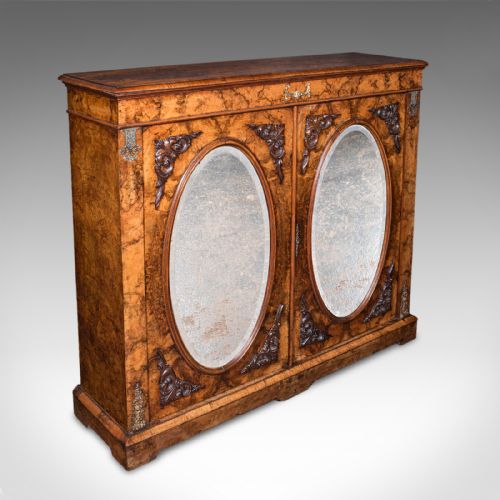
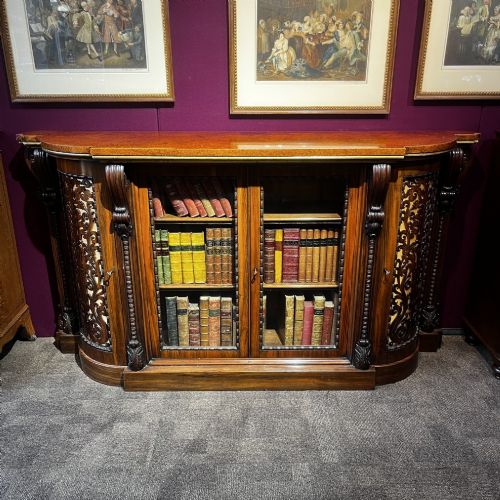
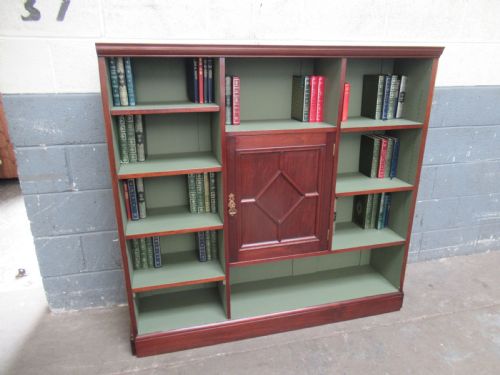
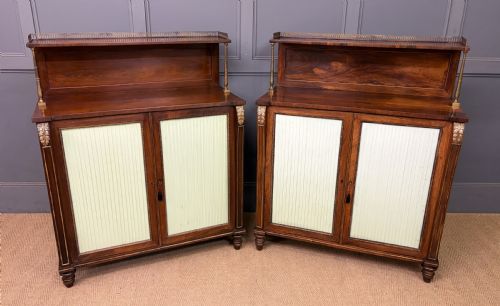
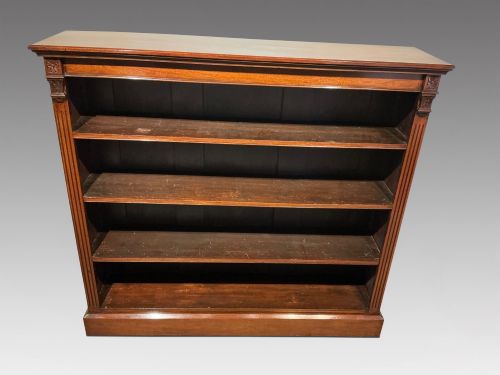
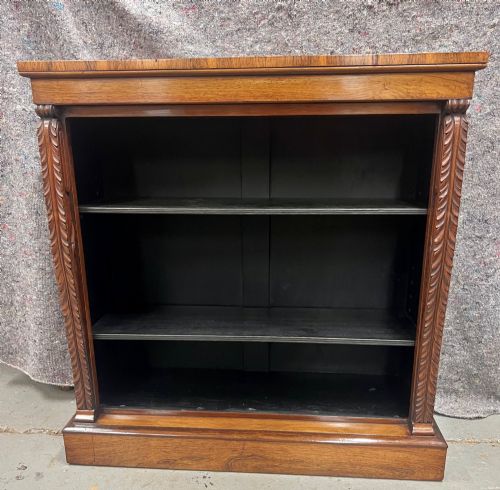
The pieces on this page span open bookshelves, side cabinets with glazed or panelled doors, and chiffoniers, originating from the eighteenth and nineteenth centuries.
Makers of these items utilised imported timbers to create low profiles designed to sit beneath dado rails or windows without blocking light.
Materials and construction
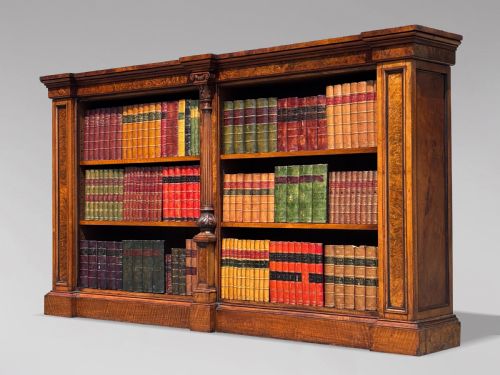
Cabinet makers relied heavily on dense hardwoods like mahogany, rosewood, and burr walnut, often laid as veneers over sturdy secondary woods to create rich grain patterns.
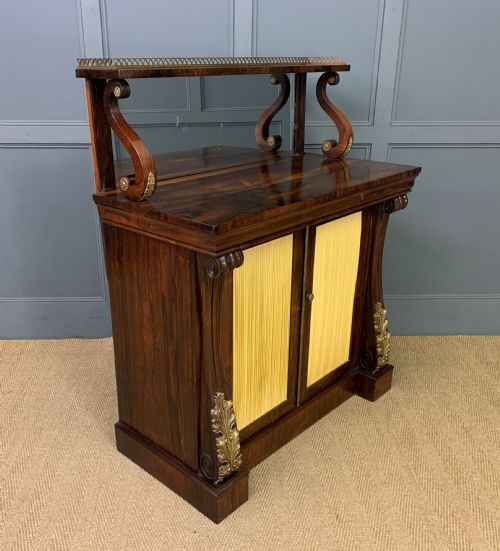
Brass inlay, ormolu mounts, and gilt detailing frequently accent the timber surfaces, while glass panels and pleated fabric doors soften the lower storage sections.
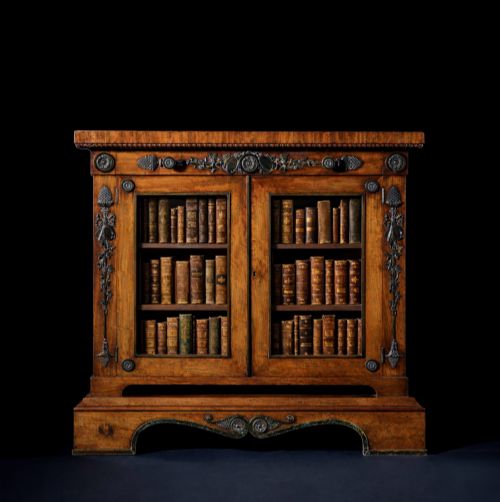
One exceptional Regency rosewood cabinet includes leather dummy books designed to conceal storage space.
Assessing quality and finish
Quality rests upon the selection of timber figures, such as figured mahogany or exotic gonçalo alves, and the precision with which veneers are matched across doors and friezes.
The refinement of brass mounts, the integrity of panel construction, and the proportion of the cornice to the plinth distinguish standard production from exceptional examples.
Gillow
The Period Low Bookcase Glossary
- Chiffonier
- A low cabinet with enclosed shelving below, frequently fitted with fabric panels or doors. It developed during the Regency period as a versatile piece for the parlour.
- Breakfront
- A cabinet design where the central section projects forward from the flanking wings. This architectural arrangement creates depth and shadow on a low wall.
- Waterfall bookcase
- A set of open shelves that progressively deepens from top to bottom, following a stepped profile. These pieces often feature graduated tiers with pierced sides.
- Ormolu
- Gilt-bronze ornamentation applied to furniture. It provides bright metallic contrast against dark rosewood and mahogany surfaces.
- Parcel gilt
- Woodwork highlighted with thin layers of gold leaf applied to carved details or mouldings. It accentuates structural lines in Regency and Georgian pieces.
Period Low Bookcase: Frequently Asked Questions
How do I date a low bookcase?
Dating relies on timber choice, hardware, and structural proportions. Regency and Georgian examples often show lighter mahogany or rosewood with delicate brass inlay, whereas Victorian pieces tend to be heavier in build.
Examining the backboards, drawer linings, and screw types helps confirm the period of manufacture.
Are these bookcases open or enclosed?
Both forms appear frequently. Open bookcases provide direct access to volumes, while side cabinets and chiffoniers feature doors with wooden panels, glass, or pleated fabric.
Enclosed versions were traditionally used to protect finer bindings from dust and light.
How do I care for rosewood and mahogany?
Keep timber furniture away from direct sunlight and radiators to prevent the wood and underlying veneers from drying out and splitting. Regular dusting with a dry, soft cloth maintains the natural lustre of the polish.
Avoid silicone-based sprays, applying traditional beeswax sparingly only when the finish appears dry.