





Period Library Table
A period library table brings substantial timber and fitted writing space into a room, offering the steady utility demanded by serious readers and writers.
Period Library Table
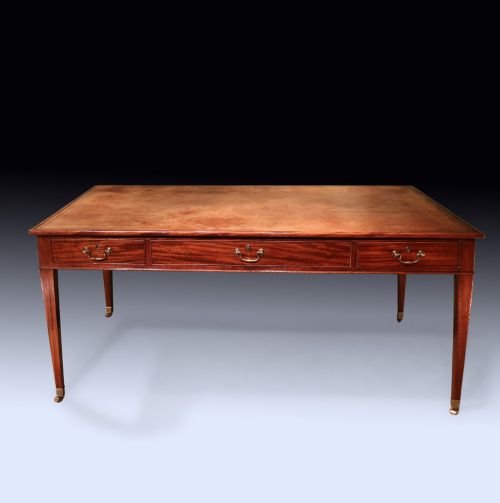
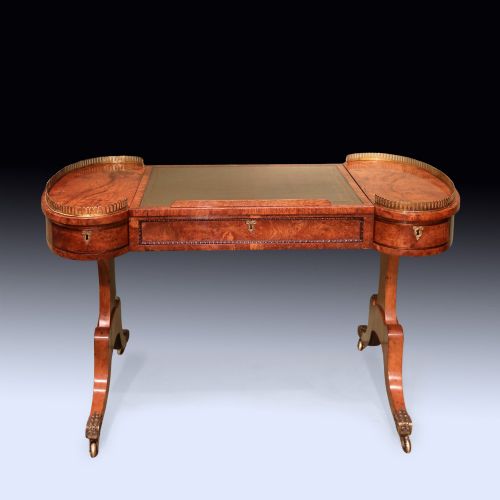
A period library table functions as a heavy, freestanding workspace designed for serious study or administrative work, differing from smaller domestic desks by its generous proportions. Buyers searching for a period library table encounter sturdy timber examples originating from the eighteenth and nineteenth centuries, spanning Georgian, Regency, and Victorian eras.
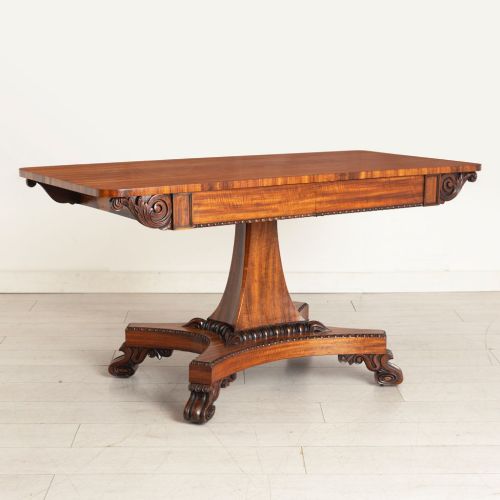
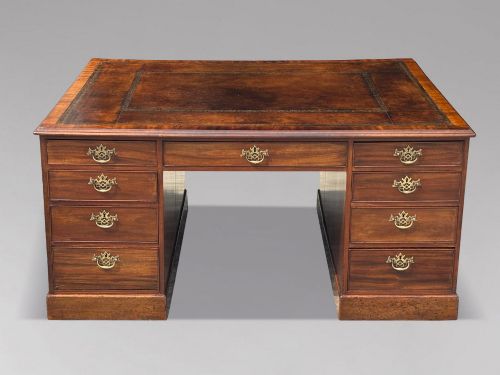
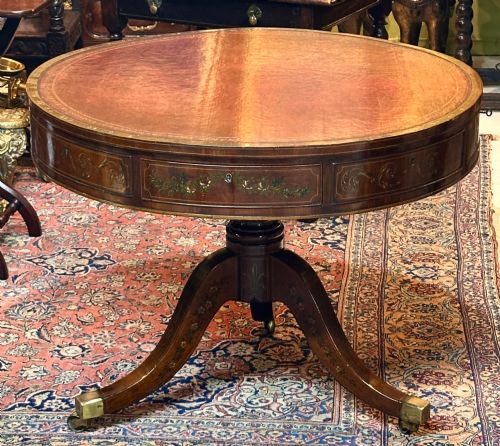
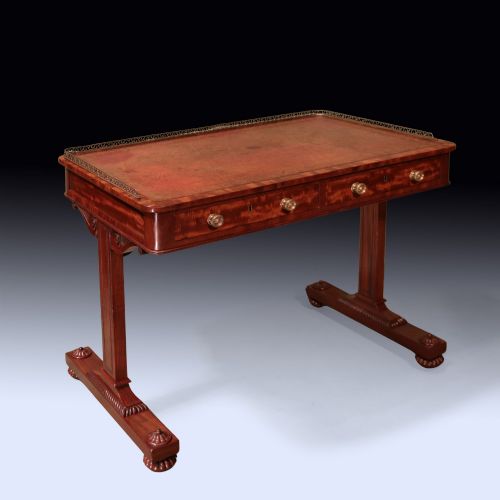
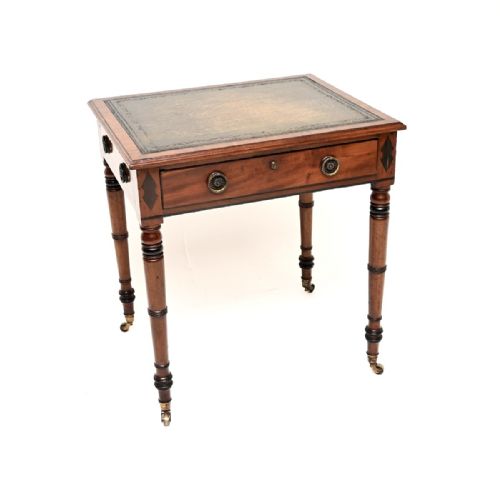
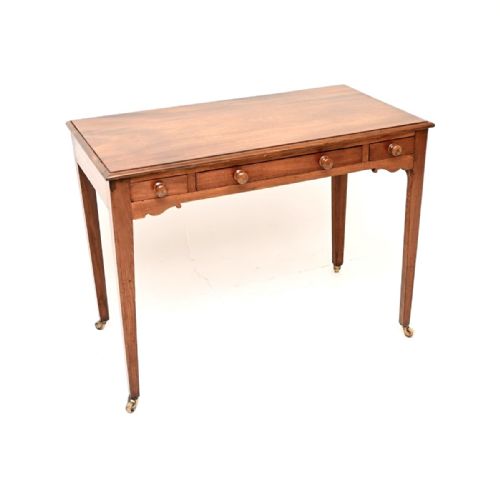
The most common form met on this page is the mahogany or rosewood writing table, often fitted with drawers beneath the timber top and resting on pedestal bases or substantial legs. Variants include circular drum tables and twin-pedestal partners desks designed for simultaneous use from opposing sides.
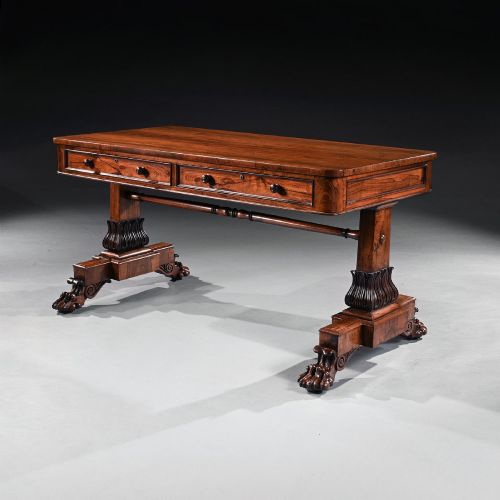
Origins cluster around English workshops influenced by Sheraton and Chippendale design principles, alongside continental pieces such as French Empire sofa tables. Structural formats range from simple rectangular writing surfaces to elaborate centre tables with carved lion paw feet or brass inlay.
Materials and construction methods
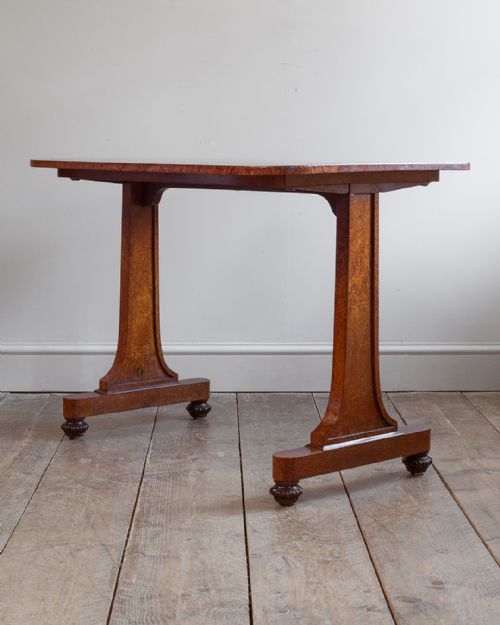
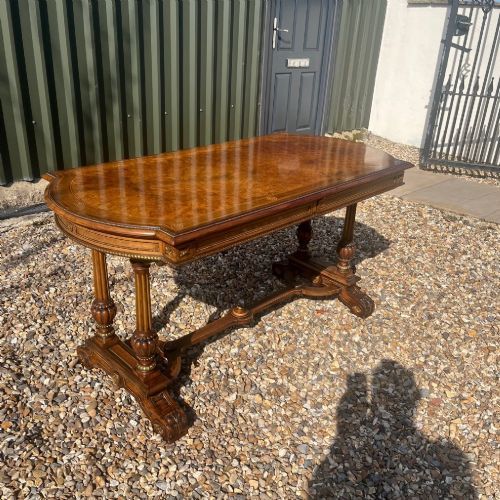
Cabinet makers constructed these tables primarily using dense hardwoods like mahogany, rosewood, and gonçalo alves, frequently selecting burr oak or burr walnut for figured decorative veneers. Secondary timbers provided internal support for drawer linings and carcases while the primary show surfaces displayed rich grain patterns.
Surface treatments incorporated inset panels of tooled leather for writing, alongside cast brass mounts, cut brass inlay, and ormolu details. Joinery relied on traditional dovetails for drawer construction and sturdy framing to support the heavy timber tops without warping.
Period Library Table Retail Price Guide 2026
Typical asking prices for period library table among the pieces listed under this phrase on Sellingantiques today, from the lower quarter to the upper quarter. They describe what is for sale here now, not the wider market.
Several tables include secret compartments hidden behind dummy drawer fronts for storing confidential letters away from prying eyes.
Distinctions in craftsmanship
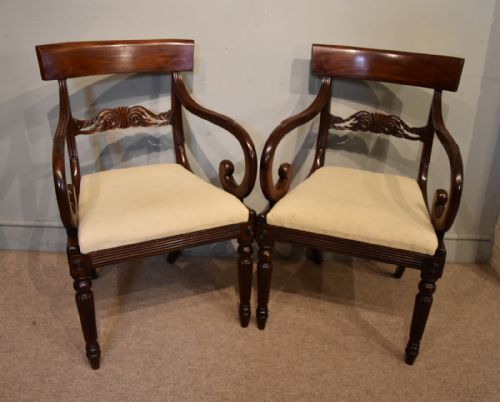
Quality rests upon the selection of timber figures, where heavily figured burr oak, gonçalo alves, or matched rosewood veneers elevate an example above plain mahogany variants. The crispness of carved details, such as lion paw feet or reeded legs, distinguishes meticulous workshop output from simpler commercial production.
Engineering integrity separates superior pieces, visible in the smooth action of dovetailed drawers and the solid integration of brass inlay or ormolu mounts. Original leather writing surfaces with well-preserved blind tooling contribute significantly to the standing of an individual table.
Jean-Joseph Chapuis
The Period Library Table Glossary
- Drum table
- A circular library table containing a revolving or stationary top surrounded by a frieze of drawers. These tables often stand on a central pillar supported by a tripod base.
- Partners desk
- A large double-sided desk built to accommodate two people sitting opposite one another. These pieces feature drawers and cupboards accessible from both sides.
- Sofa table
- A rectangular occasional table designed to stand in front of a sofa, typically featuring drop leaves at either end. They emerged during the late eighteenth century and gained popularity through the Regency period.
- Gonçalo alves
- A dense tropical hardwood prized for its striking contrasting grain patterns. Makers utilised this material for high-status Regency and William IV tables.
- Ormolu
- Gilded bronze used for decorative mounts and accents on furniture. It appears most frequently on nineteenth-century pieces alongside exotic veneers.
Period Library Table: Frequently Asked Questions
What distinguishes a library table from a standard desk?
A library table is traditionally built to stand free in the middle of a room, finished on all sides so it looks correct from any angle. Standard desks often rely on a wall placement and possess simpler back construction.
Library tables also tend to offer broader proportions to accommodate large volumes and open manuscripts.
How do I identify a Regency period table?
Regency tables typically display classical architectural influences, incorporating brass inlay, lyre supports, or rosewood veneers. The proportions favour clean lines derived from ancient Roman and Greek furniture forms.
Cabinet makers working in this era between the late eighteenth and early nineteenth centuries favoured dark exotic timbers.
Can I use a antique library table for daily work?
These tables were engineered for heavy administrative tasks and study, making them durable enough for contemporary laptop or writing use. The solid timber construction provides a stable, long-lasting surface.
Care should be taken to protect antique leather inserts from moisture and sharp implements during daily routines.
What is a partners desk used for?
A partners desk provides equal workspace on two opposing sides, allowing two people to work face-to-face. They were originally commissioned for banks, legal offices, and grand home libraries.
The internal drawer configuration mirrors itself to give both users independent storage.