





Period Library Sofa
A period library sofa brings commanding presence to a room, offering generous proportions and fine timber work.
Period Library Sofa
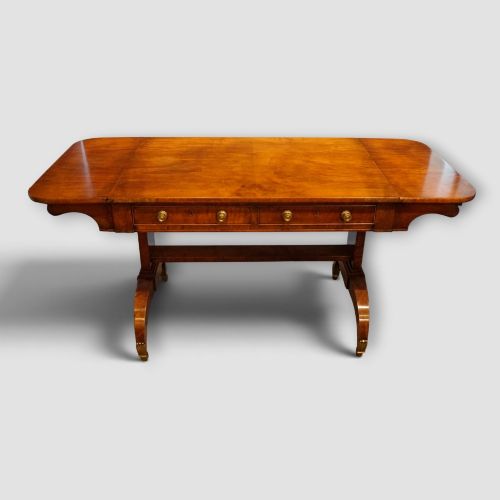
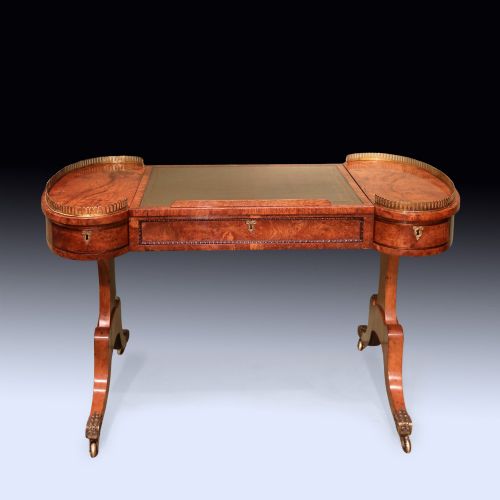
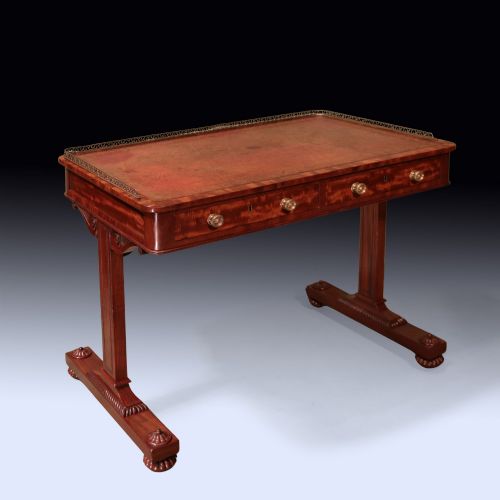
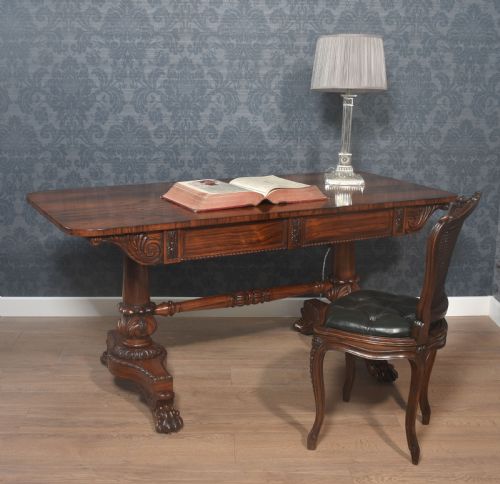
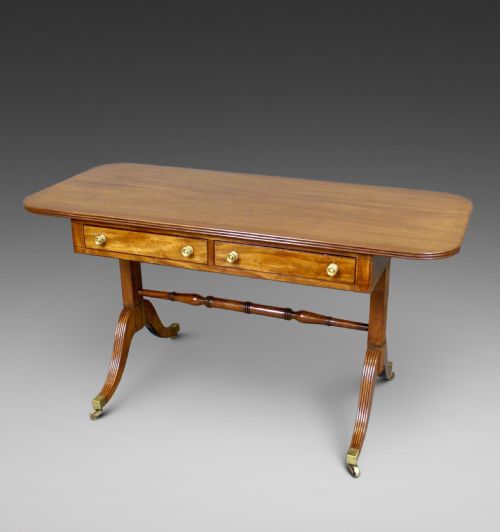
When searching for a period library sofa, buyers typically encounter tables and desks from the Regency and nineteenth-century periods, spanning styles such as George IV, French Empire, Victorian, William IV, and Sheraton.
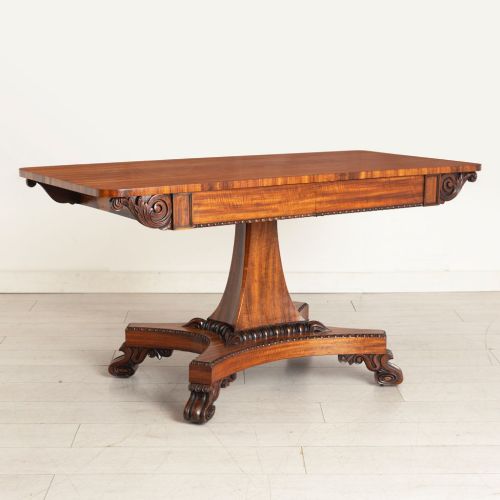
The pieces appearing on this page encompass various forms including writing tables, library tables, sofa tables, centre tables, and desks.
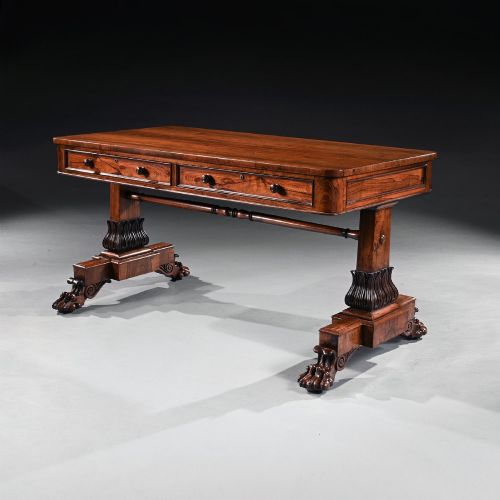
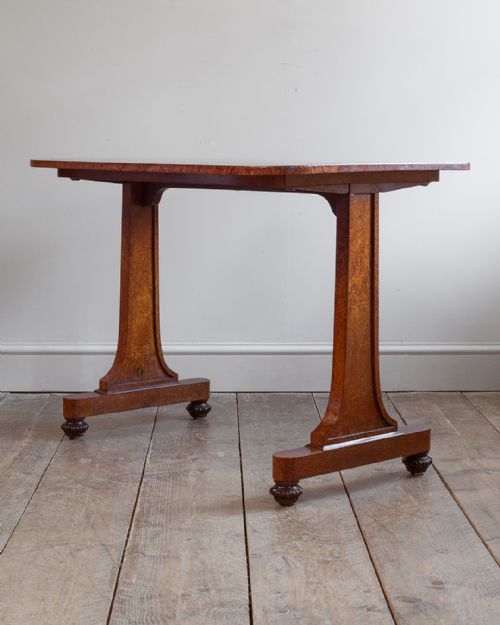
Rosewood and mahogany dominate the materials seen, alongside brass, burr oak, timber, veneer, and gonçalo alves.
Materials and construction
Cabinet makers utilised dense hardwoods like rosewood and mahogany, often enhanced by decorative veneer and burr oak to create striking surface grain.
Metalwork played a key role, with cut brass inlay integrated into timber surfaces and carved brass or wooden feet such as lions' paws supporting the structure.
Period Library Sofa Retail Price Guide 2026
Typical asking prices for period library sofa among the pieces listed under this phrase on Sellingantiques today, from the lower quarter to the upper quarter. They describe what is for sale here now, not the wider market.
Makers occasionally hid stamps inside drawer runners, leaving secret signatures for future detectives to find.
Markers of quality
Detailing elevates a piece, seen in crisp carving on feet, precise brass inlay, and the attribution or stamping of established workshops.
Gillows of Lancaster·Jean-Joseph Chapuis
The Period Library Sofa Glossary
- Regency
- A British design period spanning the early nineteenth century, characterised by classical restraint and rich mahogany or rosewood timbers. It draws inspiration from ancient Greece and Rome.
- Gonçalo Alves
- A dense tropical hardwood displaying striking dark figuring, used in high-end Regency furniture. It is sometimes referred to as tiger wood.
- Sofa table
- A rectangular table traditionally designed to stand in front of a sofa, featuring drop leaves at either end. These pieces often incorporate frieze drawers.
Period Library Sofa: Frequently Asked Questions
How were sofa tables originally used?
Sofa tables stood directly in front of settees or in the centre of principal rooms during the Regency period. Their drop leaves allowed them to expand for writing or serving tea.
Over time, these versatile tables adapted to various domestic settings, functioning equally well as side desks or freestanding centre tables.
How do I identify nineteenth-century timber?
Nineteenth-century furniture relies heavily on solid mahogany and rosewood, often enhanced by contrasting veneers like burr oak or gonçalo alves. Examining the grain pattern helps reveal the choice of wood.
Secondary woods inside drawers and structural framing provide further clues to the origin and period of manufacture.
Where should I place a centre table?
Centre tables demand a prominent freestanding position where all sides remain visible. Placing one in the middle of a library, hallway, or spacious drawing room highlights its finished back and overall symmetry.
These pieces work best away from walls to allow full appreciation of their carved supports and inlaid details.