




Period Library Desk Chair
A period library desk chair brings steady timber and deep upholstery to a working room.
Period Library Desk Chair
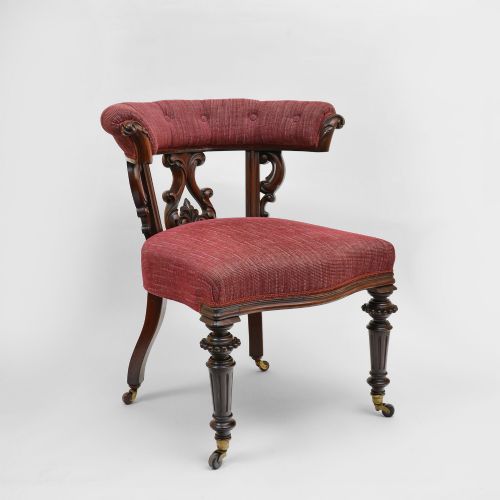
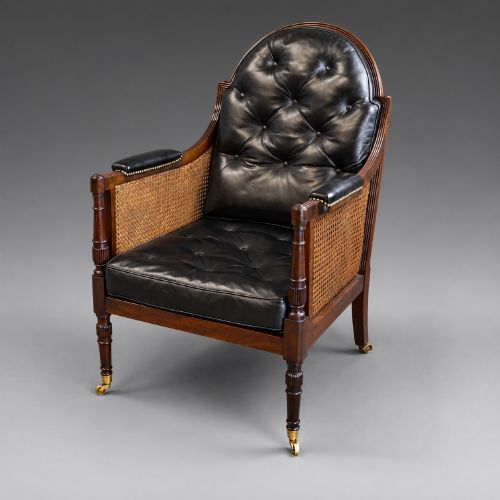
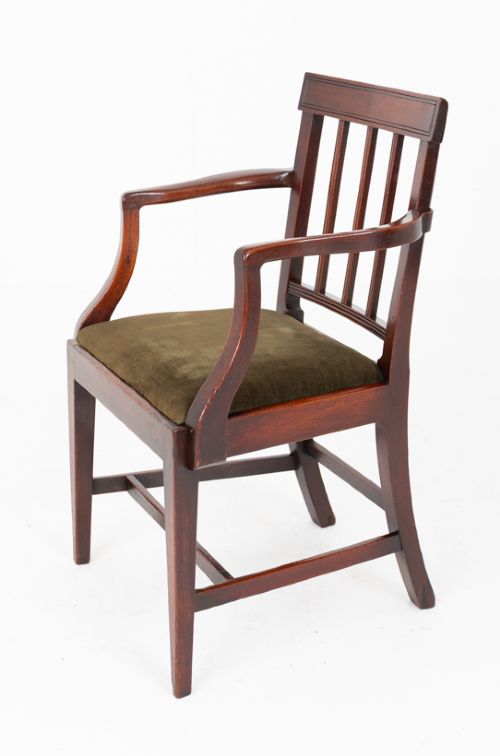
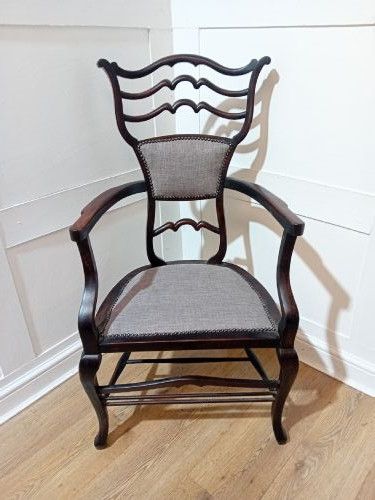
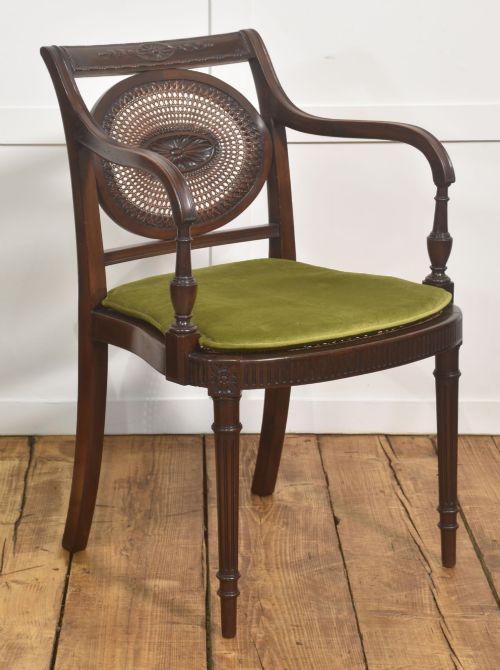
A period library desk chair sits at the intersection of comfort and study, offering robust seating designed for long hours at a table or desk. When searching for a period library desk chair, a buyer encounters forms ranging from straightforward tub shapes to generous armchairs.
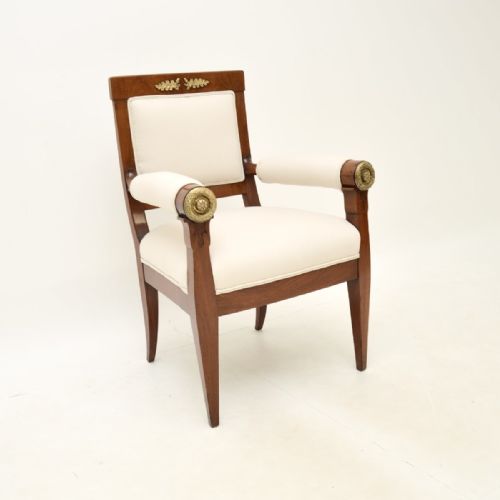
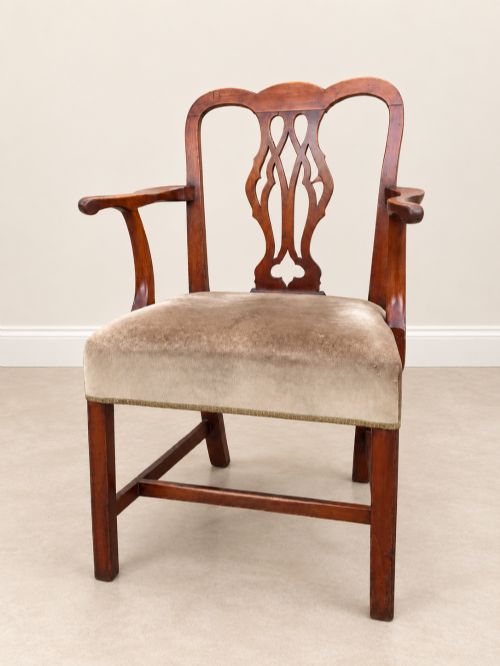
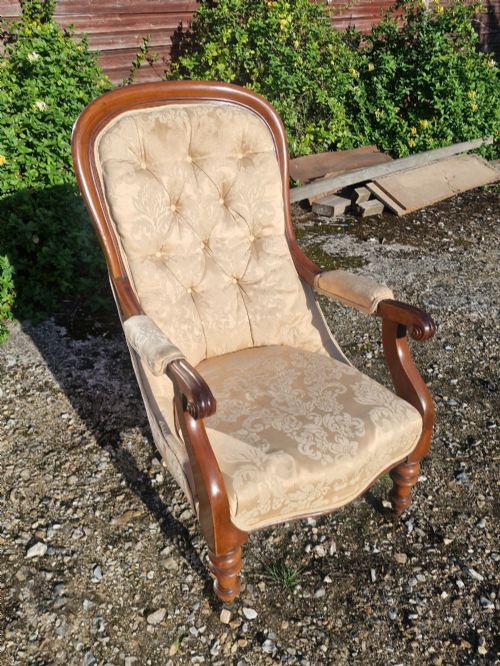
The pieces appearing on this page span the Georgian, Regency, and Victorian eras, along with Edwardian revivals. Mahogany forms the backbone of these selections, supplemented by walnut, rosewood, oak, and yew wood.
Armchairs and dedicated desk chairs dominate the forms. Makers of past centuries built these seats with substantial proportions to accommodate writing and reading in private libraries and studies.
Materials and construction
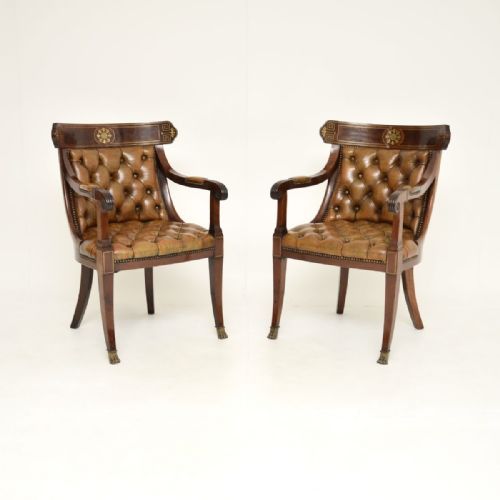
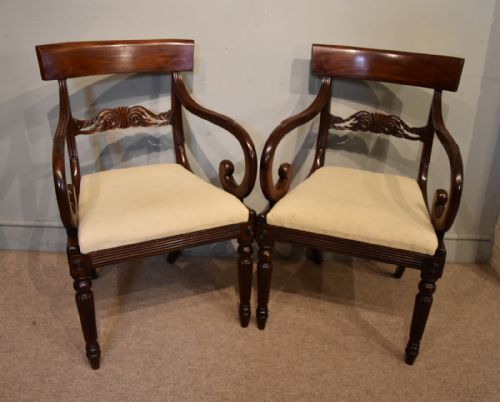
Cabinet makers relied heavily on solid mahogany and rosewood, often shaping the timber into curved frames, scroll arms, and robust legs. Brass inlay occasionally punctuates the wood, adding linear detail to the rails and splats.
Seating surfaces required durable support, utilising cane panels or webbed foundations packed with stuffing. Upholstery materials included leather, velvet, fabric, damask, and cane, secured with rows of tacks along the seat edges.
Period Library Desk Chair Retail Price Guide 2026
Typical asking prices for period library desk chair among the pieces listed under this phrase on Sellingantiques today, from the lower quarter to the upper quarter. They describe what is for sale here now, not the wider market.
One enthusiastic eighteenth-century library chair comes paired with an unexpected modern internet retail promotion.
Evaluating the work
The distinction between standard examples and superior pieces rests in the handling of the timber and the depth of the carving. Master carvers brought fluidity to scroll arms and pierced splats, whereas lesser workshops turned out stiff, mechanical lines.
Proportion dictates the presence of an exceptional chair, where the rake of the back and the height of the armrests offer physical balance. Original surface patination and uncompromised structural integrity elevate the standing of any desk chair.
Gillows·Charles Bevan
The Period Library Desk Chair Glossary
- Bergere
- An enclosed upholstered armchair with wooden framing exposed around the sides and back. Caned panels frequently replace solid wooden flanks in these designs.
- Gainsborough armchair
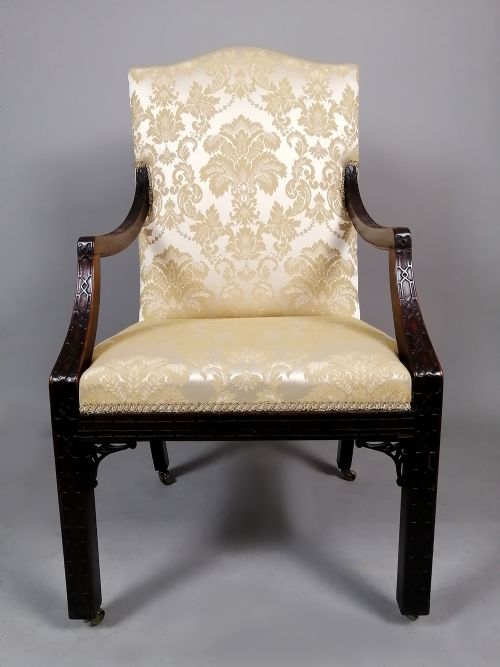
- A wide, upholstered seat with an open wooden frame, padded armrests, and short legs dating back to the eighteenth century.
- Tub chair
- An armchair featuring a continuous curved back and armrest rail enclosing the sitter. This compact form provides support around the lower back.
- Curule
- A style of X-shaped chair frame inspired by ancient Roman folding seats. Makers adapted this classical silhouette into sturdy library armchairs during the nineteenth century.
- Chippendale style
- A decorative design vocabulary marked by Chinese fretwork, carved rails, and robust cabriole legs. These details appeared on library seating through various revival periods.
Period Library Desk Chair: Frequently Asked Questions
What defines a library desk chair?
These seats combine the enclosed comfort of an armchair with the mobility or height suited to a writing table. They provide sturdy back support and upholstered arms for reading.
Makers built them using dense hardwoods like mahogany and walnut to withstand daily use in private studies.
How do I spot a Regency desk chair?
Regency examples display classical restraint, often incorporating sabre legs, brass inlay, and ebonised details. The wood is predominantly mahogany with clean, architectural lines.
Scroll arms and reeded frames frequently appear in pieces from this period, reflecting ancient Greek and Roman influences.
Are these chairs comfortable for daily use?
Most period library chairs offer generous proportions and supportive upholstered seats designed for hours of reading. Leather and fabric coverings provide a firm yet yielding surface.
Their substantial timber frames ensure stability, though modern users often check the webbing and stuffing condition.
How do Georgian and Victorian chairs differ?
Georgian pieces rely on carved mahogany, subtle Chinese Chippendale frets, and elegant proportions. They represent earlier craftsmanship focused on classical symmetry.
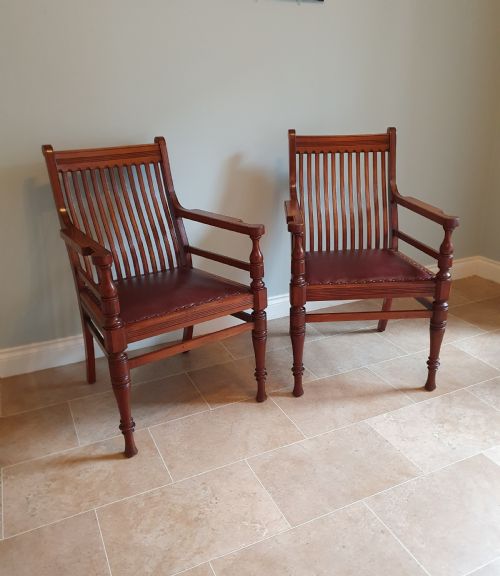
Victorian chairs often feature heavier walnut or oak frames, revival styling such as Gothic elements, and more robust padding.