


Period Leather Chairs
Period leather chairs combine sturdy timber frames with supple hide, offering both historical character and enduring comfort for daily seating.
Period Leather Chairs
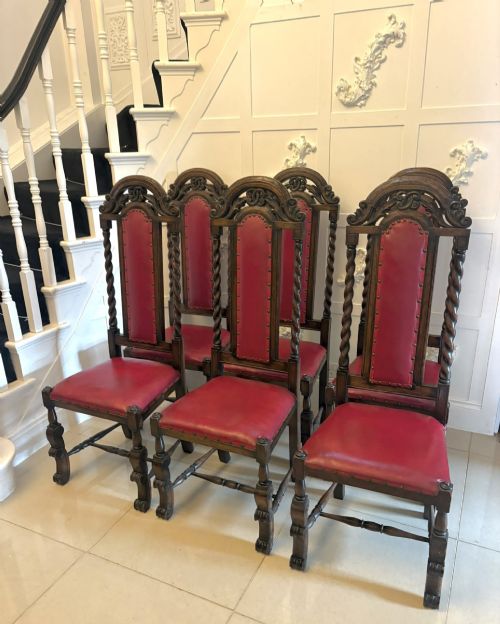
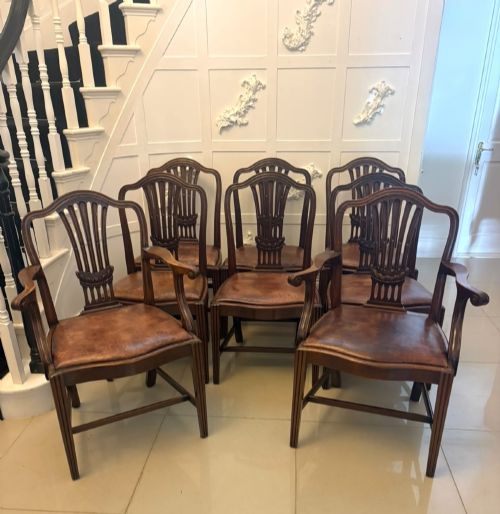
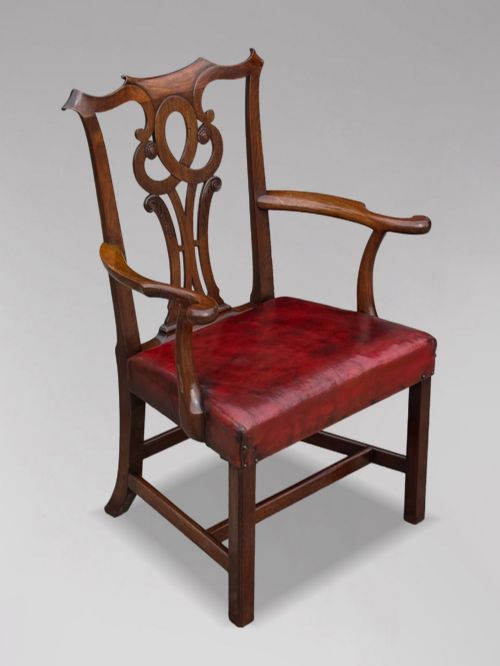
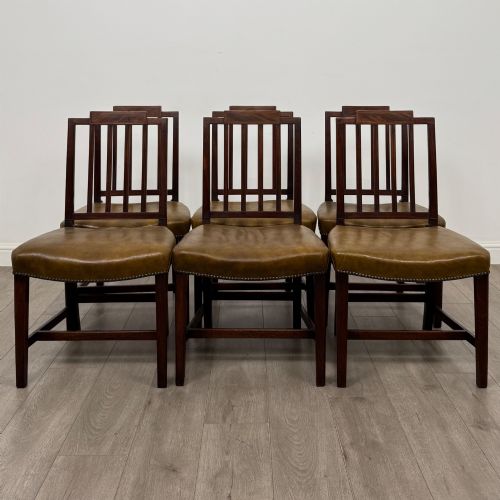
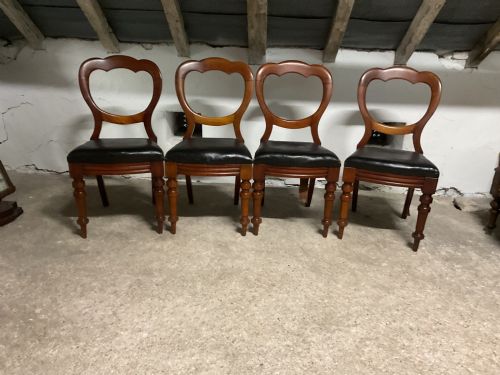
When you search for period leather chairs, you encounter seating designed across several centuries, spanning formal library armchairs to matched sets of dining chairs. The most common examples on this page date from the Georgian, Regency, and Victorian eras, frequently constructed from solid timber and upholstered in hide.
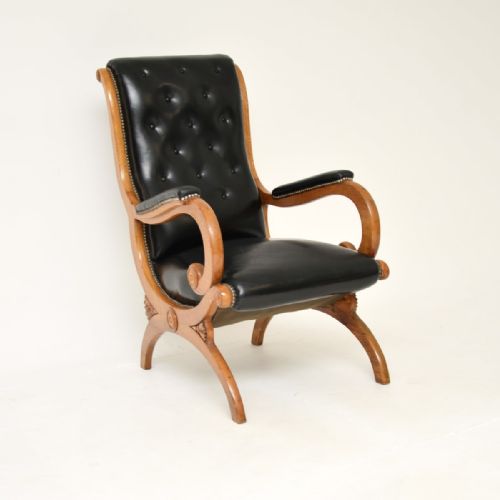
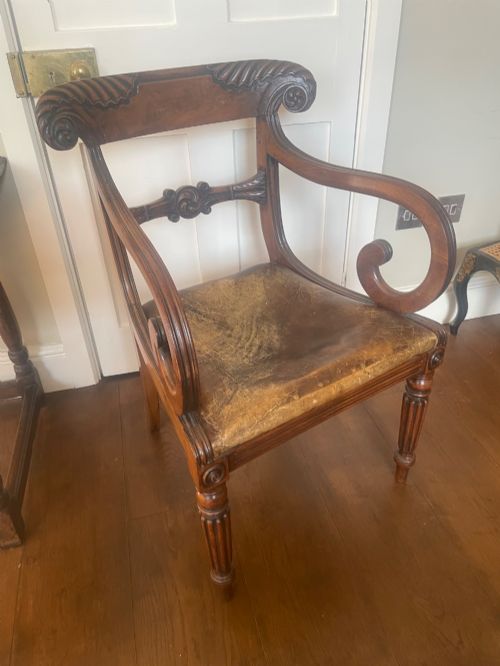
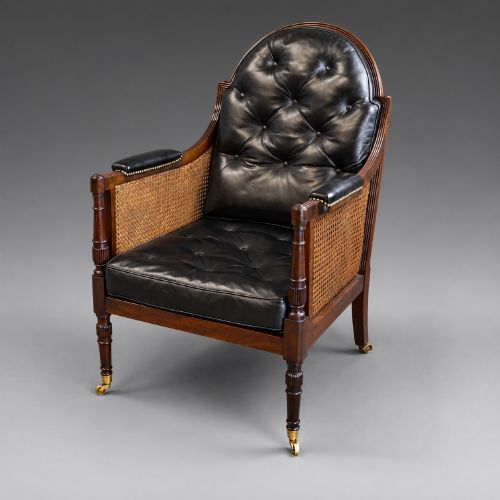
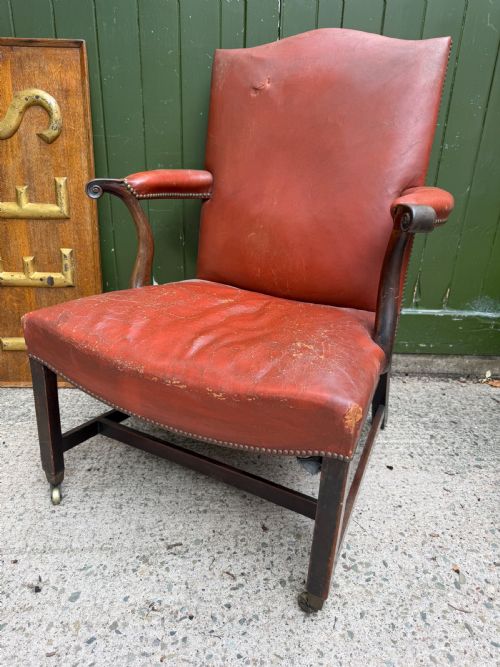
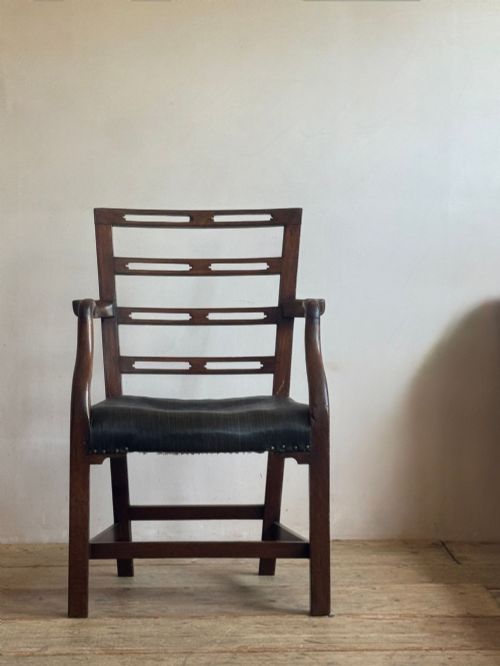
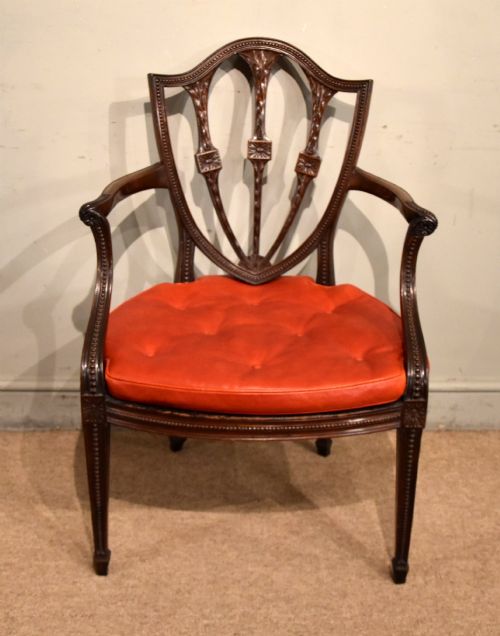
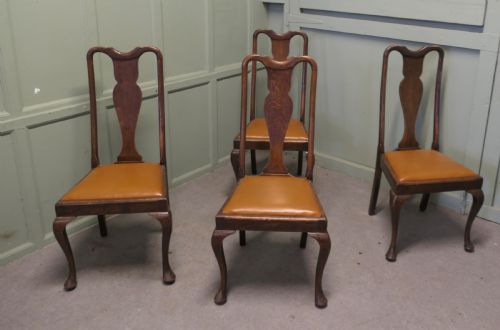
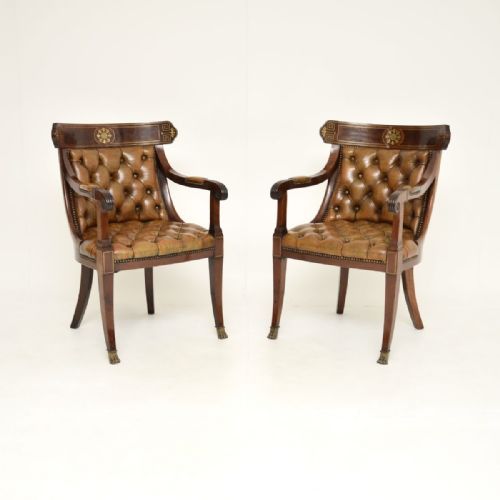
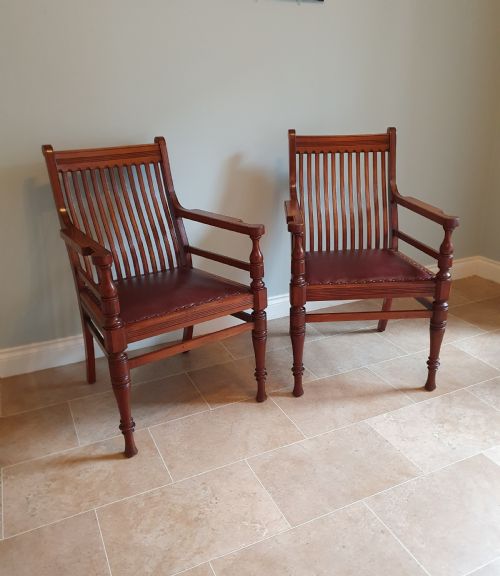
The selection ranges from single carver chairs and library armchairs to large dining sets intended for communal tables. Forms include bergere chairs, Gainsborough library armchairs, shield back designs, and simpler ladder-back seating.
Origins stretch across British workshops as well as Continental makers, encompassing styles from Queen Anne through to Art Deco. Buyers select these pieces to anchor a room with functional antiques that retain their original purpose.
Materials and Construction
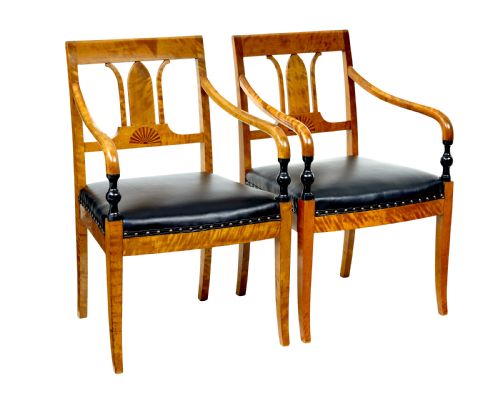
Frames rely heavily on dense hardwoods such as mahogany, oak, walnut, and rosewood, joined with traditional carpentry techniques like mortise and tenon. Secondary materials such as brass inlay, cane, and birch appear on specific Regency and Scandinavian models.
Upholstery involves fitting leather over supportive stuffing, secured with individual brass tacks or finished with deep buttoning. Hides are often hand-dyed in tones of tan, brown, green, and red to complement the polished timber frames.
Period Leather Chairs Retail Price Guide 2026
Typical asking prices for period leather chairs among the pieces listed under this phrase on Sellingantiques today, from the lower quarter to the upper quarter. They describe what is for sale here now, not the wider market.
Listings feature mahogany, oak, walnut, rosewood, and birch frames paired with leather seats across periods from 1700 to the 1930s.
Factors of Quality
The division between standard examples and the finest pieces rests on the crispness of the timber carving and the architectural proportions of the frame. Superior chairs display well-defined joinery, balanced arm supports, and timber selected for rich grain patterns.
The integrity and age of the leather surface also dictate worth, with original or appropriately aged hand-dyed hide holding greater appeal than unsympathetic modern replacements. Consistency across a matched set elevates the standing of dining chairs considerably.
Gillows·William Walker And Sons
The Period Leather Chairs Glossary
- Carver chair
- An armchair designed to match a set of dining chairs, usually placed at the head of the table. These often feature more elaborate arm supports and wider proportions than standard side chairs.
- Bergere
- An enclosed armchair with upholstered back and sides, commonly set in a wooden frame. This French style gained popularity in British interiors during the Regency period.
- Gainsborough chair
- A type of wide, upholstered armchair with open padded arms and short cabriole or straight legs. They originated in the mid-eighteenth century for use in libraries and writing rooms.
- Shield back
- A chair back shaped in the outline of a heraldic shield, popularised by cabinet makers in the late eighteenth century. This design often incorporates carved splats and upholstered drop-in or fixed seats.
- Sabre leg
- A concave-curved furniture leg that tapers toward the foot, resembling a cavalry sword. This form appears frequently on Regency dining and library chairs.
Period Leather Chairs: Frequently Asked Questions
How do I identify a Regency period chair?
Regency chairs typically display classical influences, utilising simulated rosewood, brass inlay, sabre legs, and reeded frames. These design elements reflect an early nineteenth-century preference for archaeological symmetry and refined lines.
Cabinet makers of this era also favoured lighter timbers and distinct proportions compared to the heavier mahogany forms of the preceding Georgian decades.
Were these chairs used for dining or working?
Period leather chairs served multiple functions depending on their structural form and the room they inhabited. Dining chairs and carvers furnished large tables, while heavier library armchairs and desk chairs were built for studies and reading spaces.
Smaller rocking chairs and child variants catered to domestic nurseries and private family quarters during the Victorian age.
What timber was most commonly used?
Mahogany dominates the surviving inventory, prized by eighteenth and nineteenth-century cabinet makers for its stability and deep reddish-brown grain. Oak and walnut appear frequently in earlier pieces and regional styles.
Alternative woods like rosewood, birch, and exotic veneers were reserved for high-status library armchairs and imported Continental designs.
How should I care for antique leather?
Antique leather requires gentle cleaning and regular conditioning to prevent the hide from drying out and cracking over time. Avoid placing these chairs near direct heat sources or in strong sunlight, which can fade hand-dyed colours.
Professional restoration should focus on preserving the original patina rather than applying modern synthetic finishes that alter the texture.