



Period Landscape Scene
These period landscape scene works capture pastoral views, village gatherings, and coastal settings through centuries of artistic tradition.
Period Landscape Scene
A period landscape scene brings historical views, rural countryside, and pastoral vistas directly onto canvas, paper, and wood panel. When you search for period landscape scene pieces, you encounter works spanning from the eighteenth century through the Edwardian era and into the nineteen thirties.
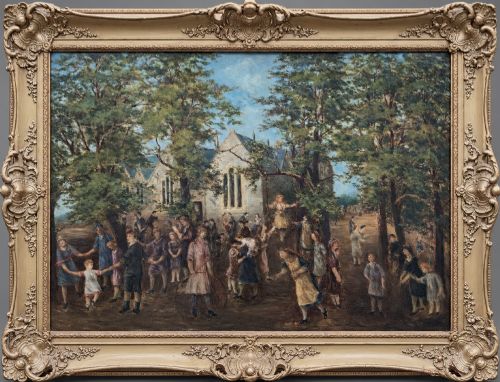
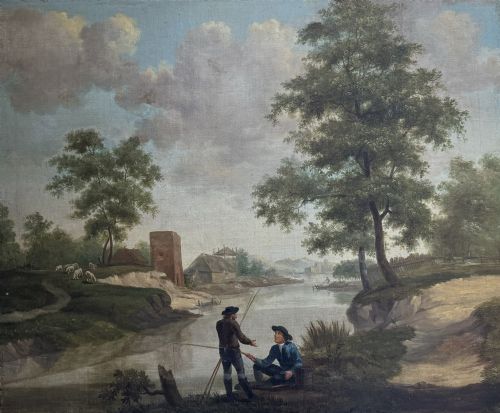
The selections available here range from early nineteenth century coastal vistas and Norwich School wood panels to French impressionist watercolours and Edwardian village gatherings. These pieces record changing rural lives, architecture, and open countryside across diverse British and European schools.
Materials and Techniques
Artists record these rural and coastal views using oil paint on canvas and wood panel, alongside watercolours and gouache on paper. The physical support often determines the texture of the surface, with canvas providing a traditional woven ground for oils.
Many of these works retain their original gilded wood framing, which complements the painted composition and protects the paper or canvas underneath. Pigments applied by hand capture the varied light of Edwardian fields, eighteenth century riversides, and nineteenth century flatlands.
Period Landscape Scene Retail Price Guide 2026
Typical asking prices for period landscape scene among the pieces listed under this phrase on Sellingantiques today, from the lower quarter to the upper quarter. They describe what is for sale here now, not the wider market.
A cheerful dog occasionally joins women outside a house in Edwardian country lanes.
Assessing Quality and Execution
The distinction between standard works and finer pieces lies in the handling of light, atmospheric depth, and compositional balance. Masterly brushwork brings movement to foliage, water, and figures within the wider countryside setting.
Condition of the painted surface and preservation within the frame also influence the overall standard of a piece. Intact brushwork on canvas or well-preserved watercolour pigments on paper maintain the original visual strength intended by the artist.
Gaston Cornil·John Sanderson Wells·Ernest Higgins Rigg·B. Kaufmann·Sydney Kendrick·Thomas Ivester Lloyd
The Period Landscape Scene Glossary
- Oil on Canvas
- A painting technique where oil-based pigments are applied to a stretched woven fabric support. This combination offers rich colour depth and durable longevity.
- Watercolour
- A painting method where coloured pigments are suspended in a water-based, translucent solution applied to paper. It produces delicate washes of light and tone.
- Wood Panel
- A rigid wooden support used by artists instead of canvas for painting. These panels provide a smooth, stable surface often seen in earlier regional works.
- Gilded Wood
- Timber frames treated with a thin layer of gold leaf or metallic gilt finish. These surrounds enhance the visual presentation of historic paintings.
Period Landscape Scene: Frequently Asked Questions
What periods do these landscapes cover?
These works span multiple centuries, starting from eighteenth century British school compositions through early nineteenth century Regency pieces and Edwardian scenes. Later examples extend into the nineteen thirties art deco period.
This broad chronological range allows collectors to find rural views, coastal settings, and village gatherings from specific historical moments and artistic movements.
How should I display these paintings?
Display these works on interior walls away from direct sunlight and excessive moisture to protect the canvas, paper, and original wood frames. Proper placement ensures the delicate watercolours and oil pigments remain stable over time.
Matching the period frame with a suitable wall space lets the historical character of the landscape become a focal point in a room.
How do I identify a watercolour?
Watercolour works are executed on paper supports, often protected beneath glass within a framed presentation. They rely on translucent washes of pigment rather than the thick impasto texture found in oil paintings.
Examining the surface closely reveals the absorbent quality of the paper and the delicate layering characteristic of nineteenth and twentieth century works on paper.