

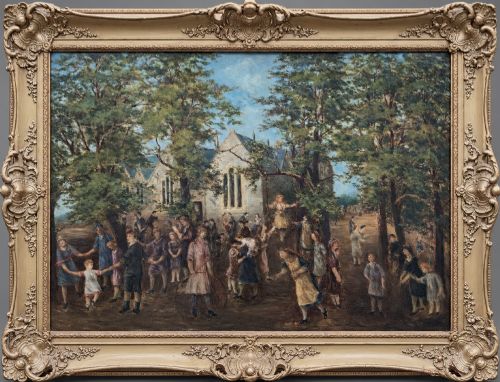
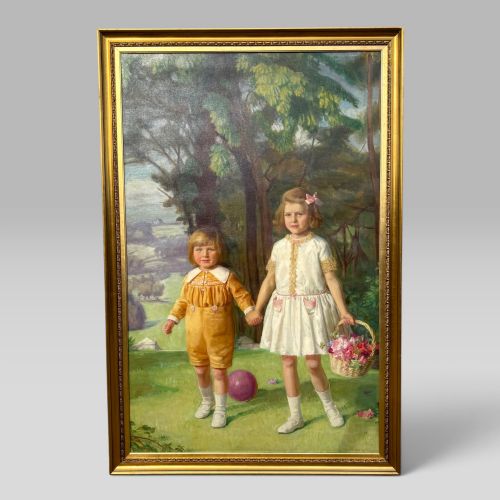
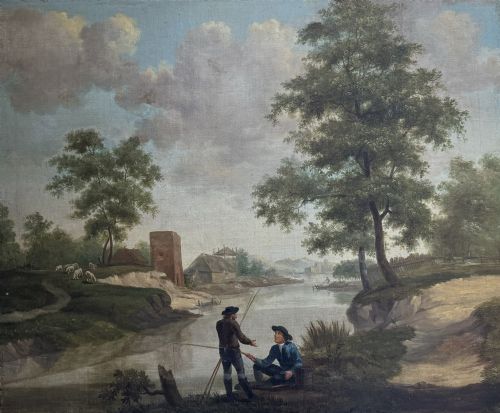
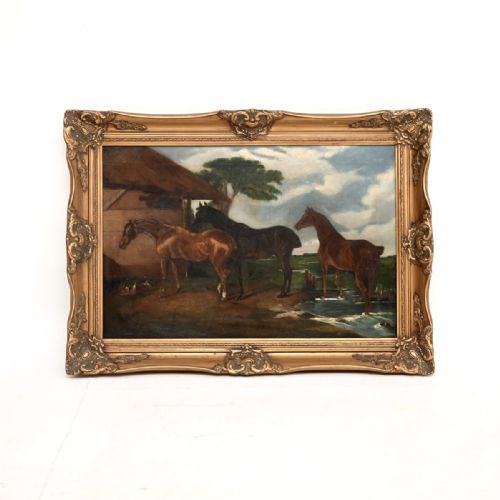
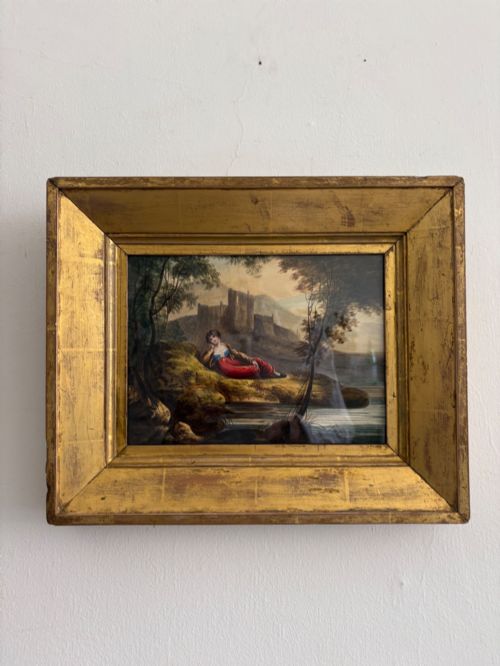


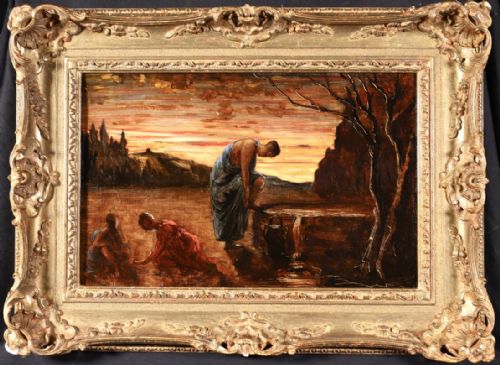
Period Landscape Artwork
Period landscape artwork brings historic countryside views and coastal scenes into rooms through oil on canvas, watercolour and woodblock print.
Period Landscape Artwork
When searching for period landscape artwork, a buyer encounters visual records of past environments spanning several centuries. These works range from expansive eighteenth-century country house canvases to intimate nineteenth-century watercolours and twentieth-century pastoral scenes.
The most common pieces on this page are oil paintings and watercolours set within period wooden or gilded frames. Examples include depictions of British flatlands, Italian classical ruins, and French Mediterranean views.
Subjects stretch beyond empty vistas to incorporate rural gatherings, coastal settings, and architectural elements such as windmills and village churches. Works emerge from various regional schools, including British, Scottish, and Norwich traditions.
Materials and Technique
Makers utilised oil paint applied to canvas, wood panels, or paper, building depth through layered pigments. Watercolours and gouache on paper offer a lighter touch, often preserved behind protective glass.
Support structures rely on traditional timber framing, frequently enhanced with gilded wood or intricate moulding. Printmaking methods such as woodblock techniques also appear alongside hand-tinted paper works.
Period Landscape Artwork Retail Price Guide 2026
Typical asking prices for period landscape artwork among the pieces listed under this phrase on Sellingantiques today, from the lower quarter to the upper quarter. They describe what is for sale here now, not the wider market.
Listings feature works created across the eighteenth, nineteenth, and early twentieth centuries, utilising oil, watercolour, and woodblock print.
Quality Variations
Distinction across the range lies in the handling of light, atmospheric perspective, and compositional balance. Superior works capture convincing depth and natural movement within skies and terrain.
The integrity of the original frame and the preservation of the pigment layer influence the standing of a piece. Finer examples display confident brushwork and secure mounting that protect the medium over time.
George F. Bird·James Elliot·Philip Richard Morris·Gaston Cornil·John Sanderson Wells·Kunisada·George Morland·Ernest Higgins Rigg·Robert Buchan Nisbet·Edith E Caswall·James H Hulse·B. Kaufmann·Sydney Kendrick·John Constable·Alexandre Decamps·Thomas Rowlandson·Thomas Monro
The Period Landscape Artwork Glossary
- Oil on Canvas
- Pigment mixed with drying oil applied to a stretched cloth support. This technique allows for rich colour blending and textured surfaces.
- Watercolour
- A paint consisting of water-soluble pigments on paper. It creates transparent washes that capture delicate light effects.
- Giltwood
- Timber carved and coated with a thin layer of gold leaf. This material frames many traditional paintings to enhance their visual weight.
- Woodblock Print
- An image carved into a wooden block, inked, and transferred to paper. This method supports precise graphic detail and flat colour fields.
- Gouache
- An opaque water-based paint featuring larger pigment particles. It provides solid areas of colour distinct from transparent watercolour washes.
Period Landscape Artwork: Frequently Asked Questions
How do I hang a heavy oil painting?
Secure the frame using appropriate wall fixings that match the weight of the canvas and wooden structure. Ensure the hanging wire or brackets distribute the load evenly.
Position the artwork away from direct sunlight and fluctuating heat sources to protect the painted surface and underlying canvas from environmental damage.
What is the difference between oil and watercolour?
Oil paint utilises a slow-drying oil binder on canvas or wood, allowing for heavy texture and deep colour layering. Watercolour employs water-soluble pigment on paper, producing lighter, translucent effects.
Oils generally require protective framing with open ventilation, whereas watercolours need glass covering to shield the delicate paper from moisture.
How do I identify the period of a frame?
Examine the construction joints, moulding profiles, and gilding techniques used on the wooden structure. Period frames often show hand-carved details and ageing patterns consistent with the canvas age.
Matching the mounting style to the era of the painting helps confirm whether the frame is original to the artwork.
Where should I display landscape artwork?
Place landscapes in living areas or studies where ambient light enhances the painted details without causing glare on the glass or varnish. Maintain stable room temperatures to preserve the materials.
Pairing pieces with traditional interior elements allows the historical subject matter to complement the surrounding room.