



Period Ladderback Chair
These period ladderback chair examples offer traditional seating and enduring regional craftsmanship that anchor a room with functional heritage.
Period Ladderback Chair
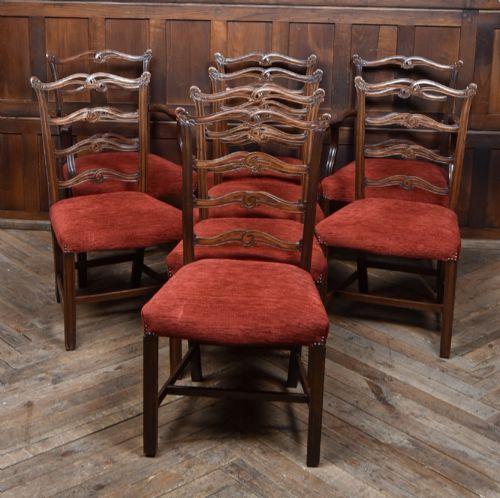
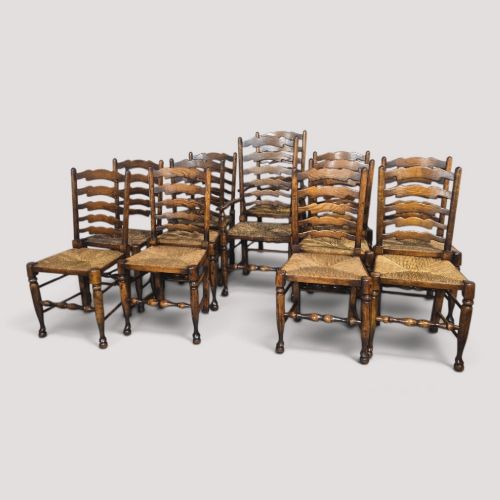
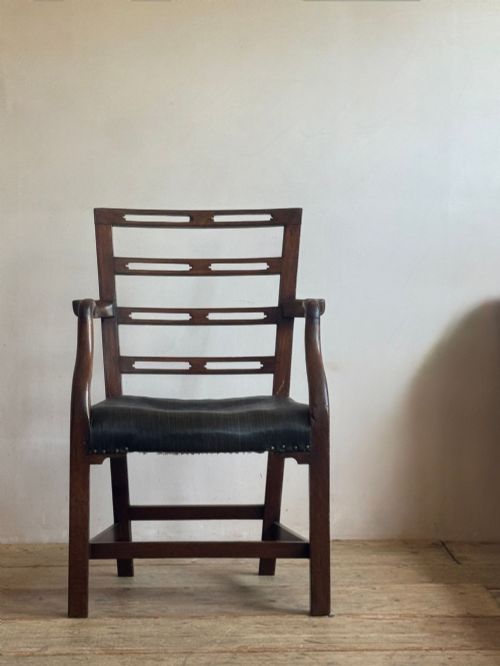
When you search for a period ladderback chair, you encounter sturdy seating defined by horizontal slats across the backrest, drawn from domestic and vernacular traditions. These pieces appear across dining sets, armchairs, high chairs, and desk chairs spanning multiple centuries.
The versions most commonly met on this page range from robust oak formats of the Georgian and eighteenth-century periods to Edwardian revival iterations and later twentieth-century interpretations. They function equally well around a dining table or as singular accent pieces in a study.
Regional variations and stylistic revivals influence the overall silhouette, incorporating Chippendale, Hepplewhite, and Arts and Crafts influences. Buyers encounter everything from single armchairs to substantial sets intended for formal dining spaces.
How they were made
Makers constructed these chairs primarily using solid timbers like oak and mahogany, often shaping the horizontal back slats to fit the curve of the sitter's spine. Joinery relied on traditional methods to ensure durability under daily domestic use.
Seating areas frequently incorporated woven rush materials or upholstered pads finished in fabric, velvet, or leather. Brass elements and subtle inlay work occasionally appear on formal revival pieces from later periods.
Period Ladderback Chair Retail Price Guide 2026
Typical asking prices for period ladderback chair among the pieces listed under this phrase on Sellingantiques today, from the lower quarter to the upper quarter. They describe what is for sale here now, not the wider market.
The listings on this site span multiple centuries, incorporating oak and mahogany woods alongside rush and upholstered seating materials.
What varies in quality
Quality rests upon the integrity of the timber selection and the precision of the joinery connecting the upright posts to the horizontal slats. Heavier, solid construction in oak or mahogany generally distinguishes higher grade examples from lighter revival builds.
The tightness and uniformity of the rush weaving or the execution of upholstery details indicate the level of craftsmanship invested in the piece. Consistency across larger sets further separates standard utility seating from finer artisan production.
Heals
The Period Ladderback Chair Glossary
- Ladderback
- A chair style featuring multiple horizontal slats or rails between the vertical back posts. This design has roots in vernacular furniture traditions.
- Rush seat
- A seating surface woven from dried marsh grasses or similar natural fibres. It provides a resilient and traditional platform for wooden chairs.
- Chippendale revival
- A style period mimicking eighteenth-century cabinet maker Thomas Chippendale designs. These pieces date predominantly to the Edwardian era and early twentieth century.
- Solid oak
- Timber sourced directly from the hardwood tree rather than veneered onto a secondary core. It provides substantial weight and durability to early chair frames.
Period Ladderback Chair: Frequently Asked Questions
What defines a ladderback chair?
A ladderback chair is characterised by a series of horizontal wooden slats set between two vertical rear posts, resembling the rungs of a ladder.
This functional framework supports the back while keeping the construction relatively lightweight and sturdy.
How do I identify a Georgian ladderback?
Georgian pieces typically display dense timber grains, traditional joinery methods, and proportions suited to eighteenth-century domestic spaces.
They often appear in solid oak or mahogany without the heavy ornamentation found in later revival styles.
Can I mix these chairs with modern tables?
These traditional designs bring visual warmth and texture that contrast effectively against contemporary minimalist furniture.
Their restrained wooden profiles allow them to integrate smoothly into varied interior schemes.