





Period Kneehole Desk
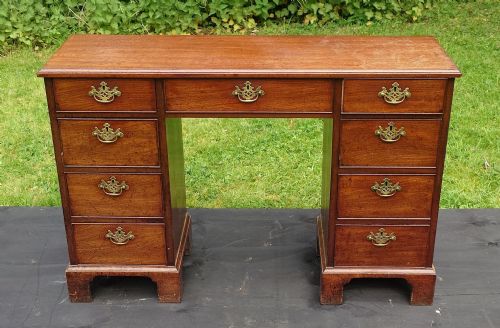
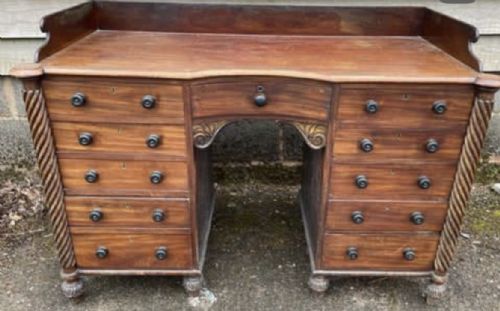
A period kneehole desk offers compact writing storage, featuring a recessed central cupboard flanked by pedestals of drawers.
Period Kneehole Desk
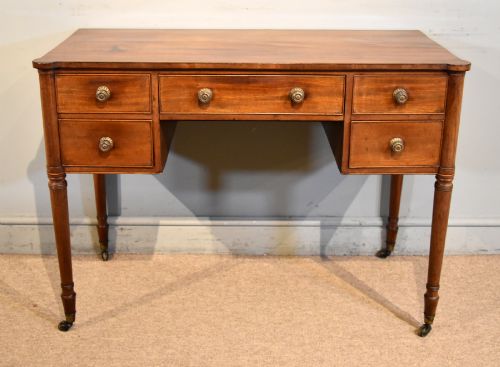
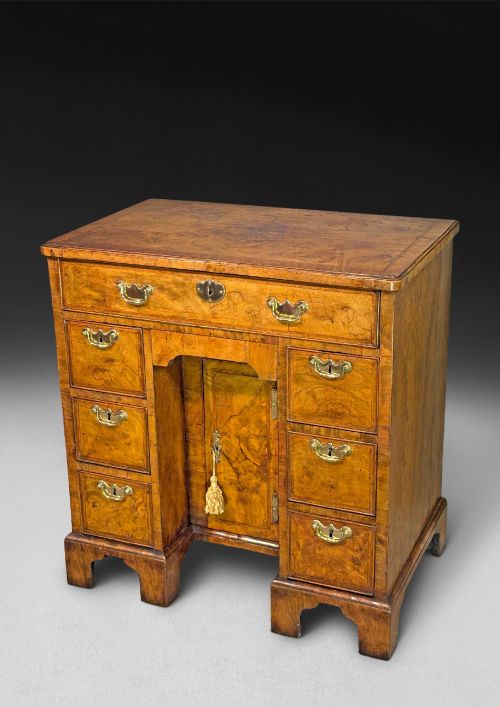
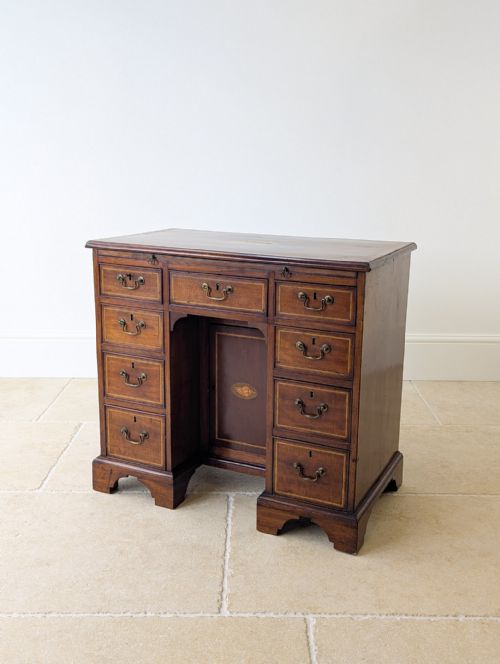
A period kneehole desk is a dedicated writing table designed with a central recess, known as the kneehole, set between two banks of small drawers. The form appears primarily across Georgian, Regency, and Victorian periods, often executed in rich cabinet timbers.
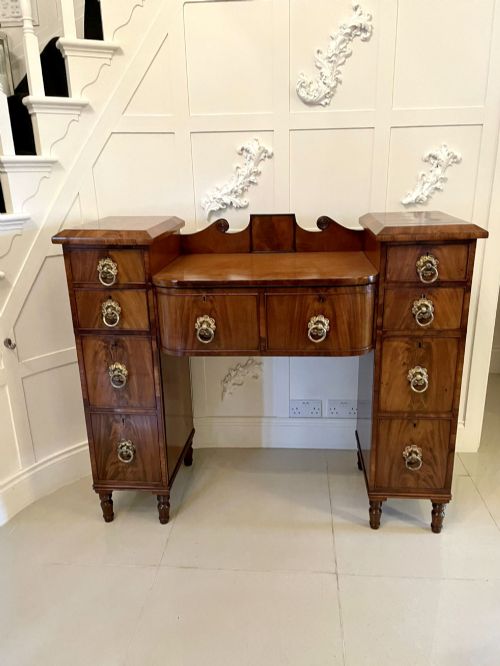
Examples on this page span the eighteenth and nineteenth centuries, including George II, George III, and Sheraton designs. Buyers frequently encounter variants functioning as writing tables, dressing chests, or dressing tables with gallery surrounds.
The layout accommodates a chair centrally while providing compartmentalised storage in the pedestals and a concealed long drawer above the kneehole space. Proportions range from narrow formats to compact pedestal writing desks intended for smaller rooms.
Materials and construction
Cabinetmakers constructed these desks predominantly using solid mahogany, figured walnut, and oak, often applying fine veneers such as satinwood to drawer fronts and writing surfaces. Secondary timbers like oak appear in drawer linings and internal framing.
Decorative detailing relies on brass hardware, marquetry inlay, and contrasting stringing lines in ebony or lighter woods. Surface finishes are complemented by inset leather writing inserts on specific models.
Period Kneehole Desk Retail Price Guide 2026
Typical asking prices for period kneehole desk among the pieces listed under this phrase on Sellingantiques today, from the lower quarter to the upper quarter. They describe what is for sale here now, not the wider market.
Listings feature mahogany, walnut, and oak timbers across Georgian, Regency, and Victorian periods.
Assessing quality
Quality rests upon the selection of timber figures, such as highly figured walnut or richly grained mahogany, and the precision of the cabinetmaker's joinery. Fine pieces display symmetrical grain matching across drawer fronts and crisp execution of carved details.
The integrity of original brass handles, locks, and internal drawer construction distinguishes superior examples from altered pieces. Consistency in timber ageing and secondary woods confirms the authenticity of the desk's period manufacture.
The Period Kneehole Desk Glossary
- Kneehole
- The central recessed space beneath a desk designed to accommodate the user's legs while seated. This architectural feature defines the pedestal desk configuration.
- Pedestal
- A vertical stack of drawers positioned on either side of the central kneehole. These columns support the upper writing surface.
- Gallery
- A raised wooden or brass surround set along the top edge of a desk or dressing table. It prevents small items from rolling off the surface.
- Marquetry
- Decorative veneer work arranged in complex geometric or pictorial patterns using various coloured woods. It creates ornamental surfaces on drawer fronts and tops.
- Secretaire
- A desk incorporating a drop-front writing flap that conceals small pigeonholes and inner drawers. This form combines storage with a pull-out writing ledge.
Period Kneehole Desk: Frequently Asked Questions
How do I identify a Georgian kneehole desk?
Georgian kneehole desks typically display solid proportions in mahogany or walnut, featuring a recessed cupboard door flanked by small drawers. Look for hand-cut dovetails on the drawer sides and period brass drop handles.
Secondary woods like oak in the drawer linings help confirm eighteenth-century origins. The overall aesthetic prioritises symmetry and restrained decorative carving.
What is the difference between a kneehole desk and a dressing table?
While sharing the same pedestal layout, kneehole dressing tables often incorporate a three-quarter gallery surround or an upstand back to retain items during grooming. Writing desks generally feature flat tops or inset leather surfaces.
Some period examples served dual purposes as dressing tables or washstands depending on the presence of interior compartments.
Are these desks suitable for daily laptop use?
Period kneehole desks provide practical workspaces, though historical drawer heights require careful measurement against modern chairs. The compact surface area accommodates laptops and writing materials comfortably.
Internal depths vary across eighteenth and nineteenth-century models, so checking the kneehole clearance ensures proper leg room for regular sitting.
How should I care for a mahogany kneehole desk?
Maintain timber surfaces by applying natural beeswax periodically to nourish the grain and protect the polish. Avoid placing antique desks in direct sunlight or near heat sources to prevent timber splitting.
Use coasters and desk pads to shield antique leather writing inserts from moisture and ink stains.