
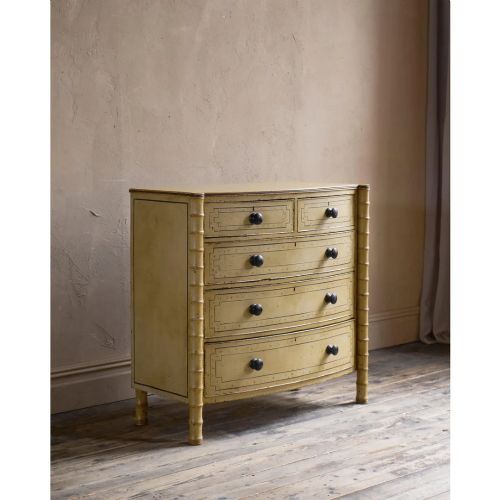
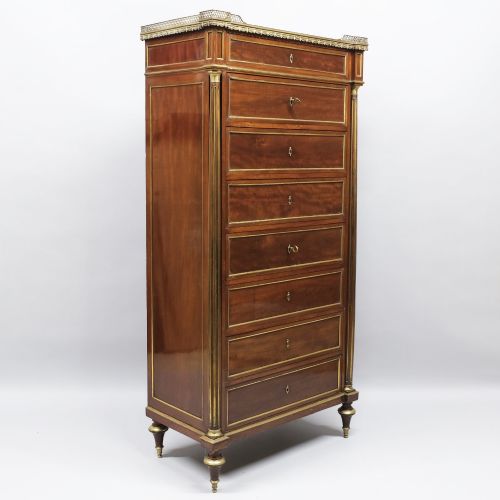
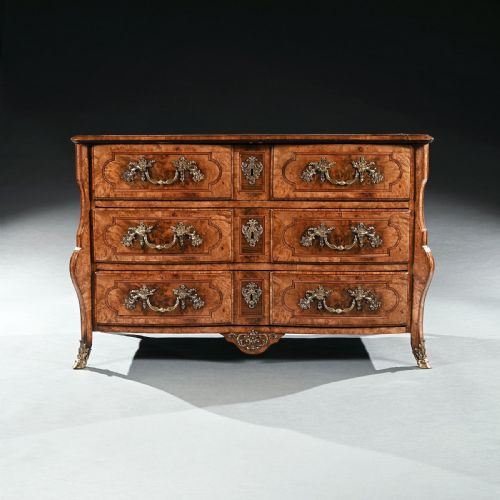


Period French Chest
A period french chest brings centuries of continental storage, from sturdy oak coffers to grand walnut commodes, directly into your room.
Period French Chest
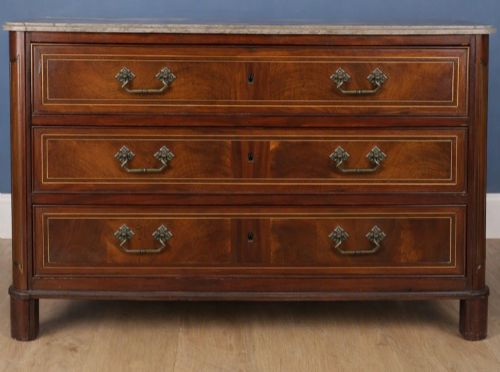
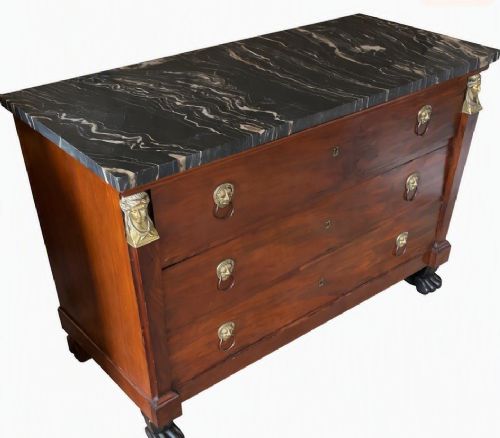
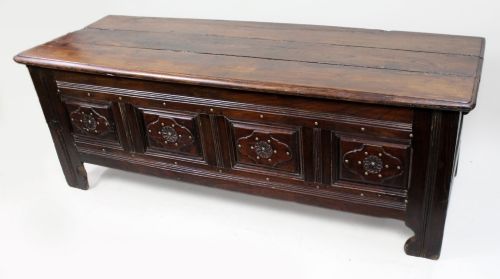
When you search for a period french chest, you encounter a variety of forms designed for storage, ranging from heavy oak coffers and blanket boxes to sophisticated marble-topped commodes. These pieces span multiple centuries, with 18th-century and 19th-century examples forming the core of what you will meet on this page.
The regional and stylistic diversity is wide, taking in French Provincial, French Empire, Regence, Louis XV, and Louis XVI Transitional designs. You are most likely to find commodes and chests of drawers executed in walnut, oak, mahogany, and fruitwood.
Early utilitarian coffers give way to refined case furniture featuring serpentine fronts, marquetry, and original stone surfaces. Each piece reflects the interior domestic needs of its era, whether for linen storage or grand salon display.
How they were made
Cabinetmakers utilised dense hardwoods such as walnut, mahogany, oak, and rosewood for the structural carcasses and drawer frames. Decorative surfaces often relied on contrasting veneers like satinwood, tulipwood, kingwood, and fruitwood arranged in geometric or figured patterns.
Metal mounts in brass, ormolu, and gilt bronze provide structural accent and decorative framing, particularly on Empire and Regence commodes. Many formal commodes incorporate heavy marble or fossil marble tops fitted directly to the timber frame.
Some provincial coffers survived centuries of damp linen storage while keeping their original hand-split oak pegs intact.
What varies in quality
The sophistication of the timber selection and the precision of the veneer work set fine examples apart from standard utility pieces. Richly figured burr maple, burr walnut, and complex multi-wood marquetry indicate a higher grade of craftsmanship.
The integration of original marble tops and chased ormolu mounts elevates a commode's standing. Finer pieces demonstrate careful hand-cut joinery and balanced proportions, particularly along serpentine and shaped fronts.
Thomas Hache of Grenoble
The Period French Chest Glossary
- Commode
- A low chest of drawers, often with a decorative marble top, developed in France during the 17th century. This form serves as a principal decorative item for the bedroom or salon.
- Coffer
- A heavy wooden chest traditionally used for storing valuables, linens, or dry goods. Early examples rely on robust framing and pegged joints.
- Ormolu
- Gilt bronze mounted onto furniture as decorative handles, escutcheons, and corner mounts. This technique was widely employed during the Empire and Régence periods.
- Serpentine
- A furniture front curving inward in the centre and outward at the ends, or vice versa. This undulating line requires advanced cabinetmaking skill.
- Semainier
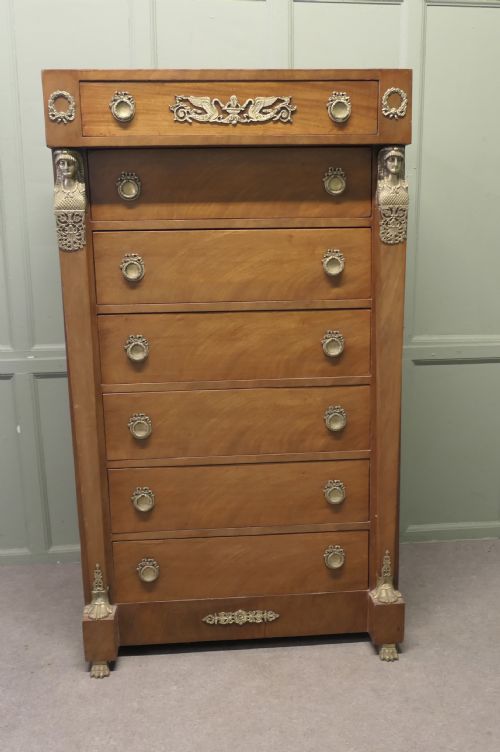
- A tall, slender chest of drawers traditionally featuring seven drawers, one for each day of the week. This form emerged during the 18th century.
Period French Chest: Frequently Asked Questions
What is a period french chest?
A period french chest is a piece of antique continental storage furniture, encompassing wooden coffers, blanket boxes, and commodes. These items date primarily from the 17th, 18th, and 19th centuries.
They reflect shifting stylistic movements from French Provincial rusticity to the formal geometry of the Empire and Neo-Classical periods.
How do I date a french commode?
Dating relies on examining the timber species, construction methods, and prevailing decorative style, such as Régence curves or Empire symmetry. Hardware types and the presence of original marble tops also offer strong chronological indicators.
Cabinetmakers adapted their designs to suit royal tastes, leaving clear stylistic markers from the Louis periods through to the 19th century.
Were marble tops original?
Many formal 18th-century and 19th-century commodes were built specifically to carry heavy marble or fossil marble tops. These stone slabs provided durable, decorative surfaces for grand interiors.
Checking the fit between the timber carcass and the stone helps confirm the integrity of the piece.
How do I live with antique furniture?
Living with these pieces involves placing them away from direct heat sources and sudden humidity changes to protect vulnerable veneers and solid timbers. Regular, gentle dusting preserves the natural lustre of walnut, mahogany, and French polish.
Their robust construction ensures they remain practical storage units for modern homes.