



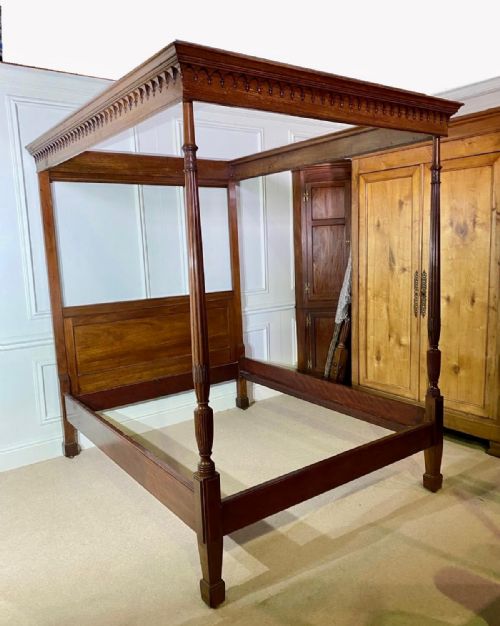

Period Four Poster Bed
A period four poster bed anchors a room with monumental presence, offering grand timber posts and a draped tester frame.
Period Four Poster Bed
A period four poster bed combines architectural timber framing with a raised sleeping platform beneath an overhead tester canopy. These frames transform a bedroom through substantial vertical scale and traditional joinery.
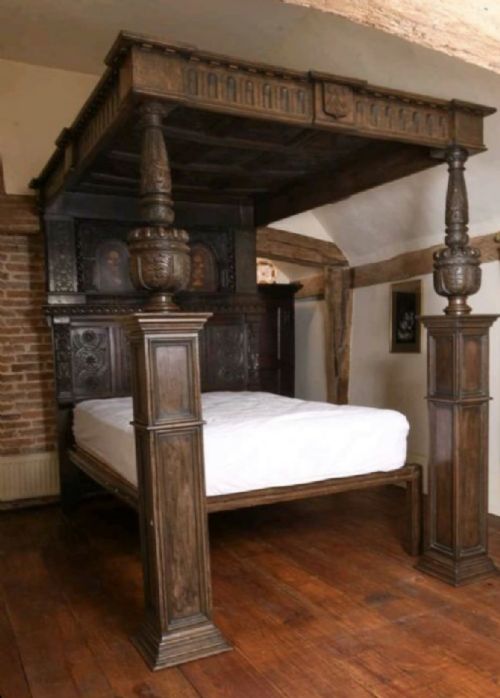
You will most commonly encounter substantial oak examples from the seventeenth century alongside finer mahogany pieces dating from the Regency and Victorian eras. Each style brings distinct regional characteristics and timber turning to the bedchamber.
Materials and Construction
Construction relies heavily on structural timbers like oak, mahogany, and pine, joined by traditional mortise and tenon methods to support the heavy tester canopy. Cabinetmakers selected dense woods capable of bearing significant weight while allowing for deep relief carving.
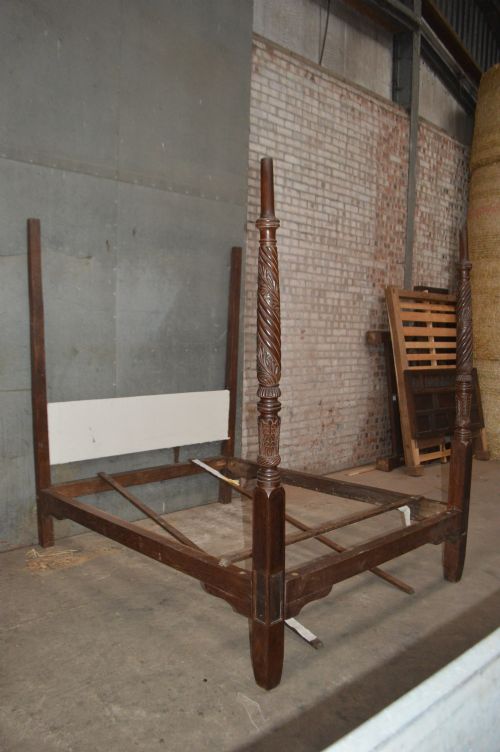
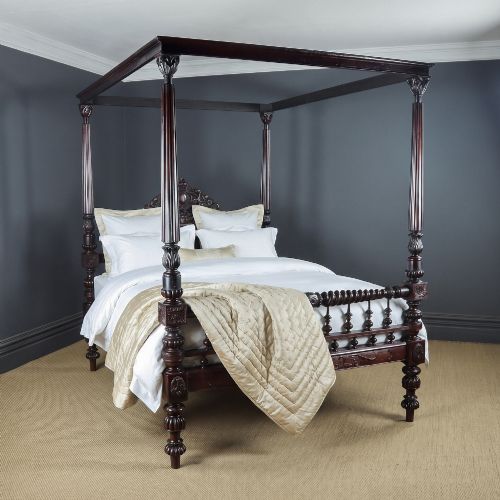
Surface finishes range from polished flame mahogany veneer and rosewood to painted treatments and waxed oak. Artisans utilised hand-carved spiral motifs, fluting, and panel work to articulate the vertical posts and headboards.
Current listings span centuries of design, encompassing seventeen-century oak, Regency mahogany, and nineteenth-century Anglo-Indian colonial timber work.
Assessing Quality and Proportion
Quality rests in the crispness of the post carvings and the structural integrity of the joints connecting the tester to the main bedframe. Superior examples maintain balanced proportions between the height of the turned posts and the overall width of the bed.
The choice of primary timber heavily dictates the refinement of the piece, moving from robust vernacular oak boards to finely figured mahogany and rosewood veneers. Original surface patination and untouched structural components separate the finest survivals from heavily altered frames.
The Period Four Poster Bed Glossary
- Tester
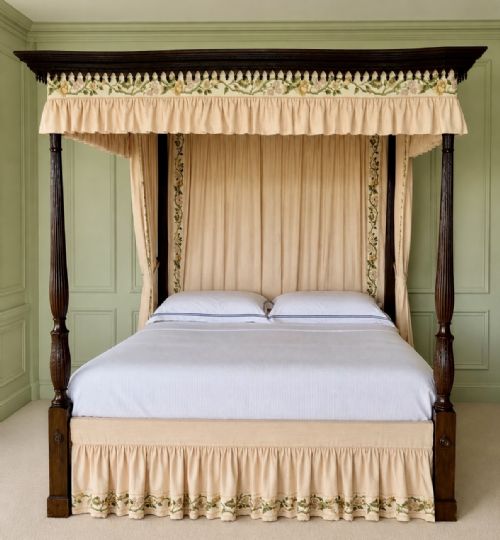
- The flat wooden canopy or ceiling suspended above a four poster bed. It frequently accommodates decorative cornice mouldings or fabric hangings.
- Half Tester
- A wall-mounted or bed-attached canopy that covers only the head portion of the bed rather than extending the full length. This configuration was common in Victorian chambers.
- Flame Mahogany Veneer
- A thin layer of timber sliced from mahogany logs where the grain creates a distinctive flickering flame pattern. Cabinetmakers applied this to prominent surfaces like headboards and friezes.
- Mortise and Tenon
- A traditional woodworking joint where a protruding peg fits securely into a corresponding cavity. This method provides the robust skeleton required for large bedframes.
Period Four Poster Bed: Frequently Asked Questions
Will a standard modern mattress fit an antique bed?
Many period four poster beds feature bespoke or historic internal dimensions that predate standard mattress sizes. Adjustments to slats or custom mattress commissions are frequently necessary for comfortable daily use.
Checking the internal width and length between the posts before purchase ensures your bedding will accommodate the frame correctly.
How do I distinguish seventeenth-century oak from later copies?
Seventeenth-century oak beds display hand-split timber grain, pegged joints, and surface patination developed over centuries of wax application. Tool marks left by pit saws and adzes remain visible upon close inspection.
Later revival pieces often utilise machine-sawn components and standardised hardware that lack the organic irregularity of genuine early joinery.
What is the difference between Regency and Victorian posts?
Regency posts typically exhibit refined reeding, classical proportions, and dark polished mahogany or rosewood surfaces. The carving is restrained and draws heavily on classical antiquity.
Victorian and Anglo-Indian variations often showcase much heavier proportions, dense tropical timbers, and deeply undercut spiral or floral ornamentation reflecting colonial trade and expanding industrial capabilities.
How were four poster beds originally used?
Historically, testers and heavy curtains served a practical purpose by retaining heat and blocking draughts in large, poorly insulated rooms. They also provided a distinct measure of privacy within shared sleeping quarters.
Over time, the textile elements evolved from functional insulation into grand decorative statements showcasing the wealth and status of the household.