

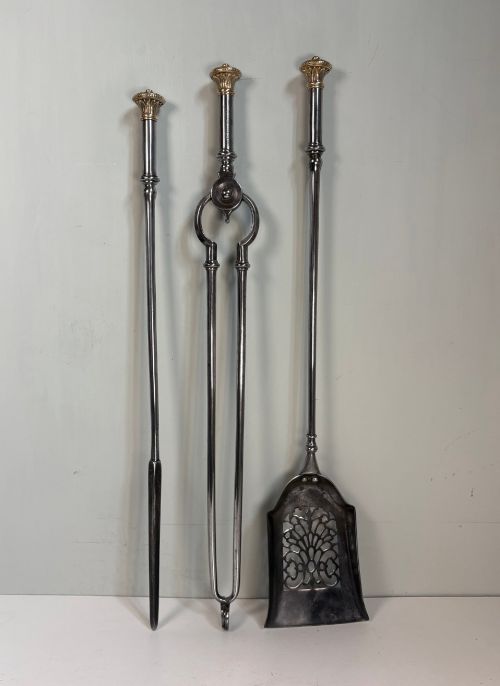
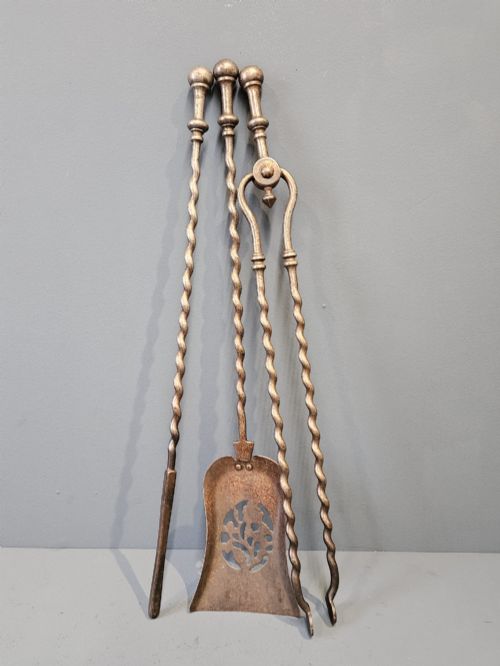


Period Fireplace Poker
A period fireplace poker is a practical hearth accessory forged in iron, steel, or brass to manage burning coal and wood.
Period Fireplace Poker
A period fireplace poker forms part of a functional hearth setup, often appearing alongside tongs and shovels within broader fire iron sets. Buyers seeking a period fireplace poker will mostly encounter individual items or sets originating from the Georgian and Victorian eras.
The objects recorded here span the eighteenth and nineteenth centuries, taking the form of fireplace accessories built for daily use. Surviving examples reflect the design standards of George III periods as well as later Victorian hearth requirements.
Materials and construction
Metalworking techniques of the eighteenth and nineteenth centuries relied heavily on steel, iron, and brass to withstand intense hearth temperatures. Makers shaped burnished or polished steel into durable shafts, occasionally pairing them with gilt brass details.
The combination of steel and brass appears frequently in sets, balancing rigid utility with decorative finish. Black iron and bright polished steel provide the structural strength needed for heavy coal handling.
Period Fireplace Poker Retail Price Guide 2026
Typical asking prices for period fireplace poker among the pieces listed under this phrase on Sellingantiques today, from the lower quarter to the upper quarter. They describe what is for sale here now, not the wider market.
Every hearth poker carries the quiet scars of past winters, shaped by hands that stoked fires centuries ago.
Factors that define quality
Quality rests upon the integrity of the metalwork and the preservation of original surfaces, whether burnished steel or polished brass. The weight and balance of the tool determine how well it handles coal or wood in an open hearth.
Decoration ranges from simple turned handles to starburst brass motifs and gilt accents. The crispness of these decorative elements separates standard utility pieces from finer hearth equipment.
The Period Fireplace Poker Glossary
- Poker
- A metal rod used to stir burning coals or wood in a fireplace. It forms the primary tool for adjusting fuel placement.
- Fire irons
- A collective term for the matching poker, tongs, and shovel used together at the hearth. These tools usually share a common material and decorative style.
- Burnished steel
- Steel that has been polished by rubbing to achieve a bright, smooth finish. This technique enhances the lustre of the metal while protecting the surface.
- Gilt brass
- Brass coated with a thin layer of gold or gold-coloured material. This finish adds decorative contrast to steel hearth tools.
Period Fireplace Poker: Frequently Asked Questions
What is a period fireplace poker made from?
These pokers are constructed from metals such as steel, iron, and brass. Many examples combine a sturdy steel shaft with decorative brass handles.
Surface finishes include burnished steel and gilt brass elements. The materials were chosen for both heat resistance and appearance.
Are pokers found alone or in sets?
Pokers frequently appear as part of a matched set that includes a shovel and tongs. These sets were designed to sit together in a hearth stand.
Individual pokers also survive from the Georgian and Victorian periods. Both single tools and complete sets served the same practical function.
How do I identify a Georgian poker?
Georgian pieces date from the eighteenth and early nineteenth centuries, reflecting the design preferences of that era. They often utilise steel and brass with clean lines and classic proportions.
Objects from the George III period show specific handling of turned metal and balanced weight. Comparing the construction methods helps confirm the era.
What makes a Victorian poker different?
Victorian examples often feature heavier brass work and decorative details like starburst motifs. These pieces date from the nineteenth century, including the 1860s and 1880s.
The manufacturing techniques of this later period produced robust hearth tools with varied ornamental finishes. They reflect the industrial capabilities of the Victorian workshop.