


Period Fire Tools
Period fire tools are essential hearth furniture that bring authentic historic character and utility to a traditional fireplace.
Period Fire Tools
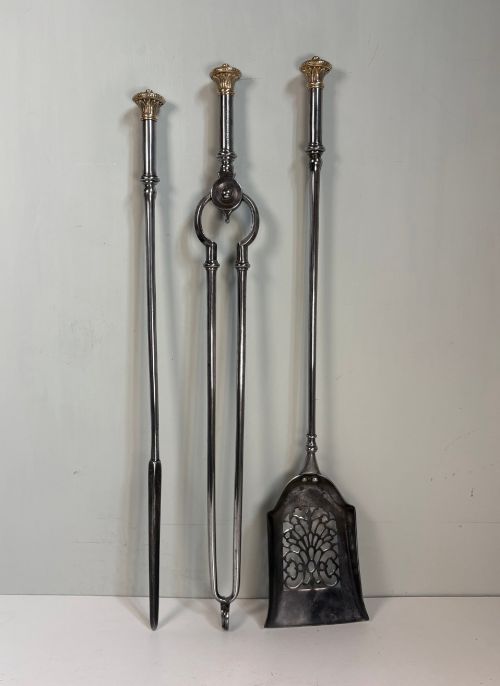
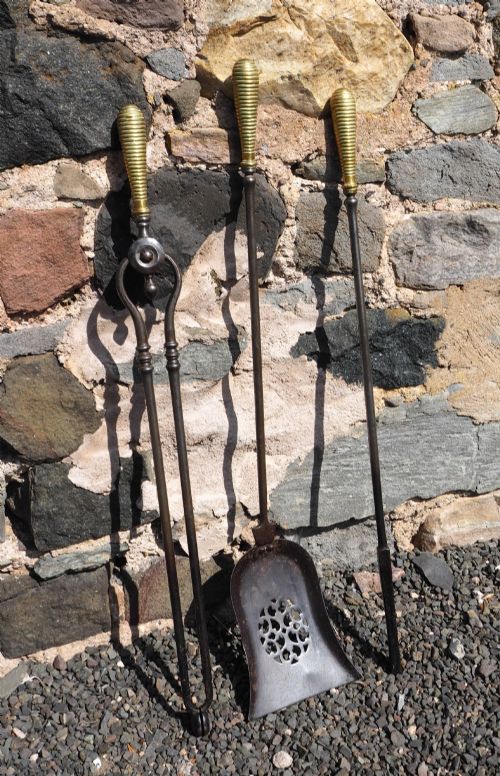
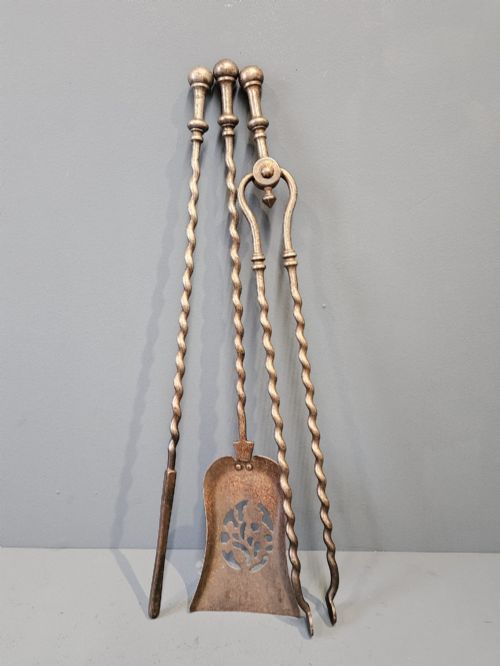
When you search for period fire tools, you are looking at functional hearth implements designed to manage coal and wood fires in historic interiors. These sets typically include pokers, tongs, and shovels, sometimes accompanied by matching fenders or andirons.
Materials and construction
Makers utilised resilient metals such as cast iron, forged steel, and brass to withstand intense hearth temperatures while maintaining structural integrity. Polished and burnished steel finishes provided a bright, reflective surface that contrasted sharply with darker cast iron components.
Some Victorian sets feature cheerful starburst motifs, ensuring even the humble poker caught the flickering glow of the coal fire.
Assessing quality and craftsmanship
The distinction between ordinary utility sets and superior examples lies in the crispness of the casting and the refinement of the metalwork. Higher quality pieces display well-defined handles, balanced proportions, and careful hand-finishing on every implement.
Material selection also dictates the hierarchy, with mixed brass and burnished steel sets often showing more elaborate decorative planning than plain iron variants. Integrity of form and matching original components elevate a set above mismatched replacements.
The Period Fire Tools Glossary
- Fire irons
- Implements used to tend a fire, traditionally consisting of a poker, tongs, and shovel. They are often found displayed together as a matched set.
- Andiron
- A horizontal iron support raised on short legs, used to hold logs in an open fireplace. They frequently date to the Elizabethan or earlier periods and display decorative cast iron work.
- Gilt brass
- Brass that has been treated with a thin layer of gold or gold-coloured wash to enhance its appearance. This technique adds a bright, decorative finish to handles and mounts.
- Burnished steel
- Steel that has been polished to a highly reflective, smooth finish. This treatment protects the metal while giving it a bright sheen popular in Georgian and 19th-century interiors.
- Fender
- A low metal guard placed in front of a fireplace to contain sparks and ash. They are frequently made of brass or cast iron to match the companion set.
Period Fire Tools: Frequently Asked Questions
What tools come in a set?
A standard set generally comprises a poker for prodding logs, tongs for moving fuel, and a shovel for clearing ash. Some collections also include a companion stand to keep the implements organised beside the hearth.
These pieces were designed to work together as a cohesive unit, sharing matching handles, materials, and decorative motifs.
How do I date these items?
Dating relies heavily on stylistic markers, material choices, and manufacturing techniques characteristic of periods like the Georgian or Victorian eras. Simple iron forms often point to earlier or strictly utilitarian origins, while ornate brass starbursts typically suggest mid-to-late 19th-century production.
Examining the wear patterns and method of assembly also helps determine whether a set belongs to the 18th century or later decades.
Can I use them in a real fire?
Most historic steel and iron pieces are structurally robust enough for regular use in an open fire. However, delicate brass elements or pieces with burnished steel finishes require careful handling to prevent tarnishing or scratching.
Many collectors choose to use sturdy iron subsets for burning fuel while keeping highly decorative brass sets purely for display.
How do I maintain brass and steel?
Regular dusting and occasional gentle cleaning keep metal surfaces stable without removing historic patination. Steel components benefit from a light application of protective oil to prevent surface oxidation in damp environments.
Avoid aggressive metal polishes that can wear away fine detailing or strip the aged character accumulated over centuries.