

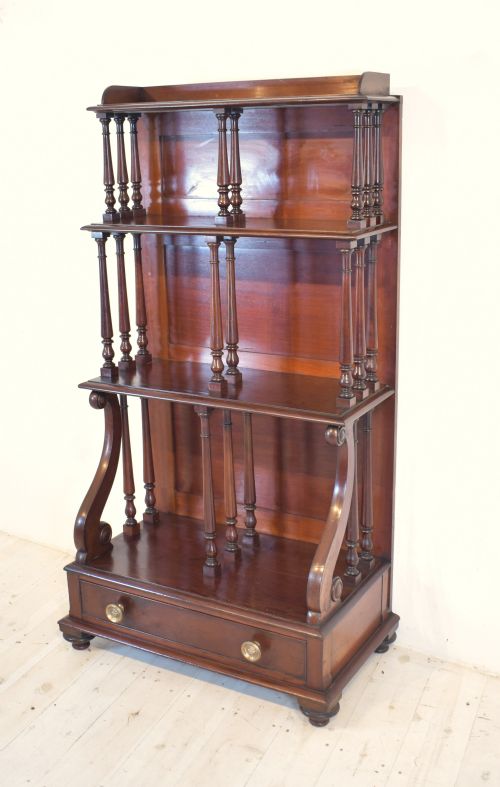

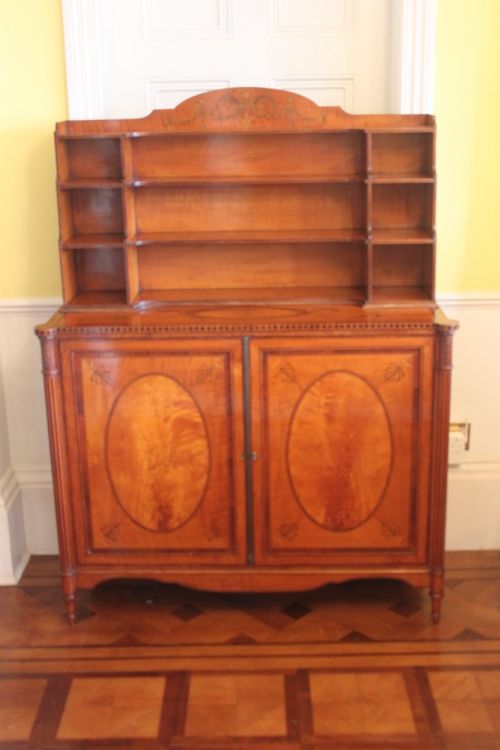

Period Display Shelf
A period display shelf organises cherished objects across tiers of mahogany, rosewood, and walnut.
Period Display Shelf
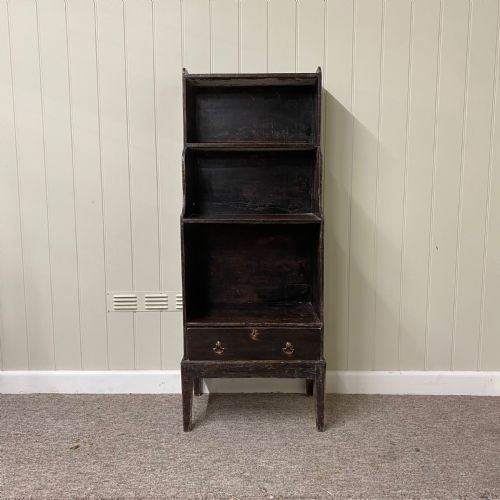
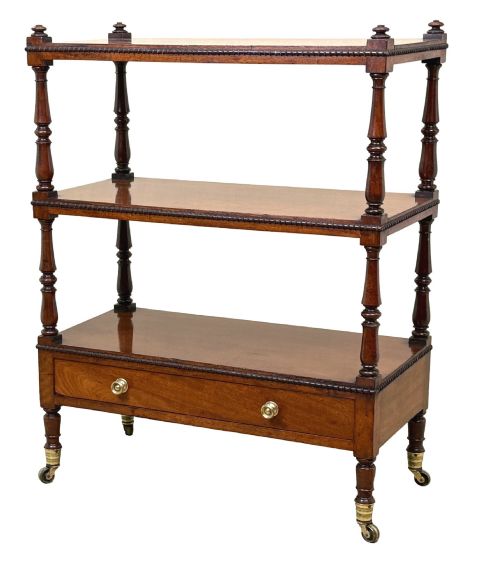
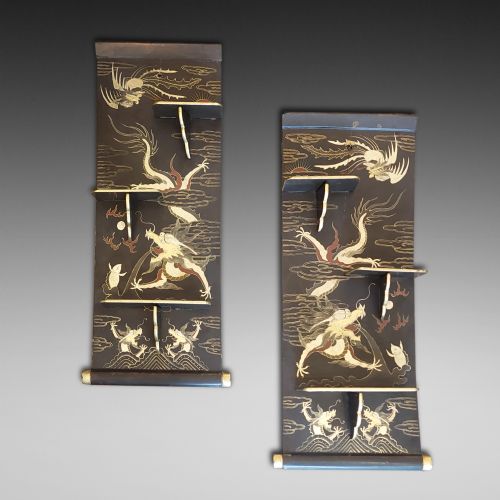
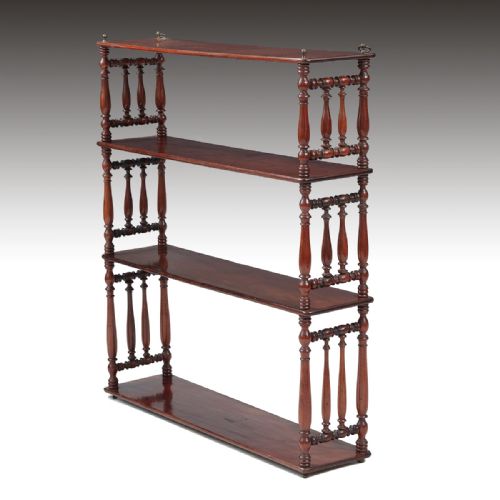
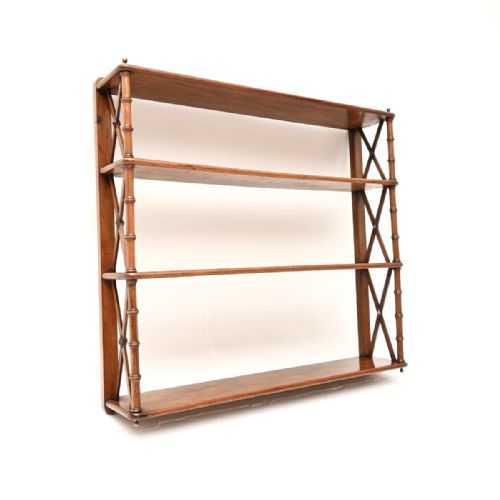
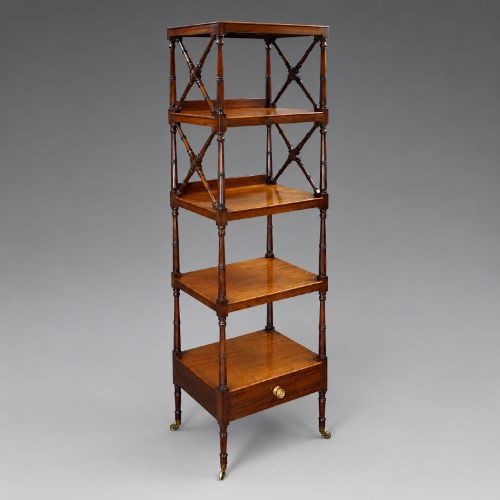
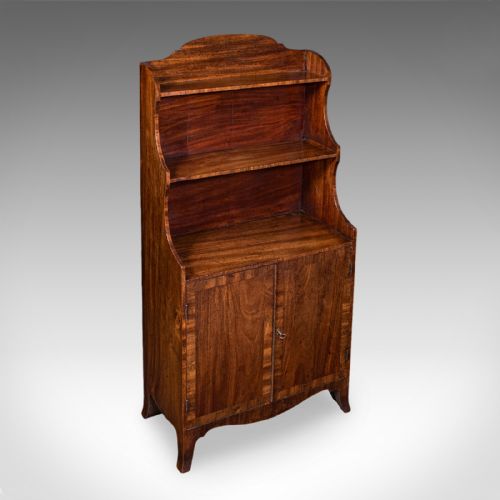
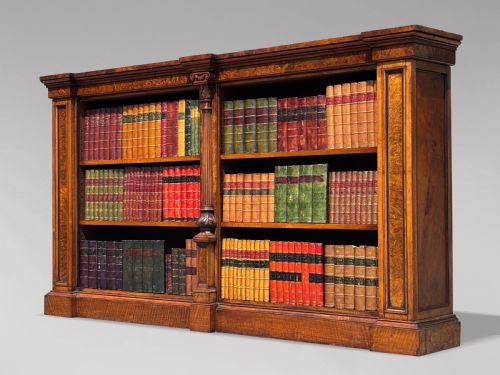
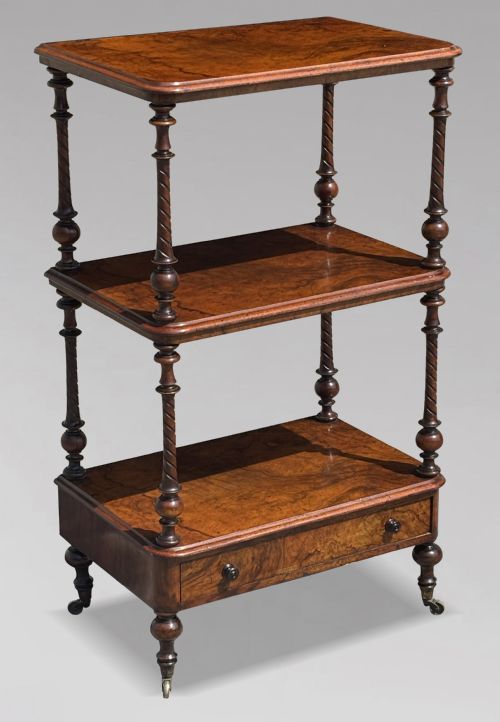
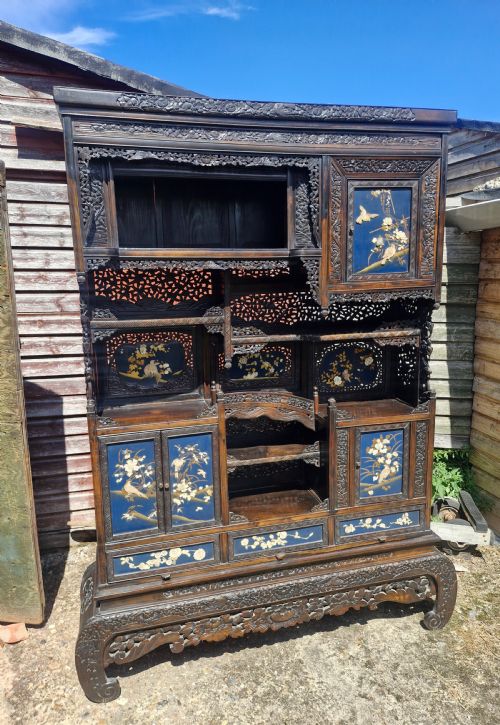
A period display shelf encompasses multiple forms, including multi-tiered whatnots, etageres, wall-mounted bookcases, and Japanese shodana cabinets. These pieces served to exhibit small ornaments, books, and decorative collections in formal reception rooms.
The versions most frequently encountered here date from the Georgian, Regency, and Victorian eras, alongside late nineteenth-century Japanese imports. They combine utility with decorative ambition, utilising vertical space to present personal collections.
Evaluating quality and execution
Quality rests on the selection of timber veneers and solid woods, where rich grain patterns in rosewood, burr walnut, and mahogany elevate the visual weight of the piece. Subtle details such as fine inlay work, brass mounts, and well-turned upright supports distinguish finer workshops from standard production.
Structural integrity matters significantly in multi-tiered pieces like etageres and whatnots, where joints must support the load of displayed objects securely. The crispness of carved elements, particularly on Japanese shodana cabinets and George III bookcases, marks the distinction between ordinary and exceptional execution.
Period Display Shelf Retail Price Guide 2026
Typical asking prices for period display shelf among the pieces listed under this phrase on Sellingantiques today, from the lower quarter to the upper quarter. They describe what is for sale here now, not the wider market.
Listings include mahogany, rosewood, walnut, and bamboo alongside Japanese shodana cabinets from the Meiji period.
The Period Display Shelf Glossary
- Etagere
- A set of open shelves for displaying ornaments or china. This French term describes pieces similar in function to the English whatnot.
- Shodona
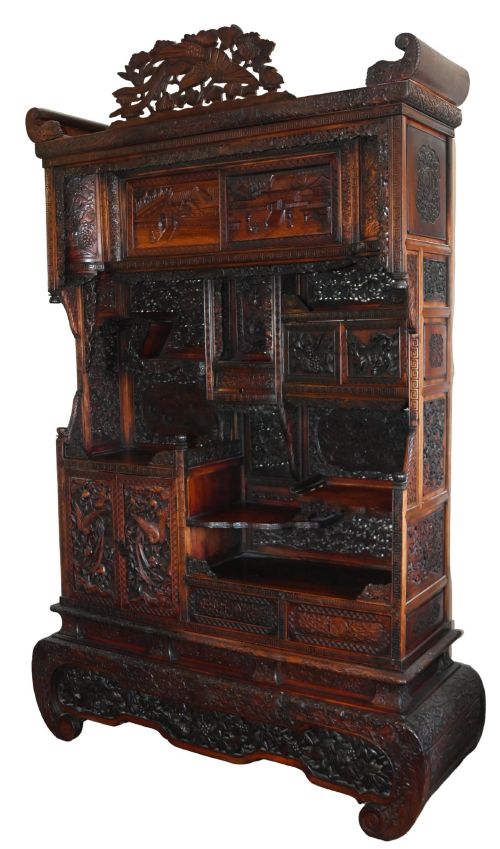
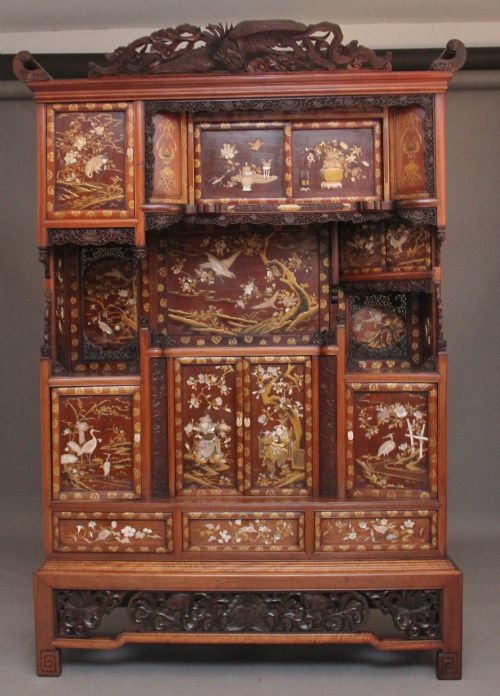
- A Japanese cabinet with asymmetrical shelving, cupboards, and drawers originating from the Meiji period. These items often feature elaborate carving and lacquered surfaces.
- Waterfall bookcase
- A standing set of graduated open shelves where each tier steps back from the one below. The profile resembles the cascading steps of a waterfall.
- Canterbury
- A low stand traditionally fitted with divisions for sheet music or folios, often combined with a whatnot top tier. It usually rests on short legs with castors.
Period Display Shelf: Frequently Asked Questions
What is a whatnot shelf?
A whatnot is a multi-tiered piece of furniture designed specifically to display ornaments, books, and small decorative items.
First appearing in the Georgian period and remaining popular through the Victorian era, these shelves utilise vertical space efficiently in smaller rooms.
How do I date a display shelf?
Dating relies on identifying the prevailing timber choices, structural proportions, and decorative motifs associated with specific eras such as Regency or Victorian.
For instance, rosewood and brass inlay typify Regency pieces, while ebonised finishes and bamboo point towards the later Aesthetic movement.
Where should I place a wall shelf?
Wall-mounted bookcases and display shelves suit rooms where floor space is limited, such as hallways, studies, or dining rooms.
Securing them properly to wall studs is essential, as period timbers carry considerable weight before any books or ceramics are added.
What is a shodana cabinet?
A shodana is a traditional Japanese cabinet featuring asymmetrical shelves, sliding doors, and small compartments.
Produced during the Meiji period, these pieces arrived in Europe as part of the late nineteenth-century craze for Japanese design and craftsmanship.