

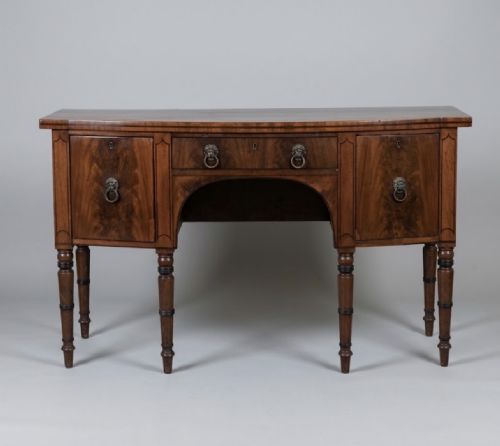
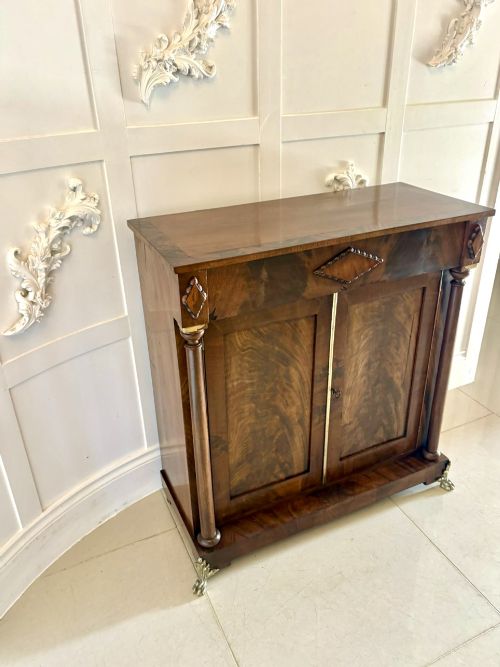
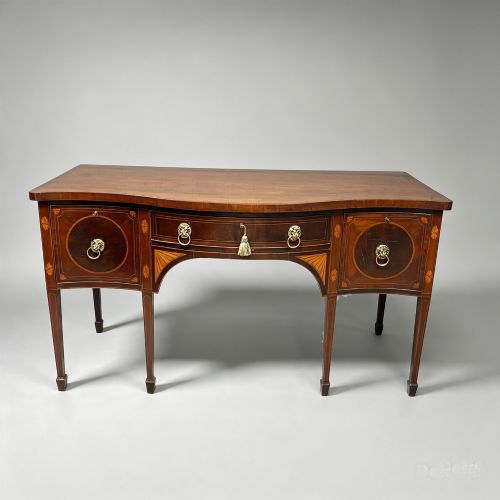
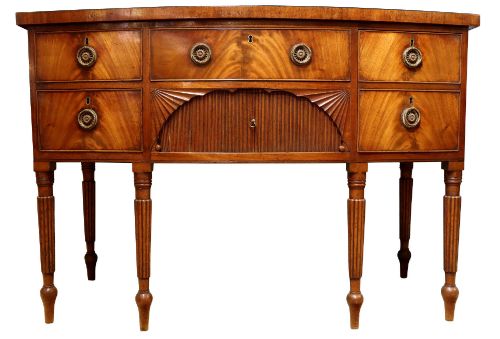
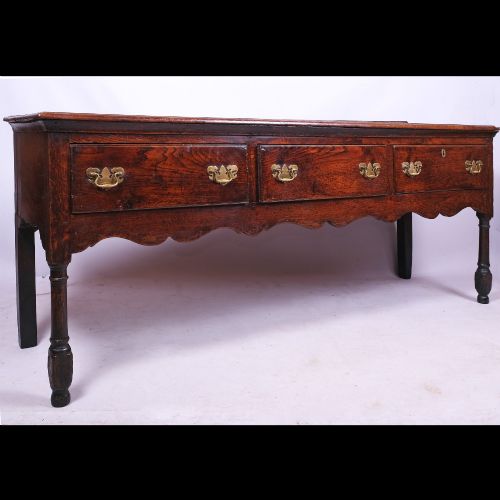
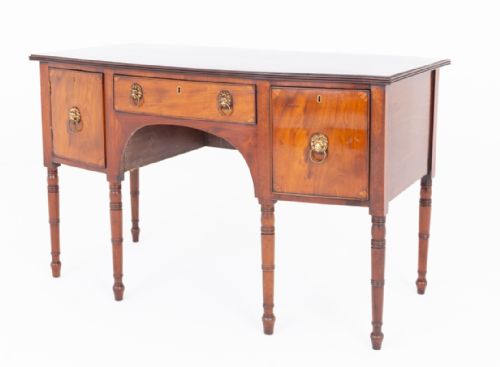
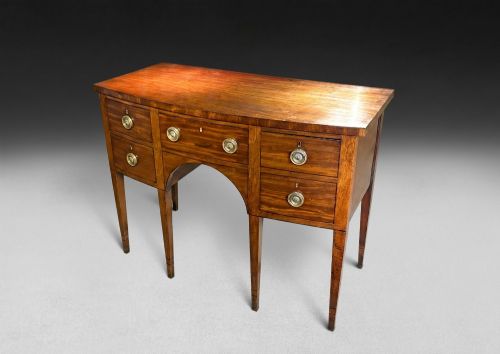


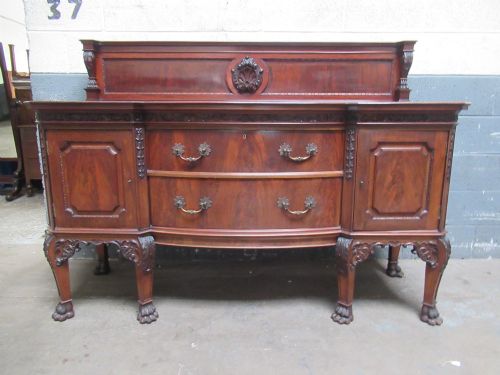

Period Dining Sideboard
A period dining sideboard anchors a room with timber grain and balanced proportions, offering deep drawers and cupboards for service.
Period Dining Sideboard
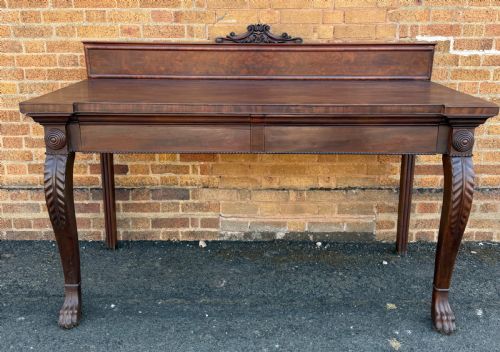
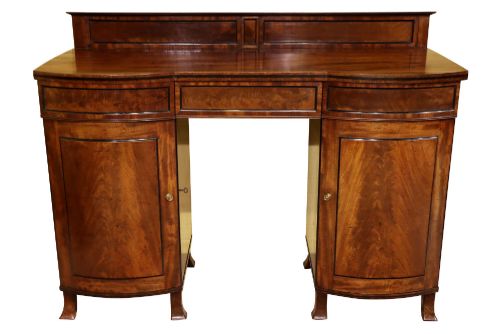
A period dining sideboard serves as the main storage and serving station in a dining room, designed to hold plate, linen and glassware. The form ranges from long serpentine and bowfront cabinets to pedestal sideboards and serving tables.
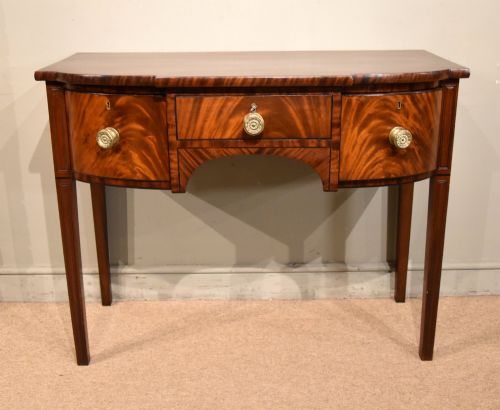
The pieces on this page emerge primarily from the Georgian, Regency and Victorian eras, alongside Edwardian examples. Mahogany forms the backbone of these selections, appearing in straight grain, figured and flame veneer varieties.
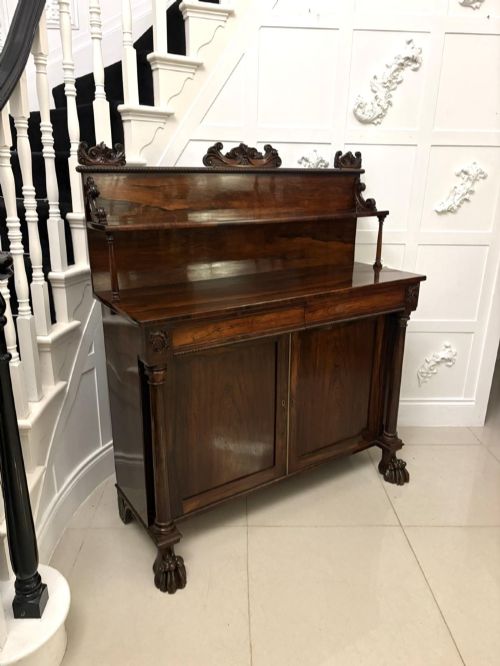
Makers and workshops constructed these items to anchor the dining space, often incorporating brass mounts, boxwood stringing or satinwood inlay. Buyers encounter everything from compact chiffoniers to imposing Irish serving tables.
Construction and materials
Cabinet makers built these sideboards using solid timber carcases faced with mahogany, flame mahogany veneer, rosewood, oak or satinwood. Drawer linings often utilise secondary woods like oak or pine, joined with hand-cut dovetails.
Decorative details rely on contrasting stringing in boxwood and cast brass gallery rails or handles. Polish finishes were traditionally built up using shellac or oil to bring out the natural figures in the grain.
Period Dining Sideboard Retail Price Guide 2026
Typical asking prices for period dining sideboard among the pieces listed under this phrase on Sellingantiques today, from the lower quarter to the upper quarter. They describe what is for sale here now, not the wider market.
Some pedestal sideboards feature concealed cellaret drawers lined to keep your vintage port cool during long dinner parties.
Judging the standard
Quality rests on the choice of timber and the control of the veneer matching across drawer fronts and doors. Superior examples display symmetrical flame mahogany figures that flow naturally across the entire width of the piece.
The refinement of the cabinet work distinguishes finer output, seen in crisp mahogany mouldings and tight drawer joints. Original brass hardware, well-figured secondary timbers and balanced proportions elevate the status of a sideboard.
Gillows·Mack Williams And Gibton
The Period Dining Sideboard Glossary
- Bowfront
- A curved cabinet front that swells outward in the centre, creating a softer silhouette than a flat facade. This shape appears frequently on Georgian and Regency pieces.
- Serpentine
- A front configuration shaped in three curves, bending outward in the middle and inward at the sides. It requires exceptional skill from the cabinet maker.
- Chiffonier
- A compact low cabinet equipped with drawers and doors, often fitted with a shelf on top. They function as smaller sideboards in dining spaces.
- Serving table
- An open-leg table designed for food service without enclosed cupboards beneath. These often stand on slender tapered or reeded legs.
- Flame mahogany veneer
- A prized timber veneer cut from the branch junction of the mahogany tree, showing a flamy, flickering grain pattern. Makers laid this over a stable secondary wood base.
- Stringing
- Thin inlaid lines of contrasting timber, such as boxwood, set into the surface of the mahogany. This technique frames drawer fronts and tabletops.
Period Dining Sideboard: Frequently Asked Questions
What is the difference between a sideboard and a serving table?
A sideboard incorporates enclosed cupboards, drawers and sometimes central pedestals for storing heavy dining silver and linen. Serving tables omit the lower carcase to provide an open framework with legs.
Serving tables suit smaller dining rooms where visual lightness matters more than concealed storage capacity. Sideboards provide greater practical utility for larger collections of tableware.
How do I identify a Regency period sideboard?
Regency pieces often display classical architectural influences, featuring reeded legs, lion mask brass handles and bold mahogany veneers. Look for pedestal ends and drop wells that typify the early nineteenth century.
These designs move away from earlier straight-lined George III formats toward more sculptural, Greco-Roman inspired silhouettes. Rosewood and palisander timbers also emerge strongly during this phase.
Can I use an antique sideboard in a modern dining room?
These sideboards provide functional storage for modern dining settings while adding warmth through rich timber tones. Their deep drawers and cupboards easily accommodate contemporary tableware and glassware.
Placing an antique piece against a plain wall allows the figured mahogany grain and brass hardware to stand out. Their sturdy construction ensures they withstand daily domestic use.
What woods were used in Georgian sideboards?
Georgian cabinet makers relied heavily on mahogany as the primary timber for high-status dining furniture. They enhanced the surfaces using decorative inlays of satinwood and boxwood.
Secondary timbers like oak and pine appear inside drawer boxes and carcase backs. Oak also forms the primary material for earlier country pieces such as Welsh dresser bases.