

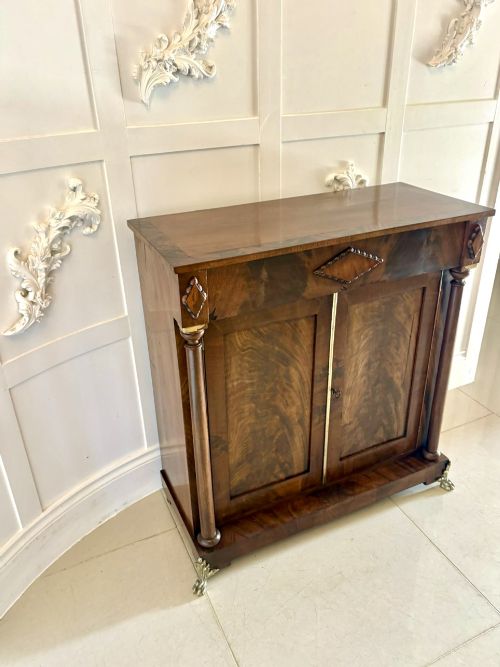
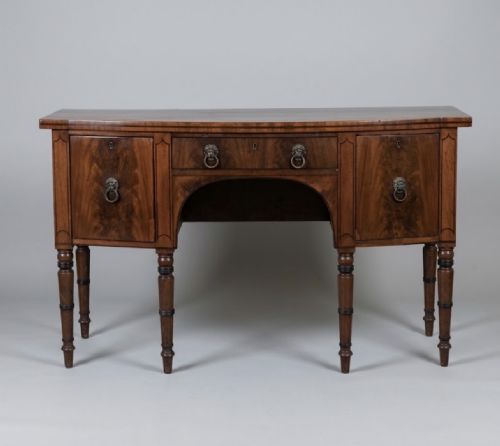
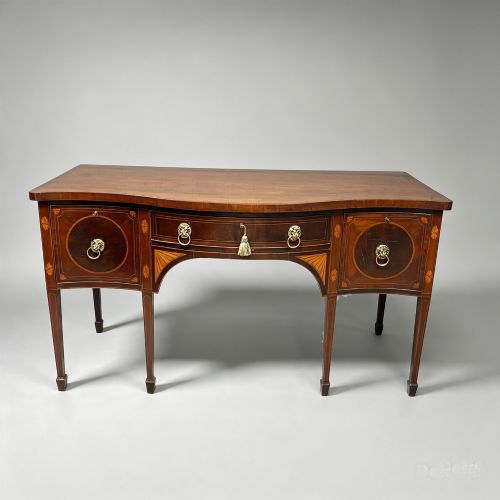
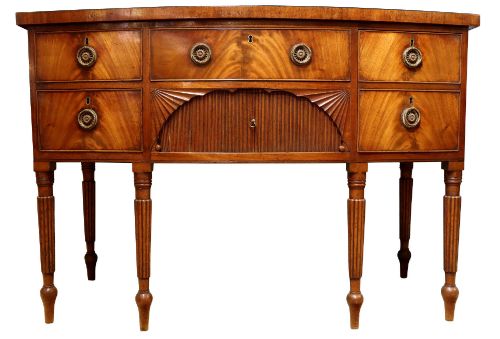
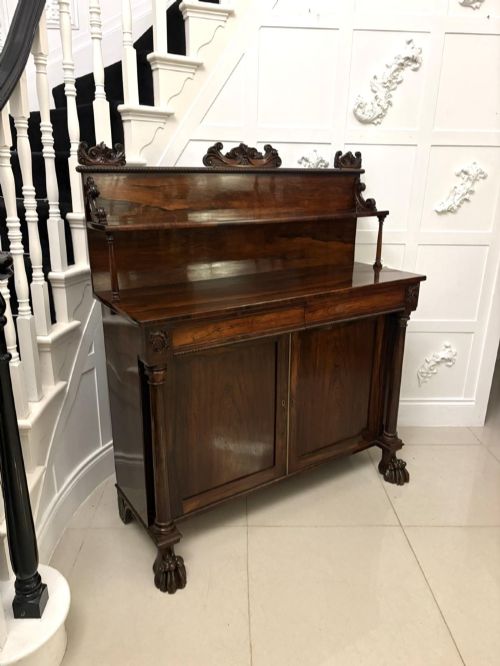
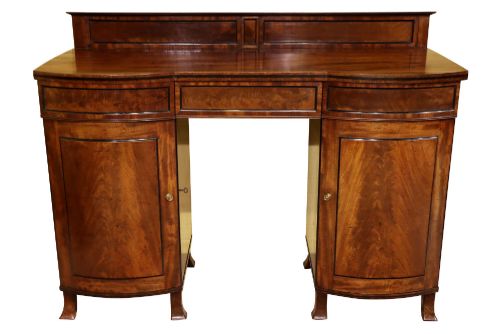
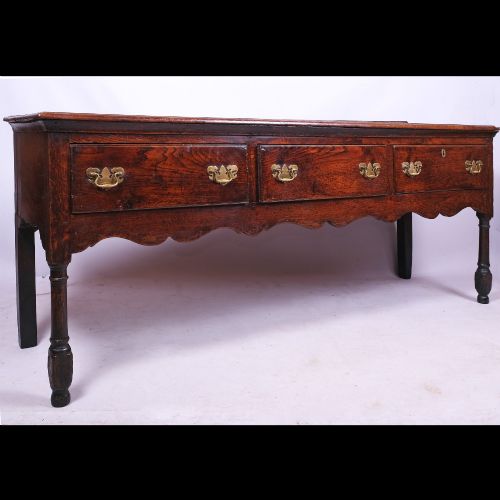
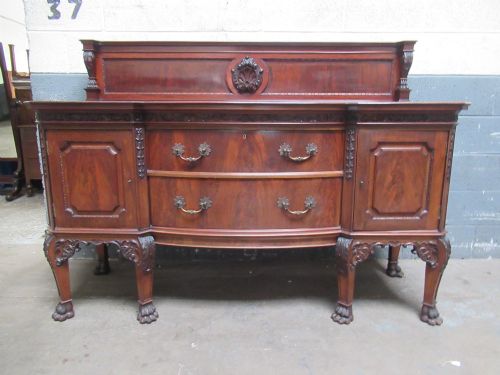


Period Dining Room Sideboard
A period dining room sideboard anchors the room with substantial timber and functional storage built for formal entertaining.
Period Dining Room Sideboard
A period dining room sideboard encompasses large storage furniture designed for dining spaces during the eighteenth, nineteenth, and early twentieth centuries. The selection spans distinct forms including serving tables, pedestal sideboards, chiffoniers, and dresser bases.
Regency and George III examples dominate the offerings, usually constructed from rich mahogany with distinct bow front, serpentine, or straight profiles. Buyers also encounter Edwardian updates, William IV buffets, and occasional Queen Anne oak pieces.
The primary forms function to display silver, store dining linen, or serve food during formal meals, utilising deep cupboards and drawers integrated into substantial timber frames.
How they were made
Cabinetmakers constructed these sideboards primarily using solid mahogany and flame mahogany veneer, often accented with satinwood, boxwood, and rosewood stringing or inlay. Timber selection governed the visual impact of the piece, with figured grain chosen for prominent drawer fronts and cupboard doors.
Structural embellishments frequently incorporate cast brass mounts, galleries, and delicate stringing details to define the outlines of bow front and serpentine surfaces. Carpenters joined structural members using traditional cabinetmaking techniques suited to heavy domestic timber furniture.
Period Dining Room Sideboard Retail Price Guide 2026
Typical asking prices for period dining room sideboard among the pieces listed under this phrase on Sellingantiques today, from the lower quarter to the upper quarter. They describe what is for sale here now, not the wider market.
The available furniture types include serving tables, chiffoniers, and dresser bases alongside traditional pedestals.
What varies in quality
Quality rests upon the selection of timber veneers and the crispness of inlaid details like boxwood and satinwood lines. Finer items demonstrate careful book-matching of flame mahogany across multiple doors and drawers.
Construction standards appear in the integrity of internal carcase framing, the thickness of secondary timbers in drawer linings, and the survival of original brass hardware or mounts.
Gillows·Mack Williams And Gibton
The Period Dining Room Sideboard Glossary
- Bow front
- A convex, curved front elevation popular on Regency and Georgian sideboards. This curved shape softens the heavy rectangular profile of the dining room furniture.
- Serpentine
- A front contour characterised by a convex centre flanked by concave wings. Master cabinetmakers used this layout to create fluid movement across the timber facade.
- Chiffonier
- A compact low sideboard or cabinet featuring enclosed lower cupboards, sometimes fitted with a shelf superstructure. These pieces provided convenient storage in dining spaces and smaller reception rooms.
- Pedestal sideboard
- A central serving surface flanked by distinct pedestal cupboards or cabinets. This layout defined formal Regency dining room furniture.
- Stringing
- Thin inlaid lines of contrasting timber such as boxwood or satinwood used to edge panels and drawer fronts. It frames the primary wood grain for decorative contrast.
Period Dining Room Sideboard: Frequently Asked Questions
What is a pedestal sideboard?
A pedestal sideboard consists of a central serving board flanked by two independent pillar cupboards or cabinets. This layout emerged during the Regency period to anchor large formal dining rooms.
The distinct three-part construction offers substantial internal storage while maintaining architectural symmetry against the dining room wall.
How do I date a mahogany sideboard?
Dating relies upon observing the primary style markers, such as George III serpentine shaping or Regency brass inlay, combined with timber characteristics. Cabinet construction methods inside drawers also help confirm the era of manufacture.
Matching the overall proportions and decorative stringing to documented periods provides a reliable guide to the decade of origin.
What is a chiffonier sideboard?
A chiffonier is a lower-profile cabinet or sideboard equipped with enclosed storage compartments beneath a flat surface. They functioned in dining rooms and parlours for serving or storing tablewares.
Many examples incorporate rich rosewood or flame mahogany veneers alongside subtle brass galleries or panelled doors.
Where were serving tables used?
Serving tables stood against dining room walls to hold dishes, flagons, and silverware before service. Unlike sideboards, they typically lacked built-in cupboards and relied on open table frames.
Homeowners paired them with separate cellarettes or relied on nearby surfaces to complete the dining room arrangement.