


Period Dining Buffet
A period dining buffet anchors the dining room with timber presence, offering generous storage and serving surface for modern hospitality.
Period Dining Buffet
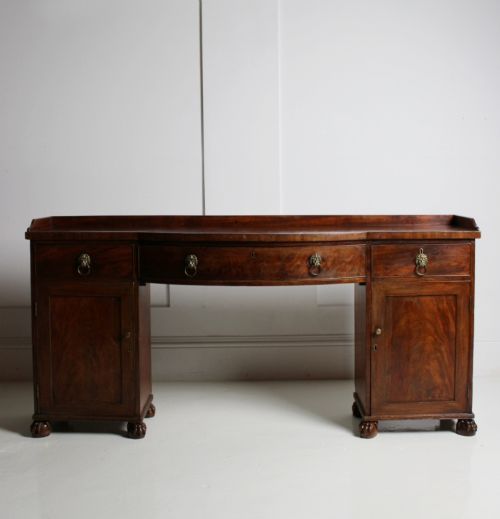
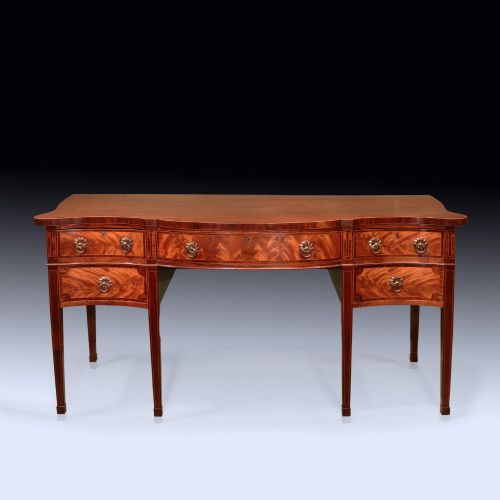
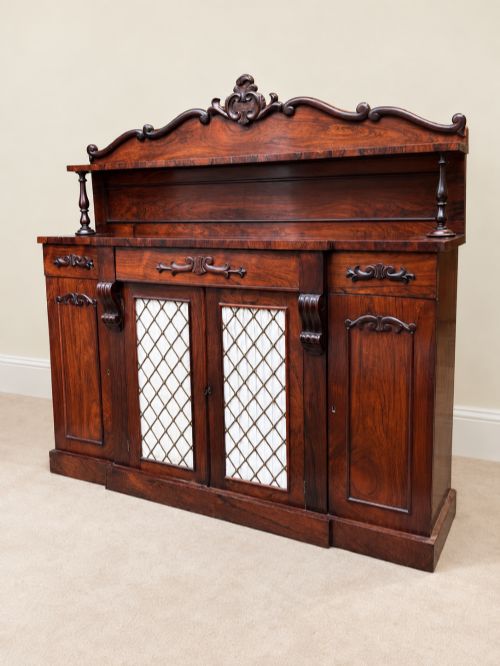
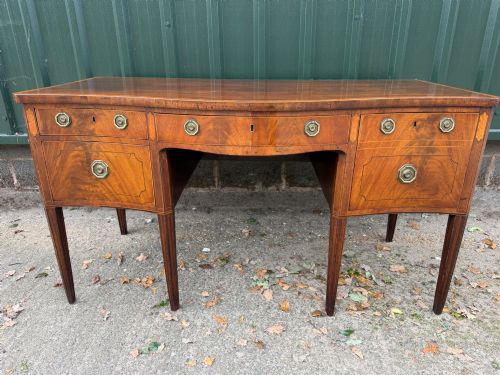
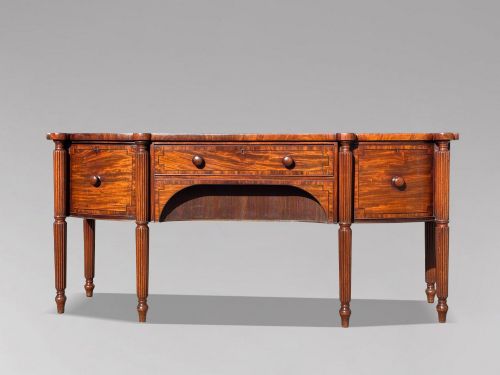
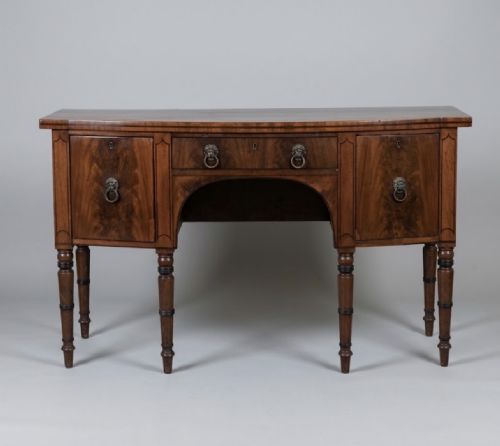
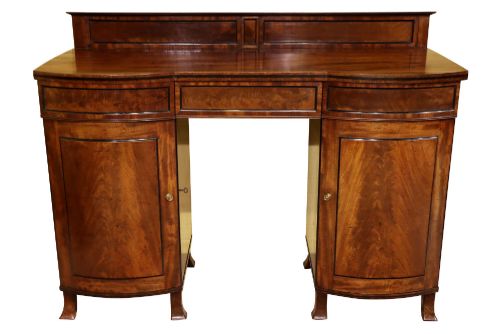
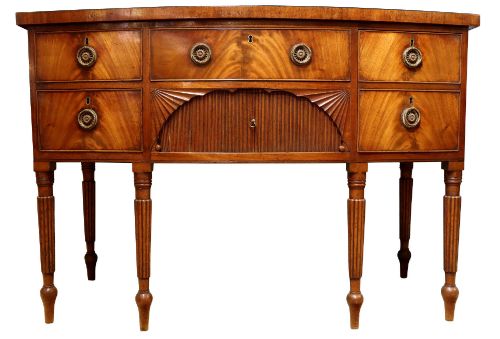
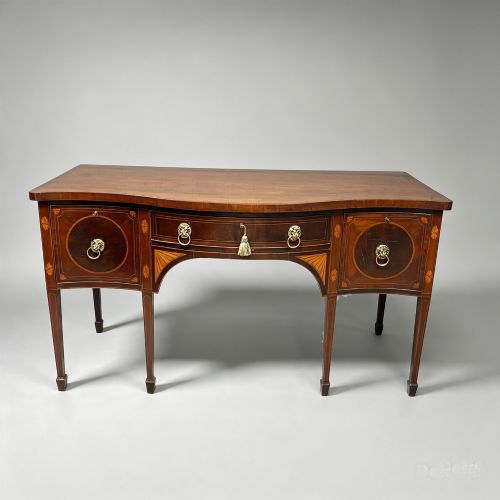
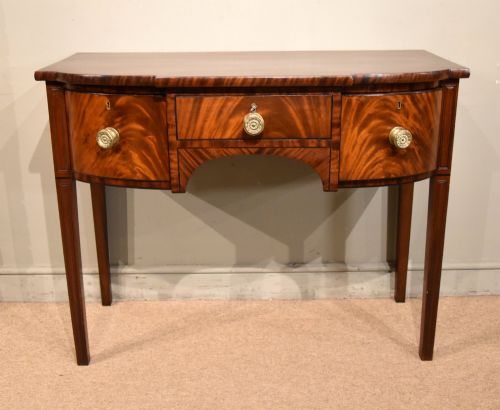
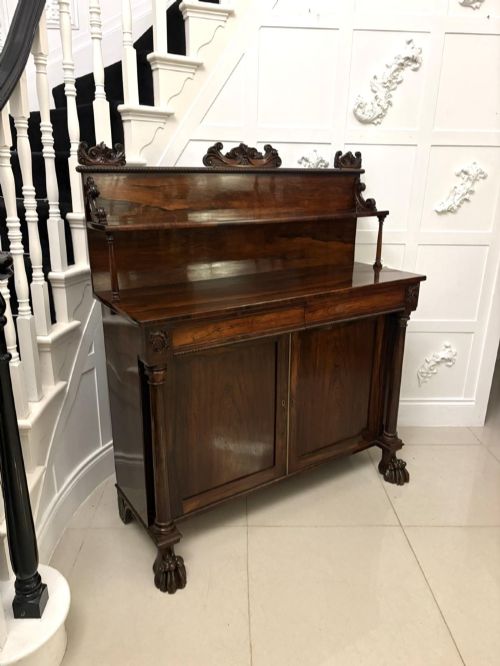
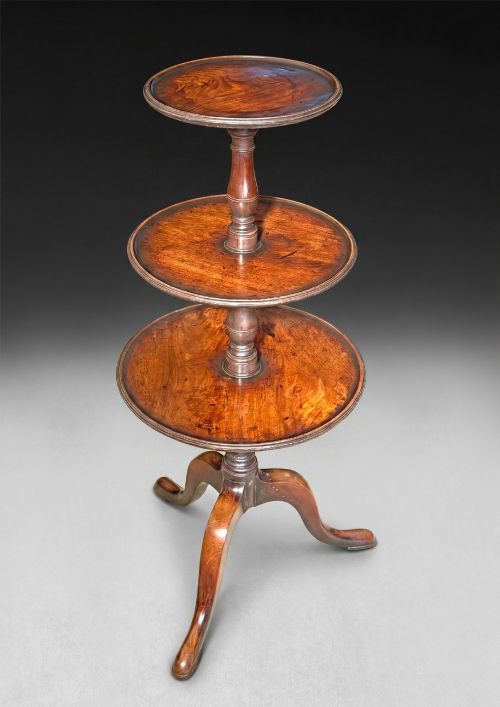
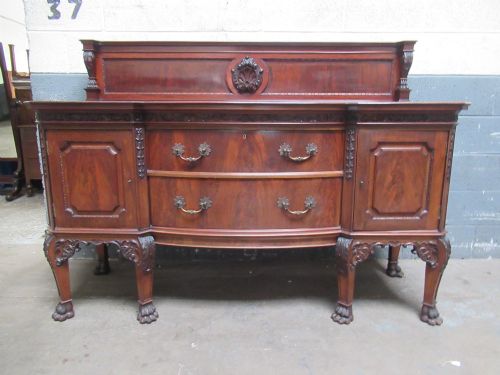
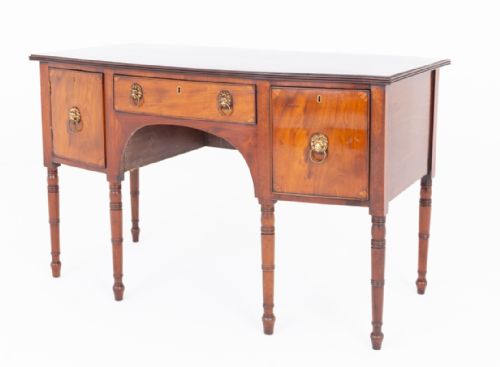
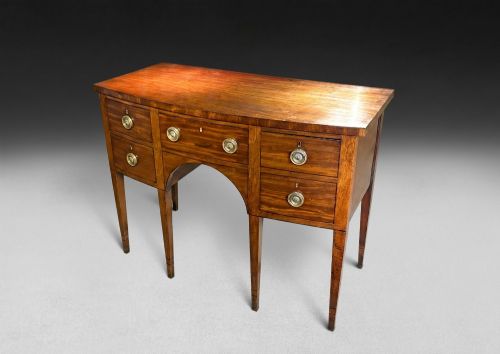
When searching for a period dining buffet, you encounter large serving furniture designed to hold china, silver, and food in the dining room. The pieces on this page span the eighteenth and nineteenth centuries, taking the form of sideboards, serving tables, and pedestals.
Georgian and Regency examples dominate the selection, featuring mahogany timbers and elegant bowfront or serpentine shapes. You also find later Edwardian and Victorian iterations, including oak dressers and dumb waiters that serve the same domestic function.
Makers such as Gillows appear among the Regency items, bringing cabinet-making pedigree to pedestals and side tables. These substantial items remain practical for modern dining spaces while displaying the proportions of earlier centuries.
What varies in quality
Quality rests on the selection of timber veneers and the crispness of inlaid stringing. The finest examples display matched flame mahogany across every drawer front, creating symmetrical patterns that require exceptional sawing skill.
Construction details distinguish workshop standards, seen in hand-cut dovetails, original brass fittings, and secondary timbers like oak used for interior drawer linings. Attribution to notable makers such as Gillows elevates the standing of a piece through documented execution and refined proportions.
Period Dining Buffet Retail Price Guide 2026
Typical asking prices for period dining buffet among the pieces listed under this phrase on Sellingantiques today, from the lower quarter to the upper quarter. They describe what is for sale here now, not the wider market.
Listings feature mahogany, oak, brass, and satinwood across periods ranging from the eighteenth century to the Edwardian era.
Gillows
The Period Dining Buffet Glossary
- Bowfront
- A convex curving front facade popular on sideboards during the Georgian and Regency periods. This shape softens the corners of the dining room and maximises internal storage capacity.
- Serpentine
- A front design featuring a central convex curve flanked by two concave curves. It requires advanced carpentry to shape timber smoothly across multiple planes.
- Flame mahogany
- Timber sliced from the fork of a mahogany tree where branches join the trunk. The grain exhibits a flickering, flame-like pattern prized for decorative veneering.
- Dumb waiter
- A tiered freestanding serving stand with revolving or stationary circular trays. These items allowed diners to help themselves without servants present in the room.
- Brass gallery
- A low rail fitted around the upper edge of a serving table or buffet. It kept plates and platters secure while staff loaded food.
Period Dining Buffet: Frequently Asked Questions
How do I use a period buffet today?
These large pieces serve wonderfully as sideboards in modern dining rooms, holding dinnerware, glassware, and serving platters.
The top surface provides ample space for drinks and food during dinner parties, functioning much as it did two centuries ago.
What is the difference between a sideboard and a serving table?
Sideboards typically incorporate banks of drawers and cupboards enclosed within a single frame for hidden storage.
Serving tables feature an open underframe with legs, functioning primarily as a surface for presenting dishes rather than storing tableware.
How do I identify a Regency period buffet?
Regency pieces often display bold mahogany veneers, brass lion-mask ring pulls, and classical architectural motifs inspired by ancient Rome and Greece.
Cabinet-makers working in this era frequently employed pedestal ends and brass gallery rails on the serving surface.
Are these buffets suitable for smaller dining rooms?
While many examples are substantial, the selection includes compact bowfront and small sideboards designed for modest spaces.
Measuring your wall space carefully ensures the piece leaves adequate clearance for dining chairs and movement.