
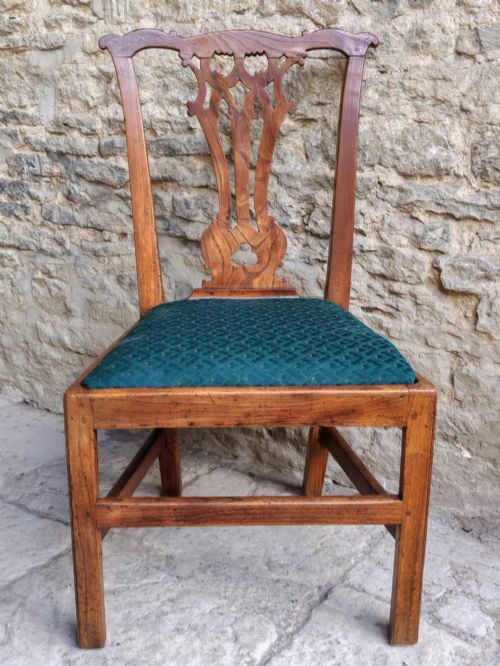
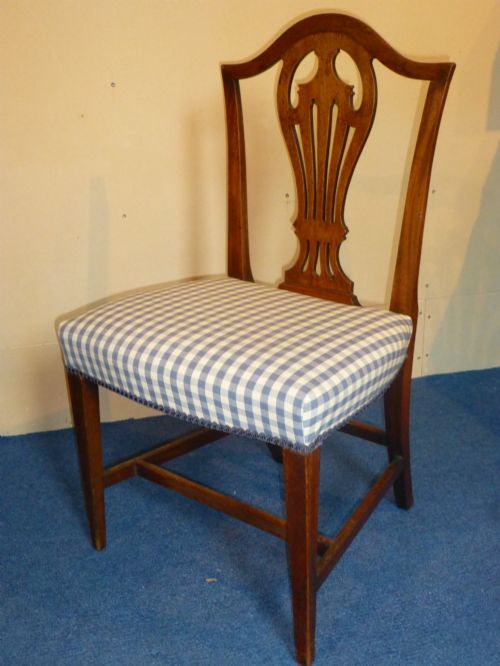
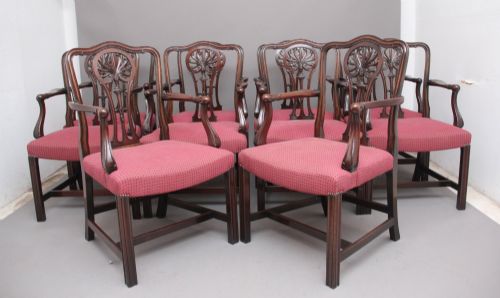
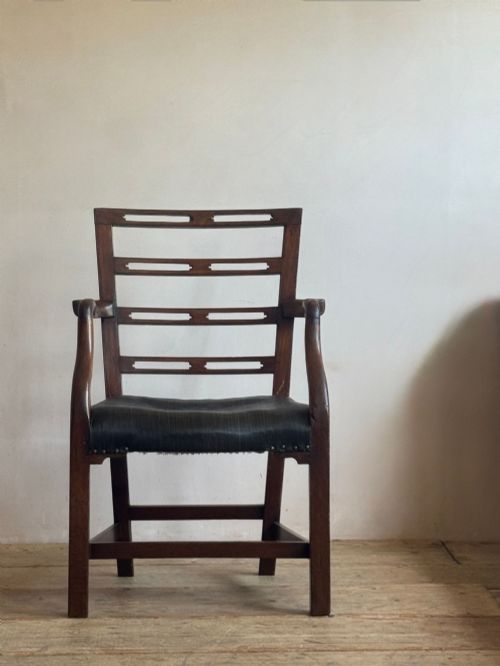
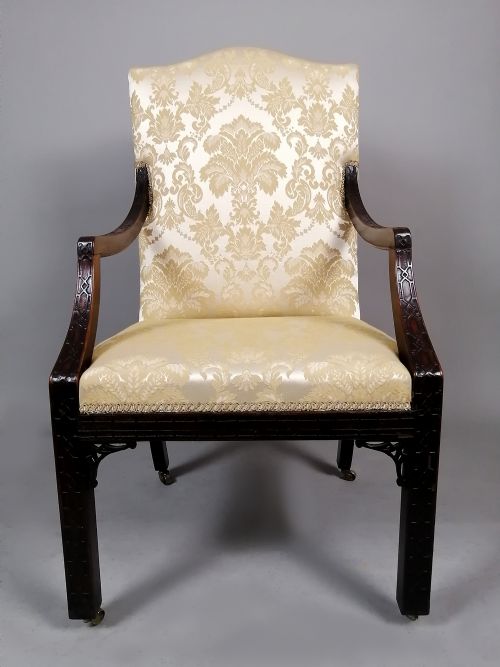
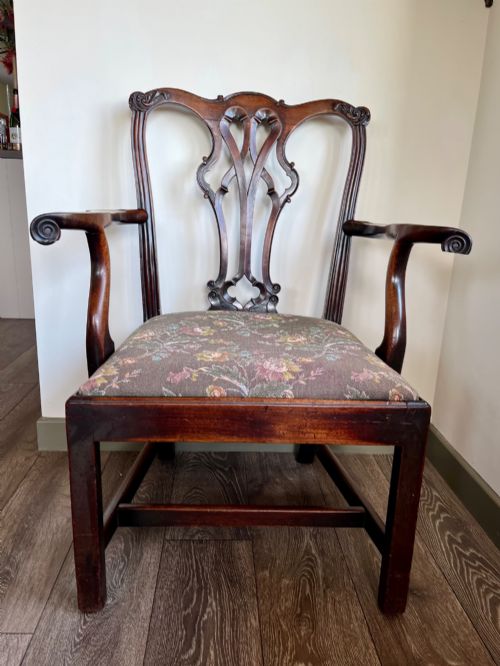
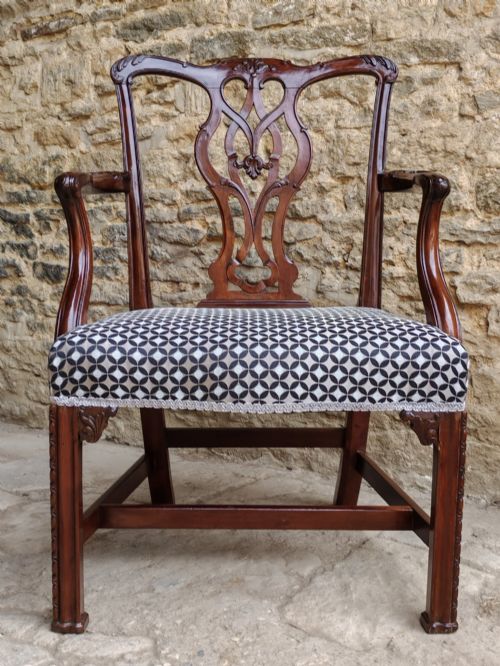
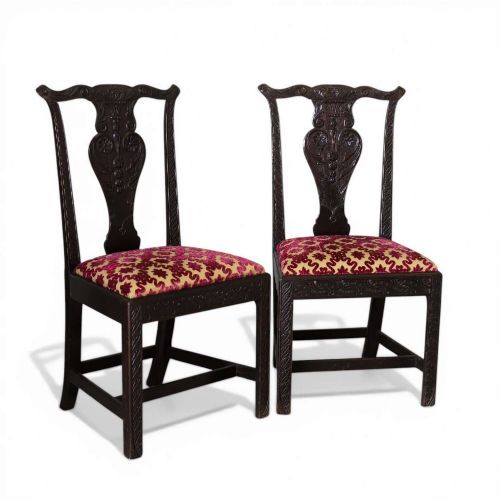

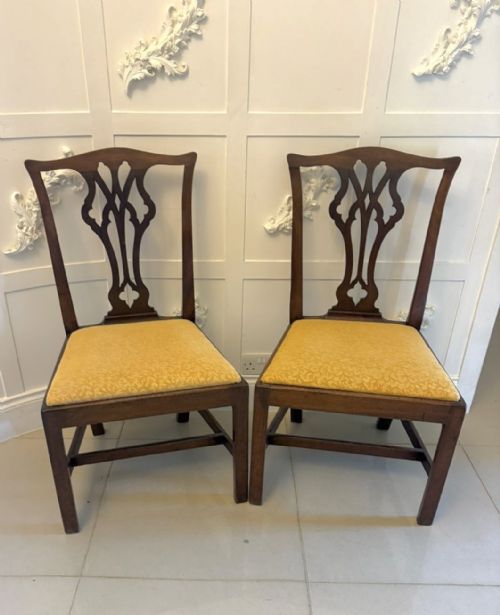


Period Chippendale Desk Chair
A period chippendale desk chair brings classic proportions and solid mahogany construction to a study, combining formal cabinet-making with functional workspace seating.
Period Chippendale Desk Chair
A period chippendale desk chair bridges domestic workspace seating and formal cabinet-making. These pieces appear primarily in eighteenth-century forms alongside later revivals from the nineteenth and early twentieth centuries.
The inventory on this page spans walnut, fruitwood, elm and oak alongside the predominant mahogany. Forms range from library armchairs and elbow chairs to specific desk variants and carvers.
Makers and workshops across Georgian Britain produced these seats for studies and libraries. Later revival pieces from the Edwardian era emulate the same classic proportions.
Materials and construction
Makers utilised dense timbers such as mahogany, walnut and fruitwood to achieve sharp carved detail along splats and arm supports. Joinery relied on precise mortise and tenon frames.
Upholstery elements incorporate leather, velvet, tapestry and fabric secured over drop-in or padded seats. Brass tacks often edge the leather or textile borders on library and desk variants.
Listings feature timber varieties including mahogany, walnut, fruitwood, elm and oak alongside upholstery in leather, velvet and tapestry.
Judging the work
Quality rests in the crispness of the hand-carved detail along the crest rail and cabriole legs. Superior examples retain original timber surfaces without excessive sanding.
Structural integrity depends on the tightness of the frame joints and the weight of the timber. Refined pieces show careful attention to internal blocking and arm support stability.
Alfred Allen of Birmingham
The Period Chippendale Desk Chair Glossary
- Carver
- An armchair, often designed for the head of a dining table or for use at a desk.
- Elbow chair
- An alternative term for an armchair, referencing the supportive armrests.
- Gainsborough chair
- A wide, upholstered armchair with open padded arms dating from the Georgian period.
- Splat
- The vertical wooden strip down the centre of a chair back, frequently pierced and carved.
- Claw and ball
- A foot carved to resemble a bird's talon gripping a spherical ball.
Period Chippendale Desk Chair: Frequently Asked Questions
How do I spot a true period chair?
Examine the timber colour, tool marks and joinery construction beneath the seat frame. Eighteenth-century pieces show distinct hand-tooling and dense grain patterns absent in later reproductions.
Compare the carving depth on the crest rail against known period examples. Genuine pieces maintain crisp execution without the softness typical of twentieth-century copying.
Were these chairs meant for desks?
Cabinet-makers designed specific elbow chairs and library seats with wider proportions to accommodate writing and reading tasks. Many examples feature sturdy arm structures and supportive backs suited to sustained use.
Later revival makers continued this functional tradition by adapting the classic forms for office environments. The seat height and open arms provided the necessary clearance for writing.
How should I care for the leather?
Apply traditional leather dressings sparingly to nourish hand-dyed surfaces and prevent cracking. Keep the chair away from direct heat sources and strong sunlight.
Dust the carved wooden frame regularly with a dry cloth. Avoid commercial liquid cleaners that might damage antique finishes.